US Troop Withdrawal from Germany Announced as Trump-Merz Tensions Boil Over
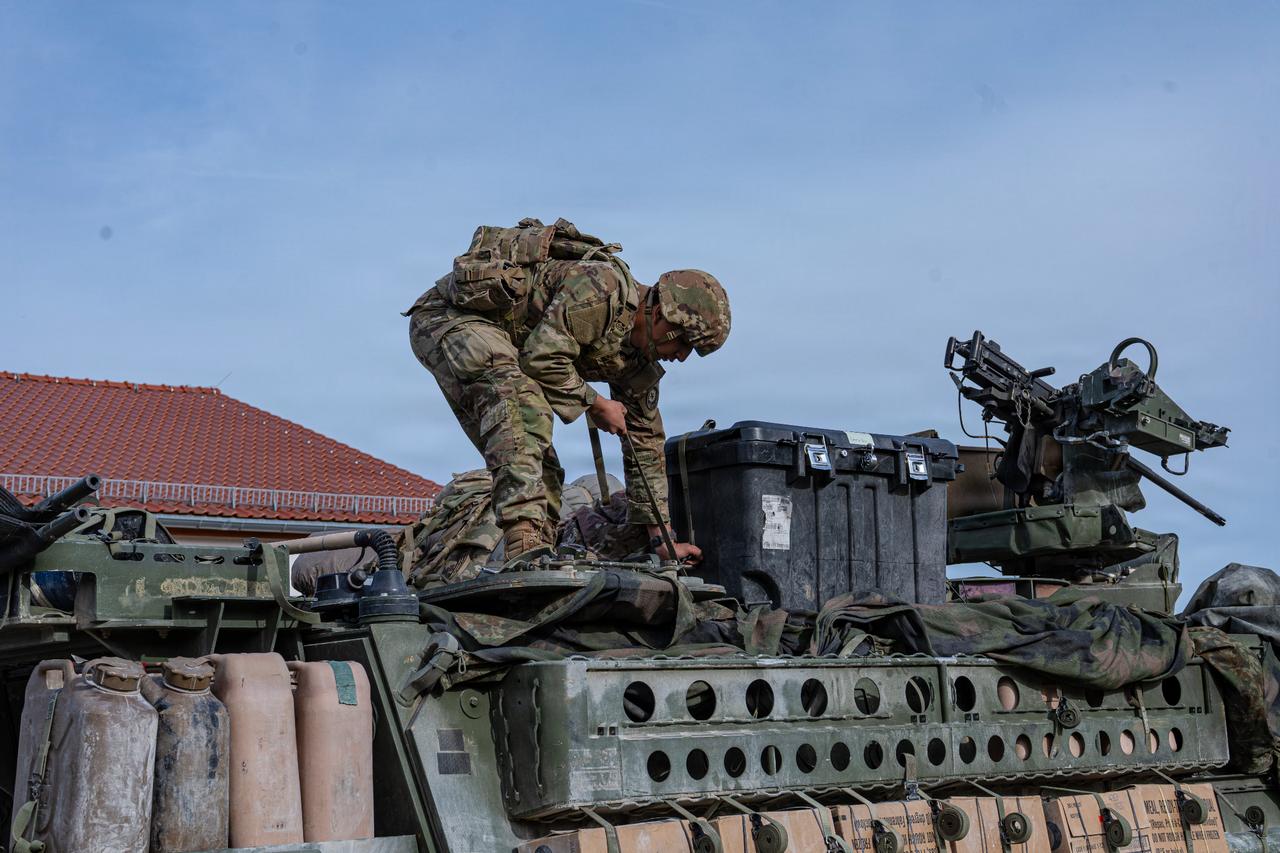
The US troop withdrawal from Germany is officially in motion. The Pentagon confirmed on Friday that around 5,000 American service members will be pulled out of the country over the next year, following a heated exchange between President Donald Trump and German Chancellor Friedrich Merz over the ongoing war with Iran. While the move marks a notable shift, it still leaves more than 30,000 US troops stationed across Germany, preserving a substantial American military footprint in Europe.
The decision, however, lands at a time when transatlantic relations are noticeably strained, with Trump openly questioning the loyalty and usefulness of several long-time NATO partners.
Pentagon Confirms the Drawdown
Chief Pentagon spokesman Sean Parnell shared the news in a formal statement, explaining that the Secretary of War had directed the withdrawal of approximately 5,000 troops from Germany. According to Parnell, the decision came after a thorough review of America’s defense posture across Europe and reflects current theater requirements as well as conditions on the ground.
The redeployment is expected to play out gradually, with completion anticipated within the next six to twelve months. Officials emphasized that this is a strategic recalibration rather than a sudden retreat, although the political backdrop tells a more complicated story.
A Public Feud Over Iran
The withdrawal announcement comes just days after a sharp public exchange between Trump and Merz over the US-led war with Iran. During a visit to a school in central Germany earlier in the week, Merz accused American officials of entering the conflict without a coherent strategy, calling the entire approach “ill-considered.”
He criticized Iran’s leadership for prolonging negotiations, saying that American envoys had been left traveling between countries with little to show for it. Merz further described Iran’s stance, particularly through the Revolutionary Guards, as humiliating to a major world power, and expressed hope that the conflict would come to a swift end.
Trump didn’t take kindly to the remarks. He fired back the next day, claiming Merz “doesn’t know what he’s talking about” when it comes to Iran. Within 24 hours, Trump announced his administration was “studying and reviewing” a potential troop reduction in Germany — a threat that has now become reality.
A Familiar Pattern from Trump’s Foreign Policy
This isn’t the first time Trump has pushed for cuts to America’s military presence in Germany. Back in 2020, during his first term and while Angela Merkel was still chancellor, he proposed pulling thousands of troops from the country. That earlier plan met heavy bipartisan resistance in Congress and was ultimately reversed before being fully implemented.
Despite the latest tensions, Merz had previously said his relationship with the American president remained “good,” signaling that the rupture has unfolded quickly and unexpectedly.
Why Germany Matters Strategically
Germany has long played a central role in America’s military operations across Europe. The country hosts Ramstein Air Base, which serves as the headquarters for US Air Forces in Europe. The base supports critical missions including:
- Airlift operations
- Airdrop deliveries
- Aeromedical evacuations
- Joint NATO logistics
Ramstein also functions as a major NATO installation, making it one of the most important hubs for transatlantic defense coordination.
According to data from the US Defense Manpower Data Center, around 36,436 active-duty US military personnel were permanently stationed in Germany as of December 2025. Even with the new troop reduction, the country will continue to anchor a significant share of America’s overseas force structure.
Tensions Spread to Other NATO Allies
The friction between Trump and European leaders has not been limited to Germany. Several other NATO members have come under fire from the US president for what he describes as insufficient cooperation in the war with Iran. Notably, Trump launched the conflict without notifying most NATO allies, a move that has fueled diplomatic discomfort across the continent.
On Thursday, Trump publicly floated the idea of slashing US troop levels in Italy and Spain as well. When asked whether such cuts were on the table, he didn’t hesitate, suggesting that both countries had failed to support the war effort. He bluntly said Italy “has not been of any help” and described Spain’s contributions as “horrible.”
This rhetorical assault on long-standing allies has unsettled European capitals, raising fears that the rift could deepen further if the Iran conflict drags on.
Germany’s Limited but Strategic Support
Despite the political clash, Germany has not entirely turned its back on US operations. Berlin has provided support in carefully measured ways, including:
- Allowing the use of German military infrastructure for related operations
- Granting access to air bases for non-offensive missions
- Pledging additional support during a future post-war phase
- Considering participation in an international stabilization mission
Germany has, however, drawn a clear line by refusing to allow its bases to serve as launchpads for direct offensive strikes. Berlin recently confirmed plans to send a naval minesweeper to the Mediterranean Sea to help prepare for the eventual reopening of the Strait of Hormuz, contingent on a sustainable end to hostilities.
Yet none of these contributions appear to have eased Trump’s frustrations.
What This Means for NATO and the Future
The decision to scale back American troops in Germany at such a politically charged moment raises bigger questions about the long-term reliability of US military commitments in Europe. NATO members have spent decades operating under the assumption of stable American support, but Trump’s willingness to use troop deployments as leverage suggests that assumption may no longer hold firm.
Some of the broader implications include:
- Increased pressure on European nations to expand their own defense capabilities
- Growing uncertainty around future US-NATO coordination
- Potential acceleration of European military self-reliance
- Heightened diplomatic sensitivity in transatlantic dialogues
For now, the withdrawal of 5,000 troops is being framed as a routine adjustment by the Pentagon. But against the backdrop of a public feud, an active war, and rising irritation between Washington and several European capitals, the move feels far more political than procedural.
Whether this becomes a one-time rebuke or the first chapter of a wider American pullback from Europe will depend largely on how relationships between Trump and his NATO counterparts evolve in the months ahead.
Author