Sinking the Condom Flotilla: How Israel Dominated the Global Sumud Flotilla Narrative
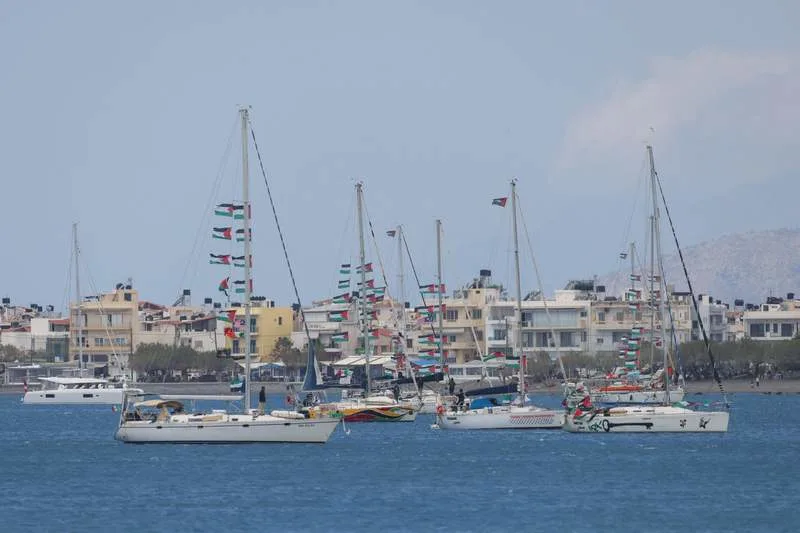
The Global Sumud Flotilla became the center of international attention this week as dozens of vessels attempted to push through to Gaza. While the world watched the ships at sea, a far more strategic battle was unfolding behind closed doors. Over a 24-hour period, Israel quietly executed one of its most coordinated information and diplomatic campaigns in recent memory, aimed not just at stopping the flotilla physically but at controlling the global narrative around it.
A Different Kind of Battle
For Israeli officials, the flotilla represented far more than a maritime challenge. It was viewed as a calculated move designed to spark a political and public relations crisis right before crucial negotiations over the second phase of the Gaza Peace Plan. The timing, in their view, was meant to pull global attention away from ongoing international efforts to advance Gaza’s reconstruction and stabilization process.
Rather than treating the situation as a purely military matter, Israel turned to its Foreign Ministry to lead the response. This marked a notable shift, as the Foreign Ministry, instead of the IDF spokesperson, took charge of shaping the public message both at home and abroad.
Lessons Learned From Past Flotillas
According to Israeli officials, this was the fifth flotilla of its kind, and they made it clear that mistakes from the past would not be repeated. The scale of this operation, however, was unprecedented. The Global Sumud Flotilla reportedly involved up to 100 vessels, far more than any previous attempt.
The closer the flotilla approached Gaza, the greater the risk of an operational, political, or media confrontation. Israeli officials concluded that the issue had to be addressed early, before it spiraled into a major international incident. As one official put it, the IDF knows how to handle the operational side, but it is the Foreign Ministry that knows how to communicate the story to the rest of the world.
A Coordinated Multi-Agency Effort
Behind the scenes, multiple Israeli bodies worked in remarkable coordination. The Foreign Ministry, Public Relations Division, IDF Spokesperson, police, Prison Service, and Population Authority all operated in sync. Officials described an unusual level of harmony between agencies, with field documentation from IDF units being transferred almost in real time to the Foreign Ministry. From there, the materials were swiftly converted into press briefings, social media content, and diplomatic talking points.
Israel’s Three-Pillar Messaging Strategy
Israel’s communication strategy was built on three core messages designed to shape global perception of the flotilla.
The first message focused on questioning the flotilla’s legitimacy. Israeli officials emphasized that humanitarian assistance to Gaza is now being managed through formal international channels, particularly the Gaza Board of Peace and the Civil-Military Coordination Center, which were established as part of US President Donald Trump’s Gaza plan. Israeli sources stated that more than 1.5 million tons of humanitarian aid, along with thousands of tons of medical supplies, have already entered the Strip through these official routes. Their conclusion was clear: there is no humanitarian gap for the flotilla to fill, making it more of a performance than a relief effort.
The second message targeted the alleged organizers. Israel openly accused Hamas of being the actual force behind the flotilla, claiming the entire initiative was designed to deflect attention from mounting pressure on the group to disarm and to derail political progress in the region. According to officials, the flotilla was not a grassroots civil society project but rather a carefully orchestrated political maneuver.
The third message took a more unconventional and even satirical tone. Israeli officials decided to brand the flotilla as the “condom flotilla,” based on items reportedly recovered from some of the vessels. Documents shared by the IDF with the Foreign Ministry allegedly showed condoms, drugs, and signs of recreational activity on board. Israeli sources claimed they did not need to fabricate anything and simply allowed the materials to speak for themselves. This branding spread rapidly across social media and helped reframe the flotilla as a publicity stunt rather than a serious humanitarian mission.
Diplomatic Pressure Working in the Background
While the information campaign played out publicly, intense diplomacy was unfolding behind the scenes. A major turning point came when the Board of Peace issued a public statement essentially declaring itself the official channel for humanitarian aid in Gaza. The council criticized the flotilla as a self-promotional act rather than a genuine effort to help Gazan civilians.
Israeli officials hinted that this announcement did not happen on its own but was the result of careful diplomatic groundwork carried out by the Foreign Ministry with international partners.
The Decision to Send Activists to Greece
In a significant move that shaped the final outcome, Israeli Foreign Minister Gideon Sa’ar announced that the flotilla activists would be transferred to Greece rather than detained in Israel. Crucially, the operation was completed without casualties.
This decision was strategic. Holding the activists on Israeli soil could have produced exactly the kind of dramatic images the flotilla organizers were hoping for, including foreign activists facing Israeli authorities, courtrooms filled with international attention, and weeks of damaging media coverage. By sending them to Greece, Israel effectively neutralized the visual and political fallout before it could take shape.
Israeli sources described the situation as a “rolling information mine” that was successfully defused before it could detonate. According to them, the entire image threat was contained in less than 24 hours.
Political Backlash Inside Israel
Not everyone in Israel agreed with the approach. National Security Minister Itamar Ben-Gvir publicly criticized Sa’ar’s decision, calling it a sign of weakness toward Israel’s enemies and those spreading antisemitism worldwide. He suggested that pressure from Turkey may have influenced the decision and accused the government of going against earlier plans approved by professional security bodies.
Ben-Gvir told Maariv that authorities had spent an entire month preparing to detain around 1,000 flotilla activists in Israeli prisons. According to a senior source, two small cabinet discussions took place on the matter, but Prime Minister Benjamin Netanyahu and Foreign Minister Sa’ar reportedly made the final call without bringing it to the full cabinet.
A New Model for Information Warfare
Regardless of internal political disagreements, the operation has been described by Israeli officials as a textbook example of modern information warfare. By blending operational action, diplomatic outreach, and aggressive public messaging, Israel managed to shape the global narrative on its own terms.
For Israel, the Global Sumud Flotilla episode is being viewed not just as a successful interception at sea but as a strategic victory in the ongoing battle for international perception, one that may well influence how the country handles similar challenges in the future.
Author