US Troop Withdrawal from Germany Sparks New Wave of NATO Anxiety
The US troop withdrawal from Germany has officially been set in motion, and while Berlin is publicly keeping its composure, the move has rattled European capitals already on edge over the future of the NATO alliance. German Defense Minister Boris Pistorius described the Pentagon’s decision as something his country had been preparing for, signaling that Germany is ready to step up and carry more of its own defense burden.
Berlin Strikes a Calm but Firm Tone
Speaking to the German news agency dpa on Saturday, Pistorius emphasized that the continued presence of American forces in Europe — especially in Germany — serves both German and US interests. At the same time, he made it clear that Germany must invest in strengthening Europe’s role within NATO if it hopes to remain a credible transatlantic partner.
His measured response stood in contrast to the unease spreading across European allied capitals. The Pentagon’s announcement on Friday confirming the pullout of roughly 5,000 troops from Germany has reignited long-standing concerns about Washington’s reliability as a security partner.
Pentagon Confirms a Six- to Twelve-Month Timeline
Pentagon spokesman Sean Parnell told NPR on Saturday that the directive came directly from Defense Secretary Pete Hegseth. According to Parnell, the move follows what he described as a careful evaluation of the Department’s force posture across Europe and the realities on the ground.
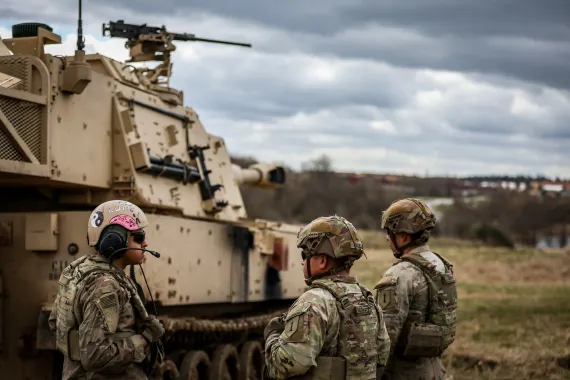
The withdrawal is expected to wrap up within the next six to twelve months. Even after the reduction, more than 30,000 American service members will remain stationed in Germany. Still, the cut effectively rolls back the troop expansion that began under President Biden in the aftermath of Russia’s full-scale invasion of Ukraine in 2022.
A Decision Tied to Diplomatic Friction
The announcement comes on the heels of pointed remarks from German Chancellor Friedrich Merz, who recently said the United States was being “humiliated” by Iran’s leadership and openly criticized Washington’s handling of the war. The Associated Press reported that Merz’s comments came just days before the Pentagon’s troop announcement — a timing that few in Europe consider coincidental.
This isn’t Trump’s first attempt at scaling back the US footprint in Germany. Back in 2020, during his first term, he tried to pull around 9,500 troops out of the country, blaming what he called insufficient German defense spending. That plan never materialized and was officially reversed by President Biden shortly after he took office in 2021.
NATO Calls for European Self-Reliance
NATO spokesperson Allison Hart took to X on Saturday to confirm that the alliance was actively engaging with the United States to fully understand the scope of the withdrawal. She added that the development reinforces the urgent need for European NATO members to ramp up their own defense investments.
Germany has already been moving in that direction. The country is currently in the middle of one of the most significant military expansions in its modern history, prompted by Russia’s aggression in Ukraine. Under Merz, Germany is set to spend more than three percent of its GDP on defense by next year, comfortably exceeding NATO’s two percent benchmark.
Spain and Italy Could Be Next on the List
The shockwaves may not stop in Germany. Earlier this week, Trump hinted that troop reductions could also extend to Italy and Spain. When asked by reporters on Thursday, he openly mused, “Yeah, I probably will… look, why shouldn’t I?”
He pointed to both nations as having taken what he viewed as unhelpful stances during the Iran conflict. Italian Prime Minister Giorgia Meloni and Spanish Prime Minister Pedro Sánchez have both been vocal critics of American military operations against Iran, and that public opposition appears to have caught the White House’s attention.
What This Means for the NATO Alliance
The unfolding situation raises a deeper question that has been hanging over Europe for years — just how committed is the United States to defending the continent in the long run? With one major drawdown already in motion and others potentially on the horizon, European nations are being pushed to reckon with a future in which American boots on the ground may no longer be a given.
For Germany, the path forward seems clear: accelerate defense modernization, invest more aggressively, and take on a leadership role within NATO’s European wing. For Spain and Italy, the road ahead looks less certain, especially if their political disagreements with Washington continue to influence US military deployment decisions.
A Turning Point for Transatlantic Relations
The US troop withdrawal from Germany may well mark a defining moment in the evolution of the transatlantic relationship. Whether this becomes a catalyst for a stronger, more independent European defense posture — or the start of a deeper rift between Washington and its allies — will likely shape the geopolitical landscape for years to come.
For now, European leaders are walking a fine line, balancing public reassurance with private concern, while quietly preparing for a future where they may need to stand more firmly on their own.
Author