Sinaloa Governor Steps Down Amid US Drug Trafficking Allegations
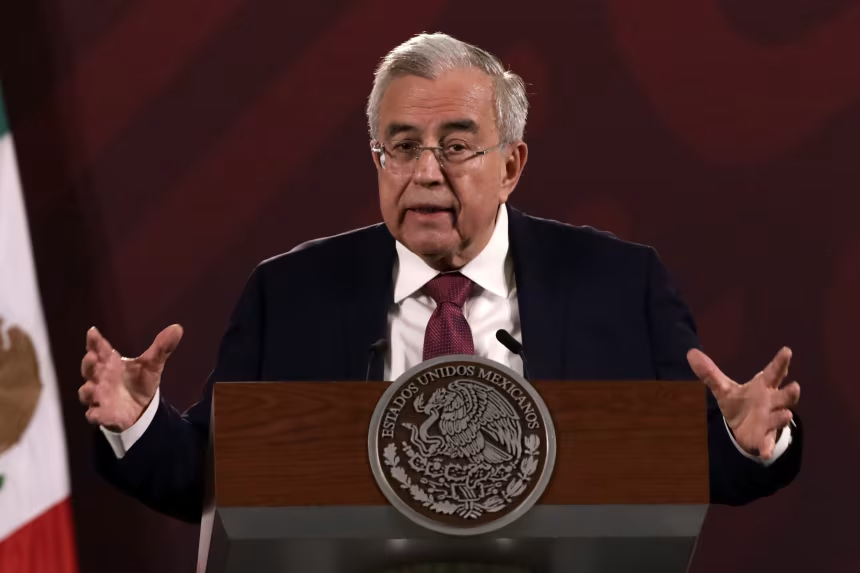
The Sinaloa governor steps down decision came swiftly after a bombshell US indictment shook Mexico’s political establishment. Ruben Rocha Moya, who has led the Mexican state of Sinaloa since 2021, announced on Friday that he would temporarily leave his post following federal drug trafficking charges filed against him in the United States. The development marks one of the most dramatic political moments in Mexico in recent years, raising fresh questions about the deep ties between organized crime and government power.
The Indictment That Shook Mexico
On Wednesday, US prosecutors unsealed a sweeping five-count indictment naming Rocha Moya alongside nine other current and former senior Mexican officials. The charges allege that the group provided support to a faction of the Sinaloa Cartel run by the Chapitos — the notorious sons of Joaquin “El Chapo” Guzman Loera.
According to prosecutors in New York, Rocha Moya allegedly held meetings with the Chapitos before he was even elected. The indictment claims he promised to install officials sympathetic to their drug trafficking network if he won the governorship. To secure his victory, cartel operatives reportedly stole ballot boxes, intimidated rival candidates, and even kidnapped opponents to force them out of the race.
A Temporary Leave Granted
State lawmakers in Sinaloa approved Rocha Moya’s request for a leave of absence on Saturday. In his place, they appointed Yeraldine Bonilla Valverde, who had previously served as the state’s Secretary of Government, as the interim governor.
In a video statement released Friday evening, Rocha rejected the allegations and explained that his decision to step aside was meant to make it easier for Mexican authorities to carry out their own investigation without interference. He insisted his conscience was clean and that his entire career stood as evidence of his integrity.
Mexican Authorities Move Cautiously
Just hours before Rocha’s announcement, Mexico’s Attorney General’s Office revealed that it had not found enough evidence to detain him on a provisional basis for extradition to the United States. The office said it would formally request additional evidence from US authorities before deciding on its next steps.
President Claudia Sheinbaum, speaking at her daily press conference on Thursday, struck a careful balance. She made it clear her government would not shield anyone who had broken the law, but emphasized that the decision on whether to pursue charges against Rocha rested with the Attorney General’s Office.
Sheinbaum also pushed back against what she described as potential interventionist behavior from the United States. Since Donald Trump returned to the White House for a second term, his administration has repeatedly accused Mexico of being too soft on organized crime — a claim Mexico City has firmly rejected.
What the Indictment Alleges
According to US prosecutors, the officials named in the indictment played multiple roles in supporting the cartel’s operations. The accusations include:
- Helping smuggle fentanyl, cocaine, and other narcotics into the United States
- Protecting cartel leaders from investigation and prosecution
- Permitting drug-related violence to continue unchecked
- Accepting millions of dollars in bribes in exchange for these favors
These allegations, if proven, would represent one of the most significant cases of state-level corruption tied to Mexican drug trafficking in years.
The Cartel’s Internal Power Struggle
The Sinaloa Cartel has been one of the most powerful criminal networks in the Western Hemisphere for decades. Following El Chapo’s arrest and extradition, the organization fractured into two main factions — one led by the Chapitos, his sons, and the other commanded by Ismael Zambada Garcia, widely known as El Mayo.
US authorities have already taken aim at both factions. Two of the Chapito brothers were extradited to the United States and pleaded guilty to drug-related charges, while the other two remain on the run inside Mexico. El Mayo himself was brought to the US in 2024 and also entered a guilty plea.
Interestingly, Zambada had previously accused Rocha of being involved in an alleged meeting that led to his eventual capture — a claim Rocha denied at the time and continues to reject.
Political Fallout in Mexico
Rocha Moya was elected governor in 2021 under the banner of Morena, the same political party as President Sheinbaum. His indictment has placed the ruling party in an uncomfortable position, especially as Mexico continues to face mounting pressure from Washington over cartel violence and the fentanyl crisis.
While Sheinbaum’s administration has tried to project independence from US influence, the case will inevitably test the strength and credibility of Mexico’s commitment to fighting organized crime at the highest levels of government.
Looking Ahead
For now, the political future of Ruben Rocha Moya hangs in the balance. His leave of absence still requires final approval from the state Congress, and Mexican investigators are expected to spend weeks, possibly months, examining the evidence shared by their American counterparts.
Whether this case ultimately leads to extradition, prosecution in Mexico, or a political comeback remains uncertain. What is clear, however, is that the Sinaloa governor steps down moment marks a significant turning point — both for Mexican politics and for the broader US–Mexico relationship in the ongoing fight against drug cartels.
As investigations continue and pressure mounts on both sides of the border, this case may end up reshaping how governments tackle the deep-rooted ties between political power and organized crime in Mexico.
Author