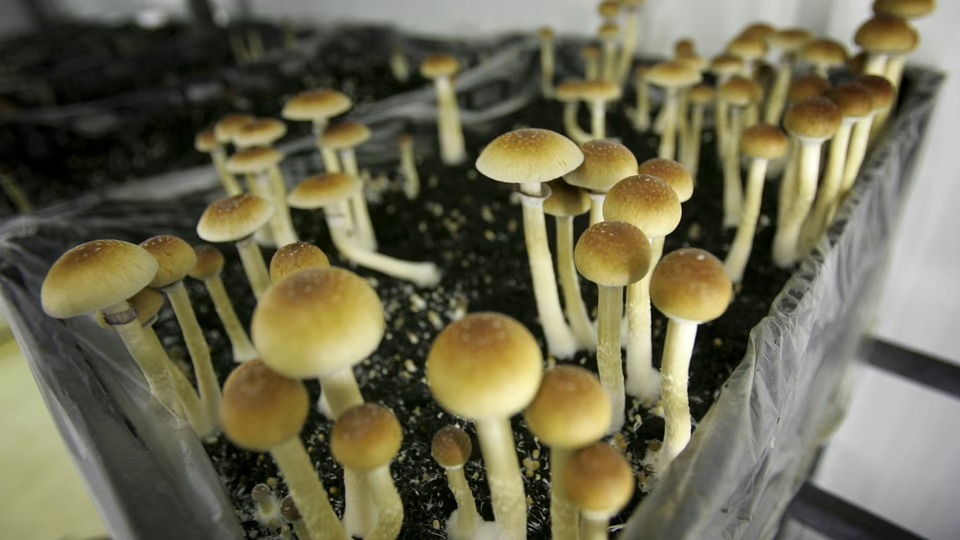
Single dose of magic mushrooms can do far more than create a temporary psychedelic experience. According to new scientific research, just one dose of psilocybin, the active compound found in magic mushrooms, may lead to anatomical changes in the brain, with effects still visible a month later. The study, conducted by neuroscientists at Imperial College London and the University of California, San Francisco, sheds new light on the long-discussed therapeutic power of psychedelics and adds to the growing momentum behind their use in treating depression, anxiety, and addiction.
A Surprising Discovery About the Brain
The research is one of the most striking attempts so far to explore how psychedelics like psilocybin physically alter the human brain. Scientists have long known that psychedelic compounds influence mental flexibility, mood, and perception. However, the idea that a single dose could leave lasting structural traces in the brain has fascinated researchers for years.
Prof. Robin Carhart-Harris, the senior author of the study and a leading neurologist in the field, described the findings as remarkable. He noted that observing potential anatomical brain changes one month after only one dose of a substance is highly unusual.
The study found that:
- Volunteers showed measurable shifts in nerve bundle structure
- Some nerve tracts appeared denser and stronger after psilocybin use
- Mental flexibility, insight, and wellbeing improved
- Brain entropy increased temporarily during the experience
- The structural changes resembled the opposite of those seen in dementia or aging
While the scientists are cautious about drawing too many conclusions, the early signs are intriguing.
How the Study Worked
The team conducted the research with 28 healthy adult volunteers who had never used a psychedelic before. The structure of the experiment was designed to ensure scientific rigor and minimize bias.
The study followed several phases:
- A placebo phase using a 1 mg dose of psilocybin, considered too small to produce psychedelic effects
- Tests of wellbeing, psychological insight, and mental flexibility
- Functional MRI scans and diffusion tensor imaging
- A month later, a 25 mg dose of psilocybin, large enough to produce a strong psychedelic experience
- Repeated testing and brain monitoring during and after the experience
Within an hour of taking the higher dose, electroencephalography (EEG) revealed a striking spike in brain entropy. This means that the brain processed a wider range of information, which scientists believe may help support flexible thinking and emotional shifts.
The Idea of Brain Entropy
Brain entropy is one of the most interesting concepts in modern neuroscience. The term refers to how varied and dynamic neural activity becomes during certain experiences. Higher entropy is generally associated with:
- More flexible thinking
- New ways of processing information
- Increased creativity
- Reduced rigid mental patterns
- Greater openness to new perspectives
When entropy is too low, the brain becomes locked in repetitive thought patterns. This is often seen in conditions such as depression, OCD, addiction, and chronic anxiety. Psychedelics like psilocybin are believed to break those patterns, allowing the brain to “reset” and explore alternative pathways.
A Surprising Anatomical Finding
The most exciting part of the study came from the diffusion tensor imaging (DTI) scans. A month after taking psilocybin, participants showed reduced water diffusion along nerve tracts running from the front of the brain to the middle. This suggests one of two possibilities:
- Pruning of weaker nerve fibers, allowing stronger ones to take charge
- Growth of newer nerve fibers that have not yet developed insulating coatings
Either possibility hints at structural reorganization in the brain. While more research is needed to confirm what these results truly mean, scientists noted that the patterns observed are the opposite of what is typically seen in aging or dementia.
This is one of the strongest indications yet that psilocybin may help support neural plasticity, the brain’s ability to rewire and adapt.
Stronger Wellbeing and Insight
A particularly noteworthy aspect of the study involved the connection between brain entropy and personal wellbeing. The researchers found that participants who experienced the largest spike in brain entropy during their psilocybin experience also reported:
- The deepest psychological insights
- The most significant emotional breakthroughs
- The greatest improvements in long-term wellbeing
- A more flexible mindset
- A stronger sense of self-acceptance
Prof. Carhart-Harris said this connection points toward a real psychobiological foundation for psilocybin’s therapeutic effects.
In other words, what people feel during the experience is supported by physical and chemical shifts in their brain.
A New Era of Psychedelic Research
This study lands at a transformative moment for psychedelic research. Over the last several years, scientists, clinicians, and even some governments have shown renewed interest in psychedelics as treatments for mental health conditions. Recent work has focused on:
- Psilocybin for depression and anxiety
- Ayahuasca for trauma and PTSD
- Ketamine for treatment-resistant depression
- DMT for addiction recovery
- LSD for cluster headaches
These investigations have helped reshape the public’s understanding of psychedelics, moving the conversation away from outdated stigma toward serious scientific consideration.
Why Psychedelics Help People Get “Unstuck”
Many psychiatrists view depression and addiction as conditions where the mind becomes locked into negative thought loops. Psychedelics may help break that cycle by:
- Increasing brain flexibility
- Strengthening new neural connections
- Loosening rigid mental patterns
- Encouraging emotional openness
- Promoting fresh perspectives
While traditional medications like antidepressants typically take weeks to show effects, psychedelics can produce significant emotional shifts almost immediately. Combined with therapy, these changes can lead to long-lasting improvements in mental health.
A Look Inside the Psychedelic Experience
Although the study focused on neuroscience and brain imaging, it also recorded the participants’ subjective experiences. Many described:
- Profound insights into their personal lives
- Greater self-understanding
- A sense of emotional release
- Increased compassion toward themselves and others
- A feeling of mental clarity that lasted for weeks
These experiences appear to align with the brain changes detected in the imaging tests, suggesting a deep connection between mental and physical transformation.
A Cautious Approach to Findings
While the results are exciting, scientists involved in the study are quick to remind readers that this is an early-stage investigation. Some of the limitations include:
- A small sample size of 28 participants
- The use of healthy volunteers rather than people with mental health conditions
- Indirect measurement methods like DTI
- The need for replication in larger groups
- The complexity of interpreting changes seen in brain scans
Still, the work adds significantly to the growing body of evidence supporting psychedelic-assisted therapy.
Voices From the Scientific Community
Other neuroscientists are watching closely. Prof. Alex Kwan of Cornell University said the research is “exciting” because it offers some of the strongest human evidence yet that psilocybin may rewire neural connections. He pointed out that animal studies in mice have already shown that psychedelics can drive plasticity.
While Kwan praised the findings, he also raised practical concerns, including:
- The small participant pool
- The indirect nature of DTI imaging
- The need for further studies in clinical populations
- The complexity of measuring real anatomical changes
- The challenge of replicating these effects across diverse groups
His comments reflect both the hope and the caution that surround this evolving field.
A Promising Step Toward New Therapies
The findings suggest that psilocybin may be useful in clinical settings beyond what is already being studied. Conditions where psilocybin therapy may show promise include:
- Major depression and treatment-resistant depression
- Anxiety related to terminal illness
- Severe addictive behaviors
- Chronic stress responses
- Eating disorders
- PTSD
If the brain changes observed in this study can be replicated in patients with mental health diagnoses, the implications for therapy would be significant.
Why Brain Plasticity Matters
Brain plasticity, sometimes called neuroplasticity, is the ability of the brain to change and adapt. It is essential for:
- Learning new skills
- Recovering from injury
- Forming new memories
- Developing emotional resilience
- Building healthier mental habits
If psilocybin truly enhances plasticity, this could explain why people often feel “transformed” after a single experience. The compound may help the brain enter a flexible state in which deeply held patterns become easier to update.
A Brief History of Psychedelic Research
Although psychedelic research has accelerated recently, it has a long and complicated history. After early enthusiasm in the 1950s and 1960s, scientific work in this area was largely halted for decades due to political and cultural concerns.
Renewed research began about 20 years ago and has since gained credibility through projects at:
- Imperial College London
- Johns Hopkins University
- New York University
- University of California, San Francisco
- Yale University
These institutions are leading the renaissance of psychedelic medicine, helping to legitimize a field once dismissed as fringe.
The Road Ahead for Psilocybin Therapy
While this study provides exciting evidence that psilocybin may produce lasting brain changes, more research is essential. Future studies will likely examine:
- Larger sample sizes
- Patients diagnosed with mental health conditions
- Long-term follow-ups beyond one month
- Comparison with other psychedelic compounds
- Integration with talk therapy
Scientists believe that combining psychedelics with structured psychological support is the most promising path forward.
Why Public Curiosity Continues to Grow
Public interest in psychedelics has surged in recent years. Reasons for the renewed attention include:
- Increasing rates of depression and anxiety
- Frustration with traditional medications
- Growing scientific evidence supporting psychedelic therapy
- Public figures speaking openly about their experiences
- Mainstream media coverage of clinical trials
This curiosity has helped reduce stigma and build support for further research.
The Importance of Responsible Use
Despite the encouraging research, scientists strongly caution against unsupervised use. Psilocybin is a powerful compound that can produce intense psychological effects. People who self-medicate without professional guidance may experience:
- Severe anxiety
- Disorientation
- Triggered mental health symptoms
- Risky behavior
- Long-term emotional disturbance
For these reasons, all current research is conducted in controlled settings with trained therapists. Future therapies will likely follow similar safety protocols.
A New Way of Understanding the Mind
The study’s broader message is that human consciousness is more flexible than once believed. By temporarily disrupting rigid thought patterns, psychedelics may help people see themselves and the world from new angles. This shift in perspective could be transformative not just for individuals, but for entire fields of medicine and psychology.
The implications for understanding the mind include:
- Better insight into how mental illness develops
- A more flexible model of how thoughts form
- Greater emphasis on neural plasticity
- A bridge between biology and lived experience
- A renewed sense of optimism about mental health treatment
These broader perspectives are gaining momentum as more research emerges.
Final Thoughts
A single dose of magic mushrooms may seem like a small thing, but according to this groundbreaking study, it can leave a meaningful imprint on the brain that lasts for weeks. The discovery that psilocybin appears to influence anatomical structure in the brain offers a powerful new perspective on how psychedelics work and why they may hold therapeutic promise.
While the study is preliminary and based on a small sample, the findings are exciting. They support a growing body of evidence that suggests psilocybin can promote brain plasticity, mental flexibility, and emotional wellbeing. They also reinforce the idea that the psychological insights people experience during a psychedelic journey may have real biological roots.
As researchers move forward, the field of psychedelic science will continue to expand. With careful study, ethical clinical use, and rigorous evaluation, psychedelics like psilocybin may eventually become powerful tools in helping people overcome depression, anxiety, addiction, and other mental health challenges.
For now, the message is clear. The brain is more adaptable than science once believed, and a single experience under the influence of psilocybin may unlock changes that ripple through the mind for weeks. As scientists explore these effects in more detail, the potential impact on mental health treatment and human understanding could be enormous.
The world of psychedelic research is opening up in ways no one anticipated even a decade ago. With each new study, the line between mind and brain becomes more visible, and the possibilities for healing become more real. The story of psilocybin is far from finished, but its next chapter is shaping up to be one of the most exciting in modern science.
Author