Hantavirus Cruise Ship Evacuation Triggers Massive International Response
The hantavirus cruise ship evacuation has become one of the most coordinated international health responses in recent memory, as multiple European nations rush to rescue their citizens from the MV Hondius cruise ship. With the vessel scheduled to anchor near Tenerife in the early hours of Sunday morning, governments, health authorities, and global agencies are racing against time and looming bad weather to safely move hundreds of passengers off the ship before conditions worsen at sea.
A Multi-Country Mission to Bring Citizens Home
Spain’s Interior Minister Fernando Grande-Marlaska confirmed on Saturday in Madrid that Germany, France, Belgium, Ireland, and the Netherlands will all be sending planes to Tenerife to evacuate their citizens. The European Union is also sending two additional aircraft to handle remaining European nationals.
For passengers from non-EU countries that are unable to dispatch their own air transport, the United States and the United Kingdom have stepped in to confirm that planes and contingency arrangements are being prepared. The unified response highlights the seriousness of the outbreak and the global concern surrounding hantavirus transmission, especially in the rare cases where the virus can spread between humans.
WHO Director-General Takes Personal Charge
Adding even more weight to the response, World Health Organization Director-General Tedros Adhanom Ghebreyesus is set to meet Spain’s Prime Minister Pedro Sanchez in Madrid on Saturday afternoon. Following that meeting, he will travel to Tenerife with Spain’s Interior Minister and Health Minister to oversee preparations for the cruise ship’s arrival.
The WHO’s direct involvement underscores the unusual nature of the outbreak. While hantavirus is typically transmitted to humans through rodents, the strain involved in this case appears to be the rare Andes virus, which has the unusual ability to spread person to person. That distinction has driven the urgent and large-scale response unfolding across multiple countries.
A Race Against Time and Weather
Local authorities have made it clear that the evacuation must be completed within a narrow window of time. The MV Hondius is expected to anchor near Tenerife between 3 a.m. and 5 a.m. GMT on Sunday, and the evacuation must take place between Sunday midday and Monday afternoon.
After that, weather forecasts predict significantly worsening sea conditions stretching into late May. Stormy weather could complicate or delay any further movement around the ship, putting passenger health and crew safety at risk. The tight schedule has prompted authorities to plan every step with precision.
Why the MV Hondius Is Heading to Spain
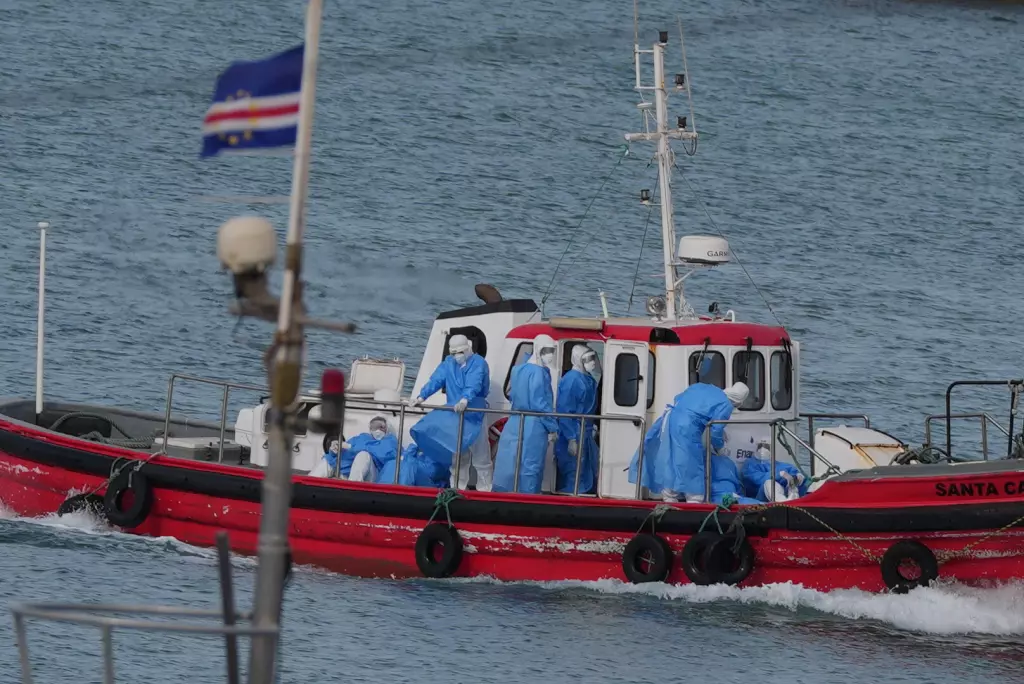
The MV Hondius, a Dutch-flagged cruise ship known for its expedition-style voyages, departed from the coast of Cape Verde on Wednesday and set course for Spain after international health agencies asked the country to manage the evacuation. The decision came after the hantavirus outbreak was confirmed onboard.
Cape Verde lacked the necessary infrastructure for an evacuation of this scale, leading the World Health Organization and the European Union to coordinate with Spanish authorities to take the lead. Spain’s strategic geography and well-developed health and emergency response systems made it the natural choice.
The Outbreak by the Numbers
According to the World Health Organization, eight people aboard the MV Hondius have fallen ill, with three of them losing their lives. Among the deceased are a Dutch couple and a German national. Six of the affected individuals have been confirmed to be infected with hantavirus, while two others remain suspected cases.
The numbers, while small, carry serious weight because of the rare and dangerous nature of the Andes hantavirus strain. In most hantavirus cases, the virus is transmitted through contact with infected rodents or their droppings. The Andes virus is notable for being the only strain capable of person-to-person transmission, which has made global health authorities particularly cautious.
Plans for Crew and Onward Voyage
Once the evacuation is complete, the MV Hondius will not remain in Spain. According to Spain’s Health Minister Monica Garcia, all passengers and 17 crew members will be evacuated, while 30 crew members will stay onboard to assist in transferring the ship to the Netherlands. Once it arrives there, the vessel will undergo a full and thorough disinfection.
The luggage of all evacuated passengers, as well as the body of a deceased passenger still onboard, will remain on the ship during the journey to the Netherlands. This is part of the broader strategy to prevent any potential further spread of the virus.
Order of Evacuation Carefully Coordinated
The evacuation process has been carefully structured to maintain order and reduce health risks. Spanish citizens will disembark first, followed by other European groups based on the readiness of each country’s evacuation aircraft. To minimize unnecessary contact, citizens will not be allowed to disembark until their respective evacuation planes are ready to depart for their home countries.
This step-by-step plan is designed to maintain proper isolation, allow for medical screening, and reduce the chance of confusion among hundreds of passengers from multiple nations. Health checks will accompany the evacuation, ensuring that anyone showing symptoms receives immediate medical attention.
Health Officials Stress Public Calm
Despite the seriousness of the outbreak, health officials, including representatives from the World Health Organization and European public health agencies, have emphasized that the broader public remains at low risk. The outbreak appears to be confined to those who were aboard the MV Hondius or in close contact with affected individuals.
Passengers who disembarked at earlier stops, such as St Helena, are also being contacted for health monitoring. Several countries, including the United States, are tracking citizens who returned home before the outbreak became widely known, instructing them to watch for symptoms and seek medical attention if they feel unwell.
Why Hantavirus Remains a Serious Concern
Hantavirus infections are uncommon in humans, but they can be deadly. Fatality rates vary widely between strains, ranging from 1 percent to as high as 50 percent in some cases. There is no specific cure for hantavirus, which means early medical care is critical to improving survival outcomes.
Symptoms typically begin with flu-like signs such as fever, fatigue, muscle aches, and headaches, but can quickly progress to severe respiratory or kidney issues. Because early symptoms can resemble many ordinary illnesses, anyone with a possible exposure is being urged to seek immediate medical care rather than waiting for symptoms to worsen.
A Global Coordination Test
The MV Hondius situation has become one of the most complex modern examples of international health coordination at sea. Different governments, multiple health agencies, customs authorities, port officials, airline operators, and public communication teams must all work in sync to make the evacuation succeed.
The smooth involvement of agencies from Germany, France, Belgium, Ireland, the Netherlands, the United Kingdom, the United States, the European Union, and the World Health Organization shows how seriously the outbreak is being treated. Even though most of the world is unaffected, the coordinated response reflects the precaution required when dealing with a virus capable of spreading between humans.
Why This Outbreak Stands Out
Cruise ships have long been recognized as environments where viruses can spread rapidly. Shared dining areas, tightly packed cabins, and close social interactions create ideal conditions for outbreaks. While most cruise ship outbreaks involve gastrointestinal illnesses or respiratory viruses, the appearance of hantavirus, particularly the Andes strain, is highly unusual.
Investigators are working to determine how the virus first entered the ship. Likely possibilities include rodent contact during a port stop or contamination through supplies brought onboard. Understanding the entry point will be essential to preventing future incidents.
A Stressful but Hopeful Final Stretch
For passengers and crew aboard the MV Hondius, the next 48 hours will be filled with uncertainty, medical screening, and complex logistics. They have spent days at sea waiting for clarity, and arrival in Tenerife will mark a major turning point for them.
Once evacuation begins, families across Europe and beyond will finally have the relief of seeing their loved ones safely home. The combined effort of multiple nations, health agencies, and emergency responders should ensure that the operation proceeds as smoothly as possible.
A Defining Moment in Cruise Ship Outbreak Response
The hantavirus cruise ship evacuation will likely be remembered as a defining moment in modern cruise ship outbreak response. Its scale, urgency, and international cooperation showcase how the world handles emerging health threats at sea. As the ship prepares to anchor near Tenerife, all eyes are on the coordinated effort to protect lives, contain the virus, and bring clarity to a situation that has unfolded with surprising speed.
If everything goes as planned, the operation could become a model for future emergencies, demonstrating how quickly nations can act when health, safety, and human lives are on the line.
Author