Israel Approves Death Penalty and Public Trials for October 7 Attackers Under Historic New Law
Israel death penalty October 7 legislation has officially become law, marking one of the most significant legal moves in the country’s modern history. The newly passed bill allows for capital punishment and public trials for those accused of participating in the unprecedented Hamas-led attacks of October 7, 2023, which became the deadliest single day in Israel’s history.
Knesset Passes Landmark Legislation
Israel’s parliament, the Knesset, approved the new law with a striking vote of 93 to 0. The remaining 27 lawmakers were either absent or chose to abstain. What made the vote particularly notable was the unusual cooperation between government and opposition politicians, who jointly sponsored the bill — a rare display of political unity in Israel’s deeply divided legislature.
The law establishes a specialized legal framework to prosecute individuals directly involved in the attacks. It applies particularly to members of the Nukhba unit of the al-Qassam Brigades, the elite force within Hamas’s military wing, who were captured inside Israel during and after the October 7 assault.
A Message of Sovereign Justice
Co-sponsor Yulia Malinovsky, an opposition politician, framed the legislation as a defining moment for Israeli sovereignty. Speaking at a press conference before the vote, she said the law would allow the world to witness Israel holding the perpetrators accountable in full view.
She added that the country had reached “the finish line” — though she described it more accurately as a new starting point for historic trials that the entire world would observe. For many lawmakers, the moment carried emotional and symbolic weight, comparable to landmark trials of the past.
Comparisons to the Eichmann Trial
Supporters of the new law have drawn comparisons to the 1962 trial of Nazi war criminal Adolf Eichmann, who remains the only person ever executed by an Israeli civil court. They argue that the upcoming trials will carry similar historic significance, both for the victims and for Israel’s national identity.
The defendants are expected to face a wide range of serious charges, including:
- Terrorism
- Murder
- Sexual violence
- Genocide
A conviction for genocide will carry the death penalty under the new law. Trials will be held before a special military court in Jerusalem, operating under unique rules different from those of standard criminal proceedings. Key moments — including opening statements, verdicts, and sentencing — will be filmed and broadcast on a dedicated website to ensure maximum public visibility.
The Horror of October 7
The October 7, 2023 attack remains a deep national wound for Israel. Hamas-led fighters killed more than 1,200 people in southern Israel, the vast majority of them civilians. Another 251 individuals — including men, women, children, and foreign nationals — were taken hostage and held in captivity inside the Gaza Strip.
The assault triggered the deadliest war in Gaza’s history. According to Gaza’s Hamas-run Health Ministry, 72,740 people have been killed, with the majority being women, children, and the elderly.
Why a New Law Was Needed
In March, Israel’s parliament had already passed the Death Penalty for Terrorists Law, targeting Palestinians convicted of terrorism. However, that law did not apply retroactively, meaning separate legislation was required to address those involved in the October 7 attacks. The new bill closes that legal gap and ensures that captured attackers can face the harshest possible penalties.
Voices of the Victims’ Families
Families of those killed and taken hostage played an active role in shaping the legislation. Carmit Palty Katzir, whose brother Elad was taken hostage from Kibbutz Nir Oz and killed in captivity, participated in parliamentary discussions to protect victims’ rights. Her father Rami was killed in the attack, and her mother Hana was taken hostage before later being released.
Palty Katzir told Israeli army radio that the trauma of October 7 has not ended for many families. She emphasized that countless relatives still lack answers about how their loved ones died and what happened during their final moments.
Human Rights Concerns
Despite overwhelming political support, the law has sparked serious criticism from Israeli human rights organizations. Their main concerns include:
- Opposition to capital punishment on principle
- Risk of “show trials” lacking proper due process
- Use of confessions allegedly obtained through torture
- Possibility of trials proceeding without defendants present
- Lower evidentiary standards in the special military court
Sari Bashi, executive director of the Public Committee Against Torture in Israel, warned that coalition members openly anticipate mass executions resulting from the trials. She said Palestinian detainees suspected of involvement in October 7 have reportedly faced systematic and widespread torture. According to her, convictions and executions based on such confessions would be deeply unjust.
Bashi acknowledged that those responsible for attacking civilians must be held accountable but insisted they deserve fair trials — and that the death penalty should never be considered.
Government Defends the Process
The Israeli government has firmly denied allegations of widespread torture, insisting it follows international legal standards. Justice Minister Yariv Levin described the preparation of the special legal framework as “work of an enormous and unprecedented scale.”
According to Levin, investigators reviewed thousands of hours of video footage, examined extensive evidence, and interrogated captured attackers. All video and audio documentation will eventually be preserved in the State Archives for historical record.
Detentions and Ongoing Tensions
Israel’s Prison Service currently holds 1,283 people classified as “unlawful combatants” without formal charges. The vast majority are from Gaza. Additionally, between 300 and 400 Gazans are reportedly held as criminal defendants suspected of participating in the October 7 attacks.
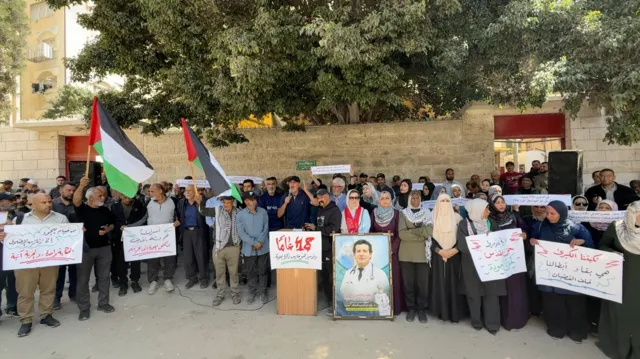
Meanwhile, families in Gaza continue searching for missing relatives. A small protest took place outside the International Committee of the Red Cross headquarters in Gaza City, where families voiced fear and frustration. Hisham al-Wahad, brother of missing journalist Haitham al-Wahad, described the law as cruel and called for international action against it.
A Divided Public Reaction
Although Israel has long functioned as a de facto abolitionist state, public opinion has been shifting. Recent polls show growing support among Jewish Israelis for the death penalty — especially for Nukhba fighters convicted of terrorism. Surveys also reveal strong public demand for an independent inquiry into how the attacks unfolded, though the current government has committed only to a government-led investigation.
Many bereaved Israeli families argue that justice cannot stop at trying the attackers alone. As Carmit Palty Katzir noted, accountability must also extend to those responsible for the failures that allowed the tragedy to happen. For Israel, the new law represents both a long-awaited step toward justice and the beginning of a difficult national reckoning that is far from over.
Author