Starmer EU Reset Faces Political Reality: A Risky Push After Labour’s Local Election Defeat
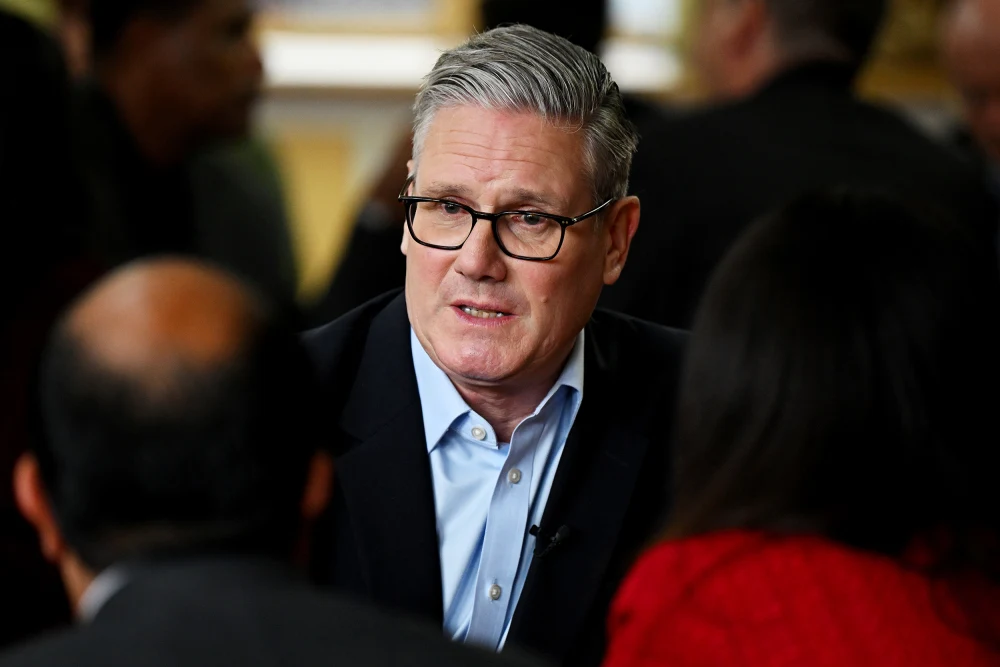
The Starmer EU Reset is shaping up to be one of the most politically delicate moves of his time in Downing Street. As Prime Minister Keir Starmer prepares for a major summit with the European Union in July, he is promising what he calls a “new direction for Britain.” Yet the political ground beneath him is shifting fast, and the timing could hardly be more difficult.
A Decade After Brexit, the Divide Still Runs Deep
Next month marks ten years since the United Kingdom voted to leave the EU, but the country remains divided in ways that continue to shape every major political moment. Last week’s local elections made that painfully clear for the governing Labour Party.
The results revealed a party pulled apart from two directions. Younger, urban, pro-EU voters, especially in London and university towns, drifted toward the Green Party. Meanwhile, traditional Labour heartlands, including parts of Wales, Scotland, and the north of England, saw significant defections to Reform UK, the party founded by long-time Brexit voice Nigel Farage.
In other words, Labour is bleeding support on both flanks at the same time, which is a nightmare scenario for any prime minister, especially one trying to recalibrate the country’s relationship with Brussels.
Starmer’s Pitch: Closer Ties, But Not Too Close
Fighting to steady his premiership, Starmer is leaning into a message of renewal. He has framed his approach as a rejection of the previous Conservative government’s confrontational stance with Europe.
“The last government was defined by breaking our relationship with Europe,” he said. “This Labour government will be defined by rebuilding our relationship with Europe.” His pitch is built around economic strength, trade, and defence cooperation, with Britain positioned “at the heart of Europe.”
The problem is that this kind of language is unlikely to win back voters in places like Sunderland, St Helens, or Barnsley, all former Labour-controlled councils that swung to Reform last week. For many of these communities, “rebuilding ties with Europe” sounds suspiciously like reopening a debate they thought was settled.
What Does a Reset Actually Mean?
For businesses and investors, the most pressing question is what Starmer means by rebuilding the relationship in practice. So far, the signals point toward a measured, limited reset rather than a sweeping reversal.
In his speech, Starmer talked about rejoining Erasmus, the EU programme that funds educational and training placements across the continent. He spoke of an “ambitious youth experience scheme” that would allow young Britons to study, work, and live in EU countries again.
But notably, he stopped well short of touching the bigger red lines. There is no plan to:
- Restore freedom of movement between the UK and EU
- Rejoin the single market
- Rejoin the customs union
That cautious stance is more conservative than many in his own party would prefer. London Mayor Sadiq Khan has openly called for Britain to rejoin the EU. Greater Manchester Mayor Andy Burnham, widely seen as a future Labour leadership contender even without a seat in Parliament, has voiced similar ambitions.
The Dynamic Alignment Strategy
Rather than chasing full membership or a major treaty overhaul, the government appears to be settling on a quieter path known in Whitehall circles as “dynamic alignment.” In simple terms, this means matching certain EU rules where it is convenient, without re-entering the bloc’s structures.
At the July summit, Starmer is expected to push for:
- A deal that gradually removes border checks on plant and animal products, in exchange for aligning with EU food standards
- A renewed effort to exempt British firms from the EU’s Carbon Border Adjustment Mechanism, a sticking point that has remained unresolved
- British participation in the EU’s internal electricity market
The King’s Speech is also expected to include legislation reflecting parts of this gradual reset. It is steady, incremental, and very much in Starmer’s style.
A Tough Sell on Both Sides
Even a modest reset is far from guaranteed to succeed. Negotiations over Britain’s potential involvement in the EU’s 140 billion euro Security Action for Europe fund, worth roughly 164 billion dollars, have already shown how complicated even narrow agreements can become.
There are also political risks at every turn. Brexit-supporting newspapers and politicians are watching closely for any sign that Britain is being pulled back into Brussels’ orbit, while pro-EU voters, particularly younger ones, see anything less than rejoining as inadequate. The result is a political squeeze with very little room to manoeuvre.
A Quiet Approach in a Loud Political Moment
Starmer’s entire premiership has been defined by this kind of cautious, step-by-step style. He prefers steady recalibration over bold leaps, and there is little indication he intends to change course now, even as his grip on power looks increasingly uncertain.
Whether that approach will be enough to satisfy markets, businesses, and a divided electorate is the question hanging over the July summit. A successful reset could bring genuine economic gains, smoother trade, and stronger ties with key European partners. A clumsy one could deepen the splits within Labour and accelerate the rise of Reform.
For now, Starmer is walking a very narrow line: trying to bring Britain closer to Europe without saying the word “rejoin,” while hoping voters on both sides of the Brexit divide give him just enough room to make it work.
— Inspired by reporting from Ian King
Author