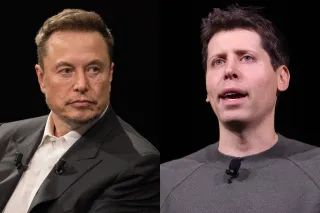
Sam Altman Pushes Back Against Elon Musk in Federal Court Testimony Over OpenAI Lawsuit
Sam Altman Pushes Back firmly against Elon Musk’s accusations in federal court this week, marking one of the most closely watched moments in the ongoing legal battle between the OpenAI co-founder and the company he once helped launch. On Tuesday, the OpenAI CEO took the witness stand, offered a detailed defence of his leadership, and addressed concerns about how the company evolved from its early nonprofit roots into one of the most valuable AI businesses in the world.
A High-Stakes Trial Drawing Global Attention
The trial, now entering its second week, has quickly become one of the defining tech industry stories of the year. Musk, who departed OpenAI years ago and has since launched his own AI company, is suing the organisation along with Altman personally. His central claim is that OpenAI strayed from its original mission as a neutral nonprofit and instead transformed into a profit-driven enterprise.
The lawsuit has cracked open a rare public window into how OpenAI operates, how its leaders make decisions, and how key figures interact behind the scenes.
Altman Defends His Role and Vision
Throughout his testimony, Altman pushed back on what he described as a misrepresentation of OpenAI’s evolution. He laid out the reasoning behind structural changes, the pressures of building one of the world’s most advanced AI systems, and the decisions that have shaped the company’s direction in recent years.
He also addressed his prior reservations about Musk’s past ambitions inside OpenAI. According to Altman, he had been deeply uncomfortable with the idea of Musk being named CEO of the company. Court documents and previous reporting have suggested that this internal disagreement contributed to the eventual fracture between the two figures.
For supporters of Altman, his testimony came across as composed, articulate, and willing to engage difficult questions head-on. For critics, it raised new debates about transparency and accountability at the very top of the AI industry.
Difficult Questions Around Trust and Disclosure
The cross-examination did not let Altman off easy. Musk’s legal team pressed him on long-standing allegations that he had not been fully transparent with OpenAI’s board and senior executives over the years. The questions touched on what board members were told, what they were not, and whether key decisions were properly disclosed.
These claims have been part of the broader narrative around OpenAI for some time, especially after the dramatic boardroom shake-up in 2023 that briefly removed Altman from his position before he was reinstated days later. The fallout from those events continues to ripple through the case.
A Rare Inside Look at OpenAI
One of the more fascinating outcomes of the trial has been the depth of detail being revealed about OpenAI’s internal world. The legal proceedings have opened up insights into the working relationships between some of the company’s most influential figures, including:
- Sam Altman, CEO of OpenAI
- Greg Brockman, OpenAI’s president
- Mira Murati, former chief technology officer
- Shivon Zilis, former board member and mother of four of Musk’s children
- Elon Musk himself, who remains both a former insider and current rival
For an industry that often operates behind closed doors, this level of disclosure is rare. Court records, depositions, and exhibits have already revealed conversations and decision points that the public would never normally see.
A Personal and Professional Battle
What makes the case so unusual is how deeply intertwined the personal and professional dimensions have become. Musk and Altman were once collaborators, even close partners in launching OpenAI together. Today, they sit on opposite sides of a courtroom dispute that could shape how nonprofit-to-for-profit transitions are treated in the AI industry for years to come.
The presence of Shivon Zilis on the witness list, along with the recent commentary around Musk’s growing AI ambitions through his own company, adds another layer of complexity. The case is not just about money or governance. It is about the cultural and philosophical direction of the most important technology of the decade.
Trump’s China Trip Adds to the Tech Industry Spotlight
The court drama is unfolding at the same moment that another major tech-related story is dominating headlines. President Trump is currently in the middle of a high-profile visit to China, and he is being accompanied by some of the biggest names in American technology.
The president’s delegation includes:
- Elon Musk, CEO of Tesla
- Tim Cook, CEO of Apple
- Jensen Huang, CEO of Nvidia, who was added as a surprise inclusion to the group
Musk’s simultaneous presence in Beijing and his ongoing legal fight with OpenAI back in the United States is striking. It captures just how globally influential he remains, even as legal questions continue to swirl around him.
Cerebras IPO Could Be the Biggest of 2026
While the courtroom and the Beijing summit grab most of the attention, another major AI story is brewing on Wall Street. The AI chipmaker Cerebras is preparing for what could become the largest IPO of 2026.
According to a Bloomberg report, the company filed updated paperwork on Monday that raised its IPO size significantly. The new structure includes:
- An expanded offering of 30 million shares
- A target of raising up to 4.8 billion dollars
- Plans for an upsized public debut later this week
Cerebras already counts major industry players among its customers, including Amazon and, notably, OpenAI itself. The company’s upcoming public market debut is likely to be a major event for the entire AI hardware sector.
Why This Moment Matters for the AI Industry
When you step back, the events of this week paint a remarkable picture. The CEO of OpenAI is defending himself in federal court. Musk is suing one of the most powerful AI companies in the world while also flying to China alongside the president. A major AI chipmaker is preparing for one of the year’s biggest IPOs. And all of this is happening as the global AI race continues to intensify.
The outcome of the OpenAI lawsuit could shape several long-term questions, including:
- How AI companies are governed
- How transparent leadership must be with boards and stakeholders
- Whether nonprofit-to-for-profit shifts will face stricter scrutiny
- How early commitments and missions are weighed in court
- How influential individual leaders should be allowed to become inside critical AI organisations
These questions will affect not only OpenAI but the entire industry for years to come.
A Trial That Continues to Grow in Significance
As the trial moves into its next phase, Altman’s testimony has become a central moment in the broader legal story. His willingness to push back against Musk’s accusations and defend OpenAI’s evolution signals that the company intends to fight this battle aggressively.
Whether the court ultimately sides with Musk or supports OpenAI’s position, the trial has already accomplished something significant. It has pulled back the curtain on one of the most secretive and consequential companies of our time and revealed the deeply personal stakes that come with leading the AI revolution.
For the AI industry, the rest of this trial may shape not only how a single company moves forward, but how the entire ecosystem evolves in the years ahead.
Author