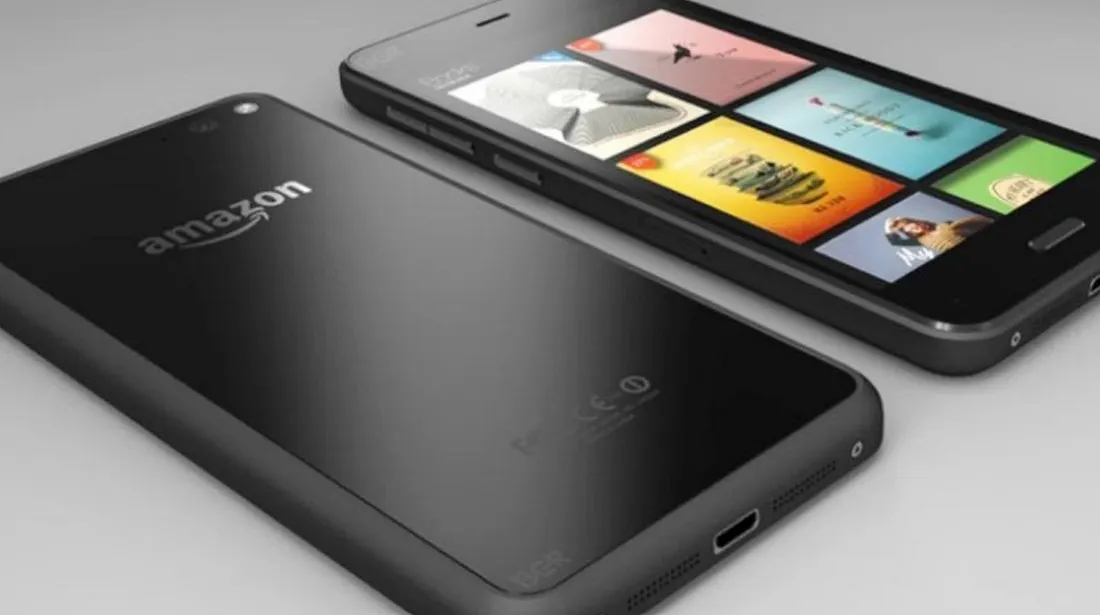
Amazon Fire Phone Sequel Rumors Shut Down by Devices Chief Panos Panay
Amazon Fire Phone Sequel speculation has been firmly put to rest. Earlier this year, reports circulated suggesting that Amazon was preparing to take another swing at the smartphone market, more than a decade after its first attempt famously crashed and burned. According to a new interview with the company’s devices chief, Panos Panay, those rumours are not based in reality. Amazon is not making another phone, although Panay does hint that the very idea of what a phone is may be evolving in interesting new directions.
Panos Panay Sets the Record Straight
In a recent interview, Panay made his position very clear. Amazon is not, in his words, “necessarily going after a phone.” That single line effectively shut down a flurry of online buzz that had picked up earlier in the year, when reports surfaced suggesting that Amazon might be quietly working on a sequel to its long-buried Fire Phone.
The clarity from Panay is noteworthy for two reasons. First, he is one of the most respected names in consumer device development, having previously led the Surface product line at Microsoft. Second, his comments suggest a more thoughtful strategy at play, one that focuses less on building yet another smartphone and more on rethinking what a personal AI-driven device could look like in the years to come.
Amazon Is Watching the Phone Evolve, Not Trying to Reinvent It
Even though Panay denied plans for another phone, he was careful not to write off mobile technology entirely. He acknowledged that smartphones are clearly transforming, especially as AI features become more central to how people use them.
Some of the key points from his comments include:
- Amazon has no current plans to build another smartphone
- The traditional phone form factor is not going away anytime soon
- AI-powered devices may eventually blur the line between phones and other personal gadgets
- The future of mobile is being shaped by intelligence, not just hardware
It is a measured stance, and it reflects the broader industry conversation. As companies like Google push deeper into AI-driven smartphones, the definition of a “phone” is becoming more fluid. Panay clearly wants Amazon to focus on that emerging shift rather than spend resources trying to compete head-to-head with Apple, Samsung, or Google.
The Fire Phone Still Haunts Amazon
To really understand why Amazon is treading so carefully, you have to look back at the original Fire Phone, which launched in 2014. It was Amazon’s big, ambitious attempt to break into the smartphone market, and it became one of the most well-known product failures in modern tech history.
The Fire Phone had some interesting hardware ideas. It launched at $649, a flagship-tier price for its time, though it was still cheaper than the absolute top-of-the-line offerings from Apple or Samsung. It also featured a quirky design touch: four IR cameras positioned in each corner of the display.
Those cameras were meant to:
- Detect when the user was picking up the phone
- Power Amazon’s “dynamic perspective” 3D-like interface
- Automatically wake the screen when needed
While interesting in theory, similar functionality had already been delivered using much smaller sensors on devices like the Motorola Droid Turbo. As a result, the Fire Phone’s thick bezels and unique camera array did not bring as much innovation as Amazon hoped.
Hardware Was Not the Real Problem
Looking back, the hardware was not Amazon’s biggest issue with the Fire Phone. The real downfall was the software. The Fire Phone ran a customised version of Android that lacked something most users at the time saw as absolutely essential: access to the Google Play Store and Google’s suite of apps.
For an Android-based device, that was a huge omission.
Some of the major software issues included:
- No access to the Google Play Store
- No support for Google services like Gmail, Maps, and YouTube
- A limited Amazon App Store with a far smaller library
- A user experience that felt incomplete compared to mainstream Android devices
It was a deeply frustrating situation for users who picked up the phone expecting a more standard Android experience. Without core apps and services, the Fire Phone simply could not compete in everyday usability.
A Painful Commercial Disaster
The lack of strong software support quickly translated into poor consumer interest. The Fire Phone was sold exclusively through AT&T in the United States, and that exclusivity quickly became more of a burden than a benefit.
Just six weeks after launch:
- The Fire Phone’s price dropped to 99 cents on a two-year contract
- An unlocked version was being offered at just $199
That kind of price slashing within such a short window made it painfully obvious that the product was not selling. The drop was not a strategic move. It was a damage-control measure.
Amazon eventually announced a $170 million write-off tied to the Fire Phone, recorded as part of its quarterly earnings. For a device that essentially failed within two months, the financial loss was a major one and the reputational damage stuck around for years.
Why Amazon Is Being So Careful Now
Given that history, it makes complete sense that Panay is being deliberate about not entering the smartphone market again, at least not in the traditional sense. The lessons from the Fire Phone era continue to shape Amazon’s product strategy. Instead of trying to compete with established giants on familiar ground, the company appears to be eyeing the next major shift in personal technology.
That shift is being driven by AI. With major players developing more agentic and intelligent devices, the future of the smartphone is no longer just about screens, cameras, and processors. It is about how seamlessly an intelligent assistant can support a person across daily tasks.
Amazon, of course, has been deeply invested in AI for years through Alexa. Its expertise in voice-driven and ambient computing places it in a unique position to influence the next generation of personal devices, even if it never builds a traditional phone again.
The New Future of Personal Devices
Panay’s comments hint at a broader vision. The phone, in his view, is going through a transformation rather than disappearing. AI is becoming the defining feature of personal technology, and the device categories of the future may not look exactly like the smartphones consumers know today.
Some likely directions this transformation might take include:
- AI-first wearables that act as personal assistants
- Smart glasses with deep AI integration
- Voice-driven gadgets that reduce reliance on screens
- Devices that blend smartphone functions with home automation
Amazon already has a strong presence in many of these categories, especially in the smart home space. If the company decides to take its next major mobile leap, it may very well happen in a category that does not even fully exist yet.
A More Mature Amazon Strategy
What stands out most about Panay’s remarks is the maturity of Amazon’s current approach. The company appears to have learned from the Fire Phone era and is now choosing innovation over imitation. Rather than try to play catch-up with Apple and Samsung, Amazon seems to be focused on building products where it can actually lead.
That is a wise position for a company with so many existing strengths in cloud computing, AI, and connected devices.
The Final Word: No Sequel Coming, but a New Era Is Possible
For fans hoping for a Fire Phone comeback, the answer is clear. It is not happening. But Amazon is far from done with personal technology. The company is watching closely as smartphones evolve into more intelligent, more interconnected, and increasingly AI-driven devices.
Whether Amazon eventually re-enters this space with something completely new remains to be seen. What is certain is that the company has no intention of repeating the mistakes of 2014. Instead of trying to build another phone, Amazon is positioning itself to play a meaningful role in whatever comes next.
Author