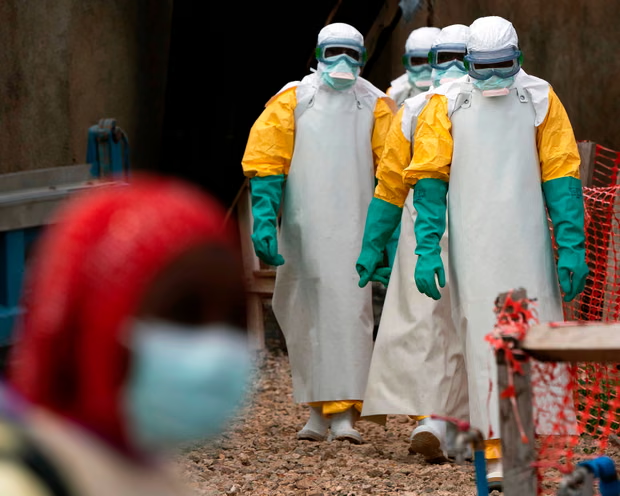
Ebola Outbreak in Congo 2026: New Strain Sparks Global Health Concern
A fresh Ebola outbreak in Congo has alarmed health authorities across Africa, with at least 65 deaths reported among nearly 250 suspected cases in the Democratic Republic of Congo’s Ituri province. The Africa Centers for Disease Control and Prevention (Africa CDC) confirmed the development on Friday, May 15, signaling what could become one of the region’s most challenging health emergencies in recent years.
Urgent Cross-Border Response Underway
In response to the rapidly evolving situation, the Africa CDC announced it would hold an emergency meeting with officials from Congo, Uganda, and South Sudan, along with international health partners. The goal is to tighten cross-border monitoring, strengthen preparedness, and coordinate a unified response before the virus spreads further.
Most of the reported deaths and suspected infections have been concentrated in the Mongwalu and Rwampara health zones. Four fatalities have been linked to laboratory-confirmed cases, while additional suspected infections have surfaced in Bunia, the provincial capital. Health officials remain especially cautious due to the dense population and frequent movement of people in these regions.
A Different Strain Raises New Challenges
Preliminary investigations suggest this outbreak may not be caused by the familiar Zaire strain that has driven nearly every previous Ebola event in Congo. Genetic sequencing is currently underway to identify the exact variant.
Jean-Jacques Muyembe, the renowned Congolese virologist who co-discovered Ebola and now leads the National Institute for Biomedical Research in Kinshasa, shared with Reuters that 15 of Congo’s 16 prior outbreaks were tied to the Zaire strain. A new variant, he warned, could significantly complicate containment, since most existing vaccines and therapeutics were specifically built to combat the Zaire form of the virus.
At present, no cases linked to this latest outbreak have been reported in the United States. The U.S. CDC also confirmed earlier this year that no infections were connected to a separate 2025 outbreak.
Why This Outbreak Is Especially Dangerous
The Africa CDC has flagged several factors that increase the risk of wider transmission:
- The urban setting of Bunia and Rwampara, which encourages rapid person-to-person spread
- High population mobility tied to artisanal and commercial mining
- Proximity to neighboring countries such as Uganda and South Sudan
- Ongoing humanitarian crises that strain local health infrastructure
This marks the 17th Ebola outbreak in Congo since the disease was first identified in the country in 1976. The previous outbreak, located in Kasai province, was officially declared over on December 1 after a three-month battle that resulted in 45 deaths out of 64 cases.
Understanding How Ebola Spreads
Contrary to common assumptions, Ebola is not transmitted through the air. It spreads primarily through direct contact with bodily fluids of an infected person, contaminated surfaces, or items such as needles and clothing. The virus can also pass on through deceased patients during burial practices, as well as from infected wildlife including fruit bats and primates.
This is why outbreaks often expand quickly within families, healthcare facilities, and tightly knit communities where physical contact is unavoidable.
Recognizing Ebola Symptoms
Ebola is known for attacking nearly every organ system in the body, often progressing rapidly once symptoms appear. The CDC notes that signs may emerge anywhere from 2 to 21 days after exposure and typically unfold in distinct stages.
Early symptoms (around five days after exposure):
- Skin rash
- Sore throat
- Chest discomfort
- Fatigue
Mid-stage symptoms (8 to 12 days):
- High fever
- Loss of appetite
- Red eyes
- Blood in stool
Advanced symptoms (around 10 days or later):
- Seizures
- Shortness of breath
- Confusion
- Internal bleeding
Without timely treatment, Ebola can be fatal in up to 90% of cases.
How Ebola Is Treated
Treatment for Ebola focuses on supportive care, including intravenous fluids, blood pressure stabilization, and medications to manage pain, fever, vomiting, and diarrhea. The FDA has approved targeted therapies and a vaccine, but these are effective only against the Zaire strain and are administered under strict medical guidelines.
The vaccine is currently recommended for individuals at elevated risk, such as healthcare workers and laboratory personnel handling samples. With a possible new strain at the center of this outbreak, scientists are concerned existing tools may offer limited protection.
Ituri’s Crisis Within a Crisis
The timing of this Ebola outbreak in Congo could not be worse. Ituri province is already grappling with intense militia violence that has claimed numerous civilian lives in recent weeks. According to Médecins Sans Frontières, many local health facilities are either overwhelmed or completely non-functional.
Displaced communities are living in poor sanitary conditions, dramatically increasing the risk of infectious disease outbreaks. The combination of armed conflict, fragile healthcare, and a potentially new viral strain creates a perfect storm that global health agencies are racing to control.
What Lies Ahead
While health teams move quickly to investigate, contain, and respond, the international community is watching closely. The success of this response will depend on coordinated surveillance, swift identification of the strain, and protection of frontline health workers in one of the most challenging environments in the world.
For now, residents in affected zones are being urged to practice strict hygiene, avoid contact with sick individuals, and report symptoms early — small steps that could mean the difference between containment and catastrophe.
Author