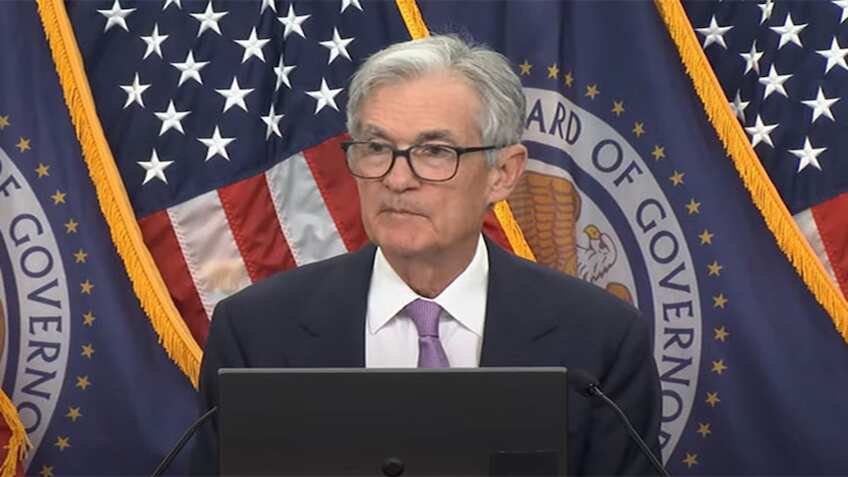
A sharp move in bond yields reset Fed rate-cut odds this week, delivering a blunt welcome message to incoming Federal Reserve Chair Kevin Warsh. Just as Warsh prepares to push for lower interest rates — a goal closely aligned with President Donald Trump’s repeated demands — bond traders are signaling that the math may no longer add up.
Key Takeaways
- Bond traders increasingly believe inflation could force the Fed to raise rates, even as political pressure pushes for cuts.
- Rising energy costs tied to the Iran war are fueling inflation and unsettling the bond market.
- Analysts say bond yields now feel “unhinged,” sharply complicating Warsh’s plans to ease monetary policy.
A Rough Welcome for the New Fed Chair
Warsh, recently confirmed by the Senate, inherits a far trickier environment than he might have hoped. While the stock market has been climbing toward fresh highs, the bond market is flashing caution. Traders have spent months bracing for inflation risks ever since the Iran war began earlier this year, and that preparation now includes a once-unthinkable scenario: the Fed may need to hike rates rather than cut them.
The shift shows up clearly in the numbers. According to the CME Group’s FedWatch Tool, the probability of a quarter-point rate hike this year climbed to 50% on May 15, up from 40% just a day earlier. Fed funds futures, meanwhile, are pricing in no cuts at all for the rest of the year.
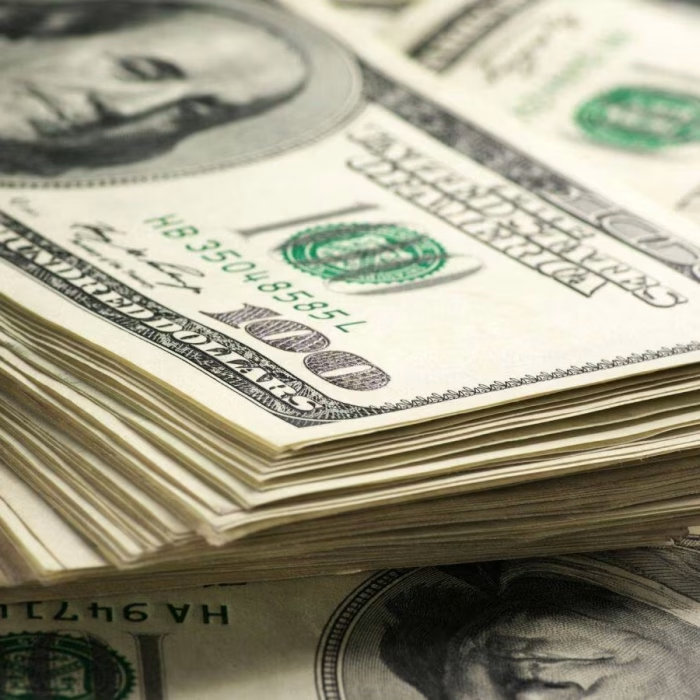
Treasury yields tell a similar story. The 30-year yield pushed past the 5% mark this week — its highest level in nearly a year. The benchmark 10-year yield surged to around 4.6%, while the two-year yield rose above 4% for the first time in roughly 11 months.
As Angelo Kourkafas, senior global investment strategist at Edward Jones, explained, risk appetite is being dampened by a worldwide climb in bond yields, driven by inflation fears, expectations of central-bank tightening, and concern over government debt as nations try to absorb the shock of higher energy prices.
Inflation Data Spooks the Market
The renewed inflation worries are not abstract. Since the Iran war began, American households — especially those on lower or fixed incomes — have felt the pinch of higher gasoline and utility bills. Businesses, in turn, have passed some of those rising energy costs on to consumers.
The data has been alarming. The April Producer Price Index jumped 6% year over year, the steepest increase since 2022. The April Consumer Price Index, released on 13 May, came in hot at 3.8% annually — the highest reading since the post-pandemic recovery in 2023, and enough to outpace workers’ wage growth for the first time in three years.
Other figures reinforced the picture:
- Headline CPI rose 0.6% from March, while core CPI (excluding food and energy) climbed 0.4%.
- Energy prices soared 17.9% year over year, with gasoline up 28.4% and fuel oil up a striking 54.3%.
- The Fed’s preferred gauge, the Personal Consumption Expenditures index, accelerated as well — headline PCE reached 3.5% and core PCE hit 3.2%, both well above the Fed’s 2% target.
At the same time, the labour market has stayed resilient. Despite the energy-driven strain, U.S. employers added more jobs than expected for a second straight month, and the unemployment rate held steady at 4.3% in April.
The Fed’s Balancing Act
This is where Warsh’s challenge becomes genuinely difficult. The Fed operates under a dual mandate from Congress: to pursue maximum employment and stable prices.
Lower interest rates tend to support hiring and economic activity, but they also risk feeding inflation — potentially triggering an inflationary spiral. Higher rates cool prices, but they raise borrowing costs and can weaken the job market. A strong labour market alongside hot inflation leaves little obvious room to cut.
Will Inflation Settle Down?
Much depends on whether current inflation proves temporary. Tony Welch, chief investment officer at SignatureFD, said the inflation narrative has clearly shifted. What was once a tailwind for markets, he noted, has turned into a neutral factor at best and a budding headwind at worst. The crucial question, in his view, is whether inflation eases as energy markets stabilise — or spreads more deeply into wages and consumer behaviour.
For now, the Federal Open Market Committee has kept the benchmark federal funds rate steady at 3.50% to 3.75%. Several regional Fed presidents have openly raised the possibility of hikes. Warsh will chair his first FOMC meeting on 18–19 June, where he must decide whether to attempt a cut or extend the pause.
Yields “A Bit Unhinged”
The bond market’s message has been hard to ignore. Economist Ed Yardeni, president of Yardeni Research, said investors believe the Fed has fallen behind on inflation just as Warsh takes the helm. He pointed to the two-year Treasury yield trading above the federal funds rate — a sign markets think current policy is too loose to contain inflation. Yardeni said traders are now hoping the June meeting tilts toward tighter policy rather than easing.
SocGen’s Subadra Rajappa was even more direct, warning that the energy-driven inflation surge will make it far harder for Warsh to deliver the lower rates he and Trump have championed. She said she was growing concerned because bond yields genuinely feel as though they are becoming “a bit unhinged,” urging closer attention to the signals the bond market is sending.
There are stakes for equities, too. Lori Calvasina of RBC Capital Markets cautioned that bullish calls on stocks could be tested if the 10-year yield reaches 5% — a level that typically compresses price-to-earnings ratios.
The Bottom Line
Warsh steps into the role hoping to lower rates, but the bond market has effectively reset the odds against him. With inflation running hot, energy costs elevated, and yields climbing, his first major decision in June may be far more constrained than he — or the White House — would like.
Note: Market figures and rate probabilities cited here reflect mid-May 2026 conditions and can change quickly. This is general information, not financial advice.
Author