The LightInk solar-powered smartwatch is challenging one of the biggest frustrations in modern wearables: the daily charging routine. While most smartwatches today demand a trip to the charger every night, this unusual little device promises to keep ticking for the better part of a year before it needs a power top-up. And it manages this without sacrificing the features that make a smartwatch genuinely useful.
If you have ever forgotten to charge your watch and ended up wearing a dead screen on your wrist all day, the idea behind this gadget will probably sound appealing.
A Different Take on Solar-Powered Wearables
Watches that harvest energy from sunlight are not entirely new, but they remain a small corner of the market. The most familiar examples come from Garmin, with rugged models like the Fenix 8 leading the pack. On those devices, the solar cells are tucked almost invisibly into the display itself, so you would barely notice they exist unless someone pointed them out.
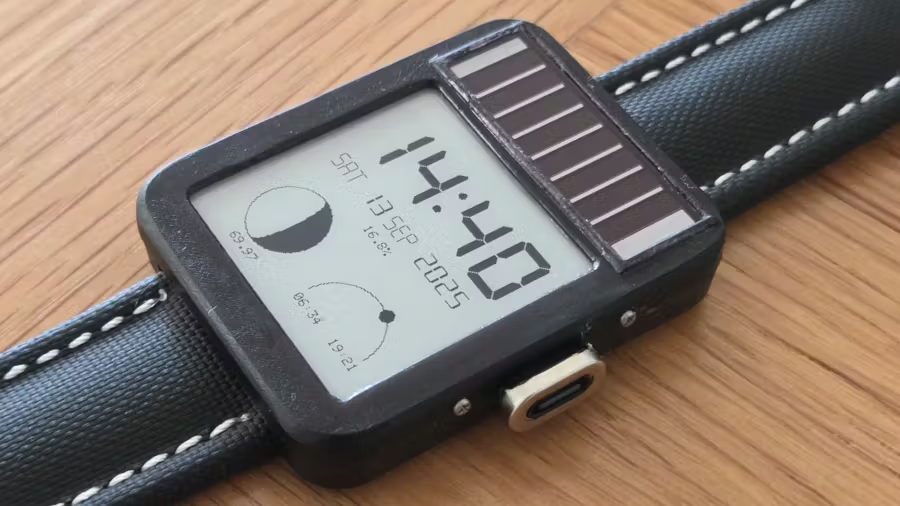
The LightInk takes the opposite route. Instead of hiding the solar panel, it puts it on full display as a distinct, visible component separate from the screen. It is a deliberate design choice — one that prioritizes function and transparency over a seamless, polished look.
But the bigger difference is not how the watch looks. It is how you get one.
This Is a Build-It-Yourself Project, Not a Store Purchase
Here is the catch: you cannot simply order a LightInk online and have it arrive in a box. This is a project born from the do-it-yourself maker community, and it lives on a public code repository rather than a retail shelf.
Anyone interested in owning one has to assemble it themselves. The creator has published a detailed guide to walk builders through the process, but it is not a casual weekend craft. To put a LightInk together, you will typically need to:
- Order a custom-made circuit board from a manufacturing service
- Have access to a 3D printer, either your own or through a paid service, to produce the casing and parts
- Be comfortable with soldering small electronic components
In other words, this watch rewards patience and a bit of technical skill. It is aimed squarely at hobbyists, tinkerers, and electronics enthusiasts rather than someone looking for a quick off-the-shelf upgrade. For the right person, though, building the device is half the appeal.
The Headline Feature: Up to 10 Months of Battery Life
The standout claim of the LightInk solar-powered smartwatch is its remarkable endurance. With a modest 100mAh battery — tiny by smartwatch standards — the device is designed to run for as long as 10 months between charges. Add the solar panel into the equation, and regular daylight exposure can stretch that figure even further.
So how does such a small battery last so long? The answer lies in smart trade-offs. The designers stripped out the power-hungry components that drain typical smartwatches and kept only what truly matters.
One notable omission is the accelerometer. Most smartwatches rely on this sensor for step counting and motion detection, but it constantly sips power. By leaving it out, the LightInk sacrifices fitness tracking in exchange for dramatically longer life. It is a clear example of the watch’s guiding philosophy: every feature has to earn its place in the power budget.
What the LightInk Can Actually Do
Despite its minimalist, efficiency-first approach, the LightInk is far from a bare-bones gadget. It packs in a surprising mix of capabilities, including a few that you will not even find on many mainstream smartwatches.
E-ink display. The watch uses an E Ink screen, the same low-power technology found in e-readers. It stays crisp and readable in bright sunlight — exactly when many glossy smartwatch displays wash out — and it draws almost no power to hold a static image.
Backlight for darkness. Because E-ink screens are not naturally lit, the LightInk includes a backlight so you can still check the time after sunset or in dim conditions.
LoRa connectivity. This is one of the more unusual inclusions. LoRa is a long-range, low-power wireless technology that can send small amounts of data over considerable distances. It is rarely seen in consumer wearables, making it a genuinely distinctive feature here.
Built-in GPS. The watch can track your location, a useful addition for outdoor activities, navigation, or simply logging where you have been.
A speaker. The LightInk also includes a speaker, opening the door to audible alerts and notifications.
This combination — especially the LoRa support — gives the watch character that mass-market devices often lack.
Sitting Between a Watch and a Smartwatch
For all its clever features, the LightInk does have one important gap: there is no companion smartphone app, at least not yet. That missing piece changes how the device fits into everyday use.
Without an app, the watch cannot easily mirror phone notifications, sync data, or be configured through a polished mobile interface the way commercial smartwatches do. As a result, the LightInk lands in an interesting middle ground — more capable than a traditional wristwatch, yet not quite a fully connected smartwatch either.
For some users, that is a limitation. For others, it is the entire point. A watch that does not constantly buzz with phone alerts, that you charge only twice a year, and that you assembled with your own hands has a quiet, deliberate kind of appeal.
Final Thoughts
The LightInk solar-powered smartwatch will not be for everyone, and it is not trying to be. It demands assembly, technical know-how, and a willingness to live without certain conveniences like fitness tracking and app integration.
What it offers in return is genuine novelty: months of battery life, a sunlight-friendly E-ink display, long-range LoRa communication, GPS, and the satisfaction of having built the thing yourself. In a market crowded with near-identical glass rectangles that all need nightly charging, a quirky, efficient, maker-built watch like this is a refreshing reminder that wearables can still be done differently.
If the project matures and gains a companion app down the line, it could become an even more compelling option for the DIY crowd. For now, it stands as a thoughtful experiment in how much a smartwatch can do while asking for almost nothing in return.
Author