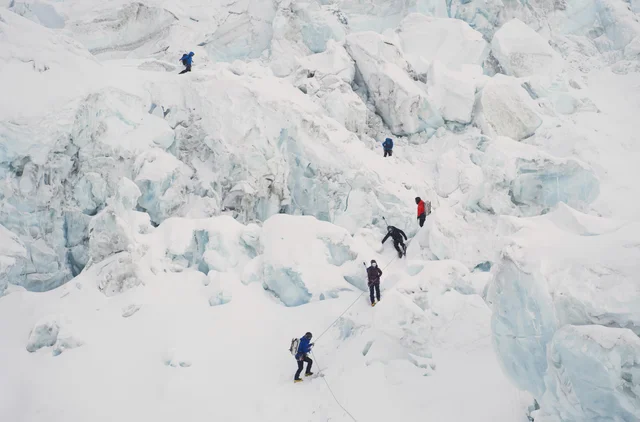
274 Climbers Summit Everest Nepal in Historic Single-Day Record
A record 274 climbers summit Everest Nepal in one day, marking a historic milestone for the world’s tallest mountain and one of the most remarkable moments of the 2026 climbing season. The achievement came on Wednesday after a delayed start to the spring climbing window, caused by a massive chunk of ice that had blocked the main route earlier in the season.
The day’s success has sparked global excitement, but it has also reignited important conversations about safety, overcrowding, and the increasing commercialization of the iconic 8,849-meter peak.
A Race Against Time and Weather
This year’s spring climbing season had been off to a sluggish start. A large ice block in the climbing route forced delays and adjustments, leaving climbers anxiously waiting for the right opportunity to make their summit push. When favorable weather finally arrived on Wednesday, mountaineers wasted no time.
According to Khimlal Gautam, an official from Nepal’s tourism department, the day’s climbs began as early as 3:00 a.m. local time and continued for 11 straight hours. The window allowed an unprecedented number of climbers to reach the top of Everest in a single day, surpassing the previous record of 223 climbers, which was set on May 22, 2019, also from Nepal’s southern side.
That same 2019 day saw another 113 climbers reach the summit through the northern route in Tibet. However, this year, China has closed that route to foreign climbers, putting even more pressure on the Nepal-side approach.
A Record-Breaking Year for Permits
The latest milestone comes amid a record-breaking surge in Everest permits issued for foreign climbers. Nearly 500 international mountaineers have been granted permission to attempt the climb this year, the highest figure ever recorded for the peak.
This increase comes despite a notable hike in permit fees. Since September last year:
- Climbing permits have increased to $15,000 per climber
- The previous fee was $11,000
- This is the first major fee increase in nearly a decade
- Most climbers also hire at least one Nepali guide, who does not require a permit
While higher costs were expected to slow demand, interest in Everest expeditions has continued to grow.
Safety Concerns and the “Death Zone”
The dramatic increase in climbers has reignited safety concerns. Recent photos circulating on social media show long lines of climbers stretching across the snow-covered slopes, particularly in the area known as the “death zone,” which lies above 8,000 meters.
At this altitude, conditions become extremely dangerous, with:
- Severely reduced oxygen levels
- Increased risk of altitude sickness
- Lower temperatures and harsh weather conditions
- Greater chance of fatigue, frostbite, and death
Most climbers rely on supplemental oxygen in the death zone, but even with bottled oxygen, experts strongly advise against staying in that area for more than 20 hours. Bottlenecks caused by overcrowding can dramatically increase risk, as climbers are forced to spend extra hours in dangerous conditions waiting their turn.
Expert Voices: Is Overcrowding Really the Problem?
Some industry leaders argue that the issue isn’t necessarily the number of climbers, but how the expeditions are managed. Lukas Furtenbach of Austria-based Furtenbach Adventures noted that as long as teams carry enough oxygen, large groups of climbers can be safely accommodated.
He pointed out that many mountains in the Alps see thousands of climbers reaching their summits each day. By comparison, he argued, 274 climbers on Everest is not a high number, considering that Everest is roughly ten times the size of those mountains.
Still, critics warn that Everest’s extreme altitude makes it fundamentally different from lower-altitude peaks, and that safety challenges are far harder to manage at such heights.
Veterans and Newcomers Made History
Wednesday’s record-setting day was just one of several remarkable moments from this year’s climbing season. The slopes of Everest have been packed with both seasoned legends and incredible new stories.
Some major highlights include:
- Kami Rita Sherpa, 56, breaking his own world record by climbing Everest for the 32nd time on Sunday
- Lhakpa Sherpa, 52, also known as the “Mountain Queen,” extending her own record for the most ascents by a female climber with her 11th summit
- Rustam Nabiev, a 34-year-old Russian double-leg amputee, reaching the summit on Thursday without the use of prosthetics
These extraordinary stories highlight how Everest continues to push the limits of human determination and resilience.
A Season Marked by Tragedy as Well
Despite the celebrations, this climbing season has also been marred by tragedy. Several climbers lost their lives during their attempts, underscoring the risks that come with mountaineering at such extreme altitudes.
Among those who died this season:
- Bijay Ghimere, 35, became the first mountaineer from Nepal’s underprivileged Hindu Dalit community to summit Everest. He reportedly suffered from altitude sickness on his descent.
- Phura Gyaljen Sherpa, 21, slipped on snow and fell into a crevasse near Camp 3 on Monday.
- Lakpa Dendi Sherpa, 51, a veteran guide, died on his way to Base Camp on May 3.
These losses serve as painful reminders that even with the best gear, training, and weather conditions, Everest remains one of the most unforgiving environments on Earth.
The Bigger Picture
The 2026 Everest season highlights a complex reality. Climbing the world’s tallest mountain has become more accessible, more documented, and more diverse than ever before. Yet that accessibility comes with serious challenges, including:
- Increased traffic in dangerous high-altitude zones
- Greater pressure on guides, especially Sherpa teams
- Environmental concerns from large expeditions
- Rising costs that still don’t seem to slow down demand
- A growing need for stricter regulations and safety standards
As Everest’s popularity continues to soar, the conversation around how to manage the mountain responsibly becomes more urgent.
Final Thoughts
The fact that 274 climbers summit Everest Nepal in a single day marks one of the most remarkable achievements in modern mountaineering history. It celebrates human ambition, teamwork, and determination, while also raising critical questions about safety, sustainability, and the future of climbing the world’s tallest peak. As more people aim for the top of Everest each year, balancing dream with responsibility will be the next great challenge for the mountain itself.
Author