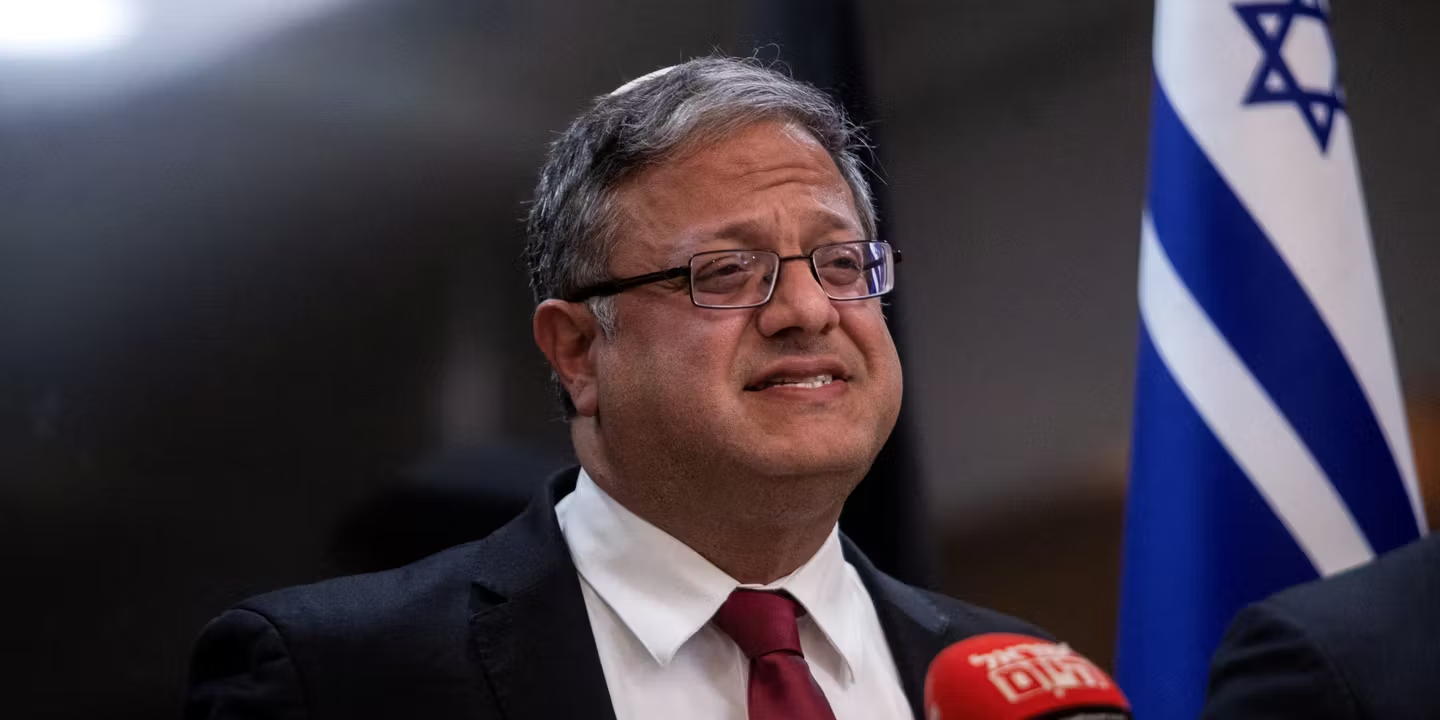
Ben-Gvir France Travel Ban 2026: Israel’s Far-Right Minister Barred After Gaza Flotilla Outrage
The Ben-Gvir France Travel Ban has emerged as one of the most striking diplomatic actions of 2026, signaling growing international tension surrounding Israel’s handling of the recent Gaza humanitarian flotilla incident. France’s decision to officially bar Israel’s far-right police minister Itamar Ben-Gvir from entering its territory has shaken political circles across Europe and beyond. As governments around the world condemn his behavior, France’s bold step is now being mirrored by calls for broader European Union sanctions against the controversial minister.
France’s Surprise Diplomatic Move
The announcement came from France’s Foreign Minister Jean-Noel Barrot, who confirmed the travel ban in a statement posted on social media. He made it clear that Ben-Gvir is no longer welcome on French soil and emphasized that this decision was a direct result of his recent conduct.
Barrot did not stop there. He also publicly called on the European Union to introduce sanctions against Ben-Gvir, joining his Italian counterpart in pushing for stronger collective action. The move reflects mounting frustration among European leaders who have grown increasingly uncomfortable with the policies and statements coming out of Israel’s hardline political camp.
What Triggered the Ban
The travel ban followed a wave of international outrage caused by Ben-Gvir himself. Earlier in the week, he posted a video on social media in which he could be seen taunting activists from a humanitarian flotilla heading to Gaza. The activists had been intercepted by the Israeli navy while attempting to deliver aid to the besieged territory.
In the video, Ben-Gvir appeared to mock the detained activists who were pinned to the ground. The clip quickly went viral, drawing condemnation from political leaders, human rights groups, and citizens across multiple continents.
Some of the activists later alleged that they had been physically mistreated, and in some cases, even assaulted during their detention. While the Israeli prison service has denied these allegations, the controversy has only deepened.
Outrage From Across the Globe
Reactions to Ben-Gvir’s behavior have not been limited to Europe. Even his usual political allies expressed discomfort with his actions. Notably:
- Prime Minister Benjamin Netanyahu publicly rebuked Ben-Gvir, stating that his actions did not reflect Israel’s values
- The United States, Israel’s strongest international ally, also criticized the minister’s conduct
- Multiple humanitarian organizations called for accountability
- European nations expressed concern over the treatment of the flotilla activists
- Calls grew for international investigations into the incident
The sharp rebuke from Netanyahu was particularly notable, as Ben-Gvir is part of his own coalition government. The internal criticism highlights just how politically isolated Ben-Gvir has become in this moment.
Who Is Itamar Ben-Gvir?
Ben-Gvir is one of the most polarizing figures in Israeli politics. As Israel’s national security minister, he leads policing operations, oversees civil security, and plays a major role in shaping internal security policies. His positions have often been described as hardline, and he has previously been accused of making provocative statements and pushing aggressive policies that have drawn international concern.
Some of the most controversial aspects of his political career include:
- Frequent public confrontations with critics
- Tough rhetoric on security, sometimes drawing accusations of inflammatory language
- Strong involvement in policy debates concerning Palestinians
- A history of provocative actions, including high-profile visits to politically sensitive sites
- A growing reputation as one of the most far-right voices in Israeli leadership
His critics argue that his political style has made it harder for Israel to navigate diplomatic relationships, especially with Western allies who already face pressure over the ongoing situation in Gaza.
The Flotilla Incident Explained
The flotilla at the center of the controversy was intended to deliver humanitarian aid to Gaza. The activists aboard had been on a high-profile mission designed to draw attention to the humanitarian situation in the region. International law experts had been closely monitoring the journey, particularly because the ships were intercepted in international waters by the Israeli navy.
After being detained, the activists were brought to Israel and eventually deported. The episode raised several concerns, including:
- The legality of intercepting vessels in international waters
- The treatment of activists during their detention
- The political messaging around humanitarian missions
- The role of governments in protecting their citizens during such missions
- The broader human rights situation in Gaza
The video posted by Ben-Gvir transformed an already tense situation into a global diplomatic flashpoint, leading directly to France’s strong response.
A New Era of Diplomatic Pressure?
France’s decision to ban Ben-Gvir could mark a turning point in how Western nations respond to controversial Israeli officials. Several European countries have privately expressed concern over the direction of Israeli policy under the current government, but few have taken official actions like this.
The move sets a precedent. By introducing a personal travel ban and pushing for EU-wide sanctions, France has signaled that it is willing to take individual action against Israeli officials whose behavior crosses what European governments consider acceptable lines.
If the EU follows France’s call, the implications could be significant. Potential outcomes include:
- New restrictions on Israeli ministers traveling within Europe
- Increased pressure on Israel to address human rights concerns
- A broader European reassessment of its diplomatic ties with Israel
- More vocal criticism of hardline figures in the Israeli government
- Growing scrutiny of Israel’s handling of humanitarian missions
While Israel remains a key ally to many European nations, these latest developments suggest that some Western governments are reaching their limits when it comes to ignoring controversial behavior.
Ben-Gvir’s Response
A spokesperson for Ben-Gvir did not immediately respond to requests for comment regarding the French decision. However, given his history of public confrontation, many analysts expect him to push back forcefully against the ban.
In the past, Ben-Gvir has often used moments of international criticism to reinforce his political messaging at home, presenting himself as a defender of Israel against outside pressure. Whether that strategy will work this time, especially with Netanyahu himself rebuking him, remains uncertain.
Implications for Israel-France Relations
The Ben-Gvir France Travel Ban will undoubtedly affect the broader relationship between France and Israel. While the two nations have historically enjoyed strong diplomatic ties, recent tensions over the Gaza conflict and humanitarian operations have placed strain on the relationship.
Major issues that could shape future relations include:
- Increased European demand for transparency in Israeli military and police actions
- Ongoing debate over humanitarian aid for Gaza
- Calls for accountability and reforms in Israeli detention practices
- Diplomatic disagreements about the management of activist missions
- Concerns about how Israel’s far-right ministers shape national policy
France has made clear that it expects accountability and dignified treatment of detainees, regardless of political circumstances.
Final Thoughts
The Ben-Gvir France Travel Ban marks one of the most significant diplomatic actions Europe has taken against an Israeli official in recent years. Sparked by a viral video, fueled by allegations of mistreatment, and reinforced by international outrage, the decision underscores a growing willingness among Western nations to push back against controversial behavior at the highest levels of government.
As the world watches to see if the European Union will follow France’s lead, the situation also highlights the delicate balance between diplomacy, human rights, and political accountability. For Israel, the controversy presents an opportunity for reflection. For Ben-Gvir, the ban represents an unprecedented diplomatic setback. And for the international community, it serves as a reminder that words and actions on the global stage always carry consequences.
Author