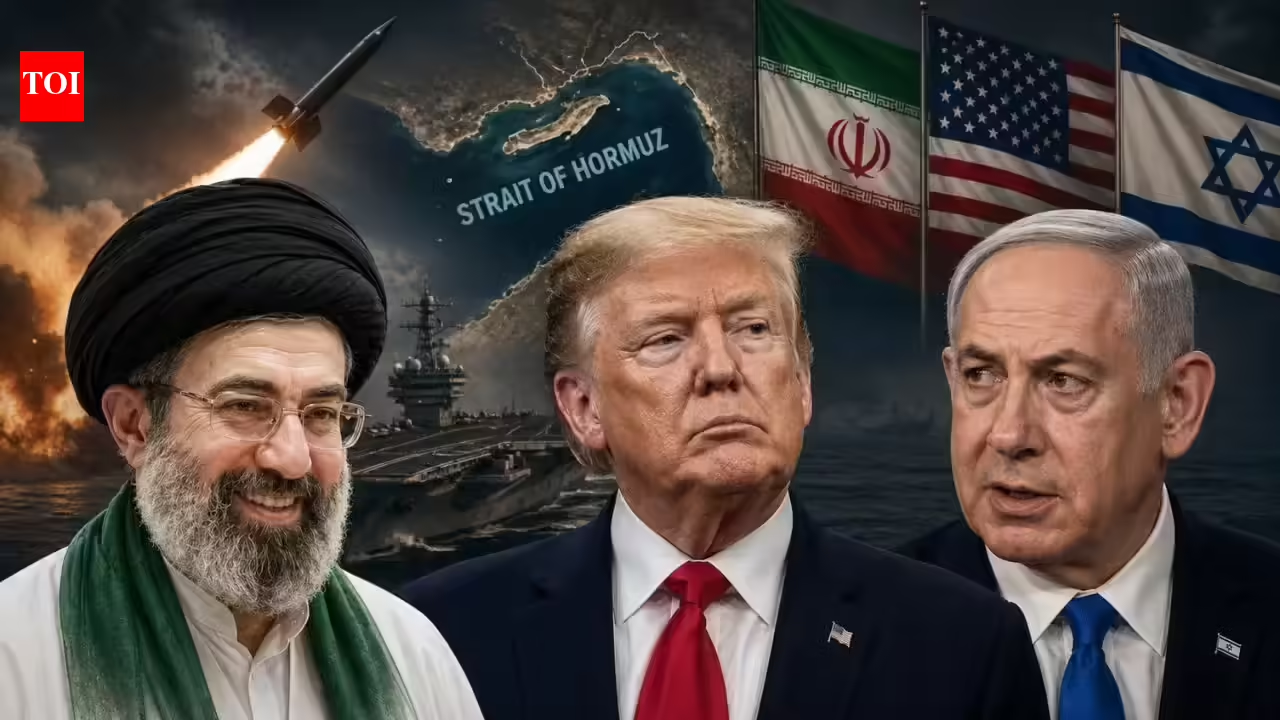
US Iran Ceasefire Deal Could Reshape Middle East Tensions
A potential US Iran ceasefire deal is taking shape, and if finalized, it could mark one of the most significant diplomatic shifts in the Middle East in years. According to a senior US administration official, both nations have crafted a memorandum of understanding that would extend the current ceasefire by 60 days while negotiators work toward a permanent agreement to end the war. As part of this framework, the long-blocked Strait of Hormuz would be demined and reopened, a move with major implications for global trade and energy markets.
But while the news has sparked cautious optimism, nothing is set in stone just yet.
Where Things Stand Right Now
As of Sunday, no formal agreement has been signed between the two governments. The senior US official confirmed that while the framework has been developed, the level of binding commitment behind it is still uncertain.
A diplomat familiar with the negotiations explained that the proposal is currently awaiting approval from the Iranian side. Once signed, the agreement would set off a chain of significant actions.
Under the proposed memorandum of understanding, Iran would:
- Immediately reopen the Strait of Hormuz
- Take steps to restore prewar shipping conditions within 30 days
- Join the US and its allies in declaring an end to all active military operations, including in Lebanon
- Reaffirm that it will never develop nuclear weapons
- Agree to dispose of its enriched uranium stockpile through a mutually agreed method
These steps, if implemented, would represent a sweeping change in regional dynamics, both militarily and economically.
Trump Pushes Back on Speculation
President Donald Trump weighed in on the unfolding situation through his Truth Social platform on Sunday evening. He cautioned that the deal “isn’t even fully negotiated yet” and warned the public not to rush to conclusions.
Trump dismissed critics, insisting that he does not “make bad deals” and emphasizing that no one outside the negotiations truly knows what the final agreement will look like. Earlier in the day, he had said discussions were moving forward in an orderly and productive manner.
He also encouraged his negotiators to take their time and avoid pushing the process too quickly. According to Trump, time is on the US side, and he stressed that getting the agreement right matters more than getting it done fast. He also reaffirmed the administration’s firm stance that Iran cannot, under any circumstances, develop or acquire nuclear weapons.
A Phased Reopening of the Strait
One of the most closely watched aspects of the deal is the reopening of the Strait of Hormuz, which has been a major chokepoint for global oil shipments during the conflict. According to an Iranian official familiar with the talks, the reopening will happen in stages, not all at once.
In the first phase, several key things would happen:
- The United States would release approximately $12 billion in frozen Iranian assets
- Minesweeping operations would begin in the strait
- The US naval blockade would be lifted
The Iranian official emphasized that the current memorandum does not yet include a finalized nuclear agreement. Instead, it commits both sides to negotiate the nuclear issue separately. More details, including a possible formal announcement, may come as early as Monday.
The Nuclear Question Remains Central
For the United States, the nuclear issue is non-negotiable. The senior US administration official explained that the memorandum of understanding commits Iran to giving up its “nuclear dust,” a reference to its stockpiles of highly enriched uranium. Over the coming two months, both sides will work out the mechanism for safely disposing of those stockpiles.
According to officials, the approach is best described as “trust but verify on steroids.” That means Iran won’t get the release of frozen funds or wider sanctions relief until it begins delivering on its commitments. As one official put it bluntly, Iran “gets nothing until they deliver.”
What This Means for Global Energy Markets
The Strait of Hormuz handles a significant share of the world’s oil exports. Its closure during the conflict has rattled global energy markets and pushed prices higher for consumers around the world. If shipping returns to prewar conditions within 30 days as planned, the impact could be substantial.
US officials are framing the deal as a win for everyday Americans, particularly when it comes to fuel prices. The senior official suggested that reopening the strait would bring “relief to American families at the pump.”
A few likely effects of the reopening could include:
- A drop in global crude oil prices
- More stable shipping routes through the Gulf
- Lower gasoline prices in the US and other major economies
- A boost to international trade flow
- Reduced uncertainty for energy-dependent industries
Allies, Proxies, and Regional Stability
Beyond the economic and nuclear elements, the framework also addresses the broader military situation across the Middle East. According to the senior US official, the deal ensures that both sides, including the US and its allies as well as Iran and its proxies, will cease military operations in the region.
However, the agreement also guarantees Israel’s right to take action against any imminent threats. That clause reflects ongoing concerns about regional stability and the complex web of alliances and rivalries that have shaped this conflict.
Challenges That Could Derail the Deal
Despite the optimistic tone from negotiators, several hurdles remain. Until the Iranian government officially approves the memorandum, the deal exists more as a possibility than a guarantee. Past negotiations between the two countries have collapsed at the last minute over disagreements about verification, sanctions relief, and timelines.
Key uncertainties include:
- Whether Iran’s leadership will accept the current terms
- How disposal of enriched uranium will actually take place
- The pace of US sanctions relief
- Verification mechanisms for ongoing compliance
- The role of regional players such as Israel and Saudi Arabia
- Domestic political reactions in both countries
Looking Ahead
If the US Iran ceasefire deal moves forward as planned, it could be a turning point in one of the world’s most volatile conflicts. The 60-day extension would give both sides breathing room to hammer out the final details, while immediate steps like reopening the Strait of Hormuz could deliver real benefits to global markets right away.
Still, with the deal not yet signed and Trump himself urging caution, no one should assume the conflict is over. The next few days, and especially Monday’s expected announcement, will reveal whether this framework holds up under real-world pressure or becomes another missed opportunity in a long history of strained US-Iran relations.
For now, the world is watching closely, hoping that diplomacy can succeed where months of conflict could not.
Author