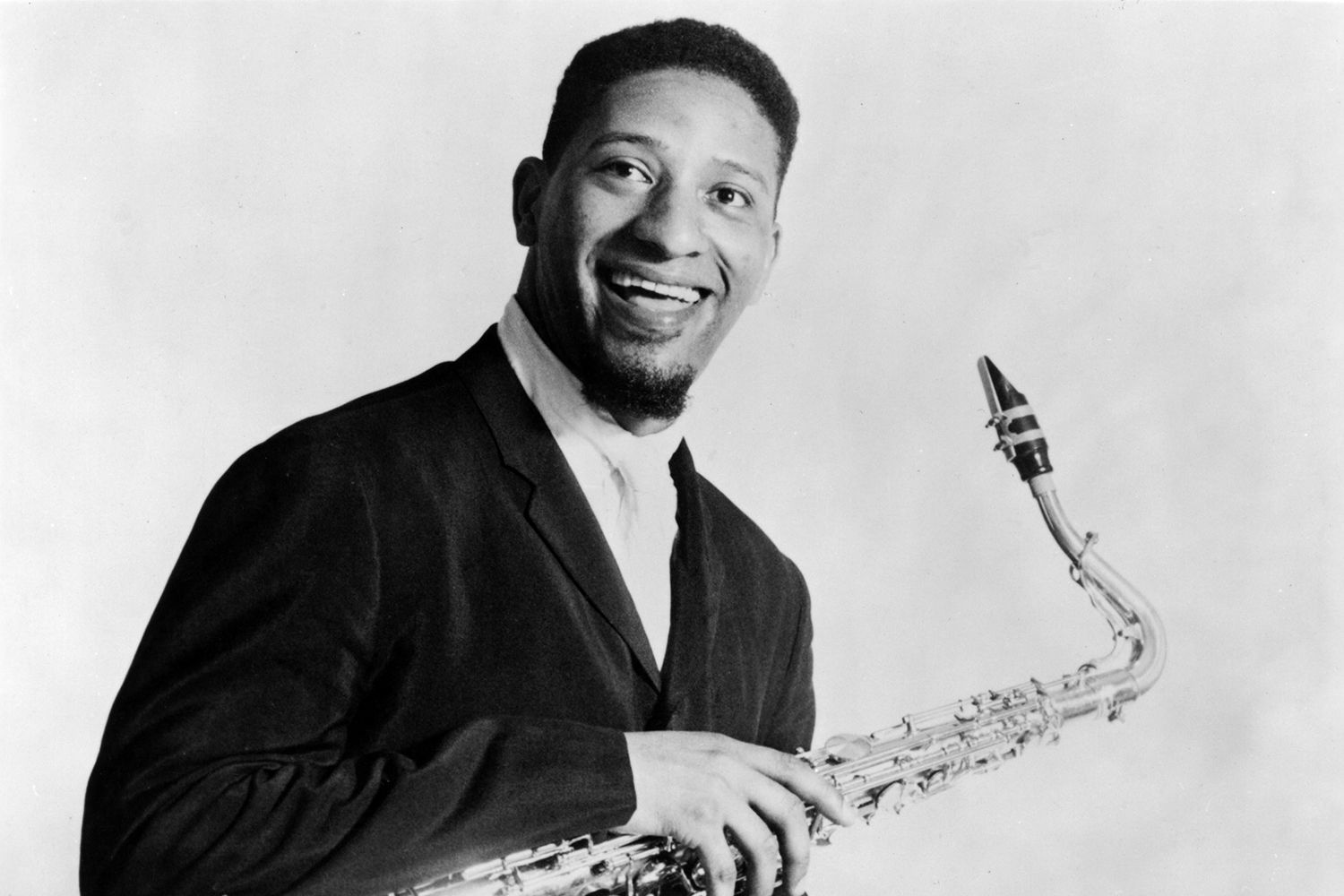
Sonny Rollins, the commanding tenor saxophonist whose imaginative phrasing and unmistakable sound helped shape modern jazz, has died at the age of 95. He passed away at his home in Woodstock, New York, with the news confirmed by his publicist, Terri Hinte. With his death, the music world loses one of its last great architects of the post-war jazz era.
A Singular Voice in a Genre Built on Originality
Even in a genre that celebrates individuality, Sonny Rollins stood apart. While many young saxophonists of the late 1940s leaned toward a soft, restrained tone, he chose a bold, full-bodied sound reminiscent of Coleman Hawkins, the pioneering force behind the tenor saxophone in jazz. His playing combined ferocity, wit, and unpredictability, refusing to be boxed into any one category.
He came of age during the rise of bebop, and while his music absorbed its harmonic depth and rhythmic complexity, calling him simply a bebop player would not do him justice. Over time he ventured into avant-garde experiments, jazz-rock fusion, and Caribbean-inspired sounds, all while maintaining a voice that was unmistakably his own.
As he once said, his music was too vast to fit a single label. He wanted every performance to feel new.
The Restless Pursuit of Perfection
Few musicians were as self-critical as Sonny Rollins. He often walked away from concerts and recordings convinced he could do better. While some critics noted that his on-stage inconsistency was unusual for an artist of his stature, fans saw this as proof of his honesty. He preferred risk over routine, choosing exploration over predictability.
In his words, real playing happened at a subconscious level, where clichés had no room to surface. When he was truly in the zone, his mind, he said, went completely blank.
Early Life and Rapid Rise
Born in Harlem on September 7, 1930, Rollins was the youngest of three children of parents from the Virgin Islands. Though he briefly considered a career in art, music quickly took over. By the time he was a teenager, he was already performing professionally. His first recordings came in 1949, and soon he was working with jazz royalty including Miles Davis, Thelonious Monk, and Bud Powell.
A struggle with heroin addiction nearly stalled his career in the early 1950s, but he overcame it by 1955. That same year he joined the Max Roach and Clifford Brown Quintet, a partnership that helped catapult him into national recognition.
The Year That Defined Him
The year 1956 became a turning point. Sonny Rollins released two albums that are now considered jazz cornerstones: Tenor Madness, featuring his only recorded session with John Coltrane, and Saxophone Colossus, a title that captured both his imposing physical presence and his rising influence.
Two tracks from Saxophone Colossus drew especially deep admiration. “Blue 7,” a creative blues improvisation, became the subject of a celebrated essay by composer Gunther Schuller. “St. Thomas,” based on a traditional West Indian melody, launched Rollins’ lifelong love affair with jazz-calypso fusion.
Stepping Away to Reinvent
By 1959, Rollins was hailed as one of jazz’s brightest new figures. Then, without warning, he disappeared. Convinced he wasn’t living up to his own standards, he spent months practicing alone, often atop the Williamsburg Bridge late at night, where the open acoustics felt right and no neighbors objected.
The mystery surrounding his absence only deepened his reputation as a perfectionist. When he returned in 1961 with a major RCA Victor contract, the jazz world treated his comeback as a headline event. His return album, fittingly titled The Bridge, captured both the moment and the myth.
Constant Reinvention
Throughout the 1960s, Rollins toured the world and worked with everyone from young experimentalists like trumpeter Don Cherry to his lifelong idol Coleman Hawkins. He even composed music for the 1966 British film Alfie. Then, once again, he stepped away.
Between 1966 and 1972, he traveled to Japan and India on what he described as a spiritual journey. When he resurfaced, he plunged back into recording with Sonny Rollins’ Next Album for the Milestone label, a partnership that would last over three decades.
His later experiments with electric instruments and rock-influenced rhythms attracted criticism, but Rollins remained unapologetic. He even contributed saxophone to three tracks on the Rolling Stones’ 1981 album Tattoo You, although he passed on touring with them.
Honors, Late Years, and Lasting Legacy
Despite mixed reviews during certain periods, Sonny Rollins enjoyed enormous success as a live performer. He credited his wife and longtime manager Lucille Rollins, who died in 2004, with much of his career stability.
He continued performing well into his seventies. In 2005 he launched his own record label, Doxy, releasing a celebrated series of live recordings. Honors came pouring in over the years, including two Grammy Awards, a Lifetime Achievement Grammy in 2004, the National Medal of Arts in 2011, a Kennedy Center Honor, and the Edward MacDowell Medal, making him the first jazz musician ever to receive it.
His archives were acquired in 2017 by the Schomburg Center for Research in Black Culture, and an ongoing campaign continues to push for the Williamsburg Bridge to be renamed in his honor.
After being diagnosed with pulmonary fibrosis, Rollins gave his final public performance in 2012. With the passing of Benny Golson in 2024, he became the last surviving musician from the famous 1958 Harlem photograph by Art Kane.
Reflecting on his retirement, Rollins said it was painful to stop playing, but he chose gratitude over sorrow, knowing he had been able to dedicate his entire life to music.
Author