Israel Killed Two Hamas Military Leaders This Month, But Can It Truly Change the Conflict?
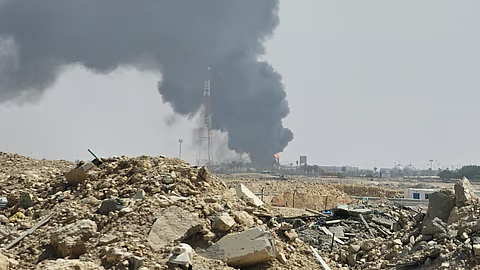
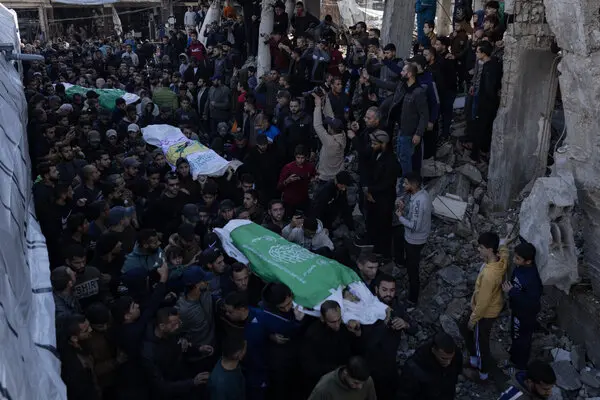
In a striking demonstration of military reach, the news that Israel killed two Hamas military leaders within the span of two weeks has reignited a long-running debate. Israel’s military eliminated both the head of Hamas’ military wing and the man who replaced him, marking the latest entries in a lengthy history of targeted killings aimed at senior militants.
Yet behind the operational success lies a more difficult question: do these killings actually change the trajectory of the conflict, or do they merely offer symbolic victories while leaving the deeper causes untouched?
Who Were the Targets?
The two men killed were identified as Mohammed Odeh and Izz al-Din al-Haddad, both described as architects of the October 7, 2023, attack on Israel that triggered the war in Gaza. Israeli officials framed their deaths as part of a broader campaign to pursue those responsible for that assault.
For Israel, reaching these figures represents a significant achievement. It signals the military’s capacity to penetrate Hamas’ leadership structure and strike at the very people who planned one of the most consequential attacks in the country’s recent history.
The Limits of Targeted Killings
Despite the tactical success, experts caution that eliminating leaders rarely resolves the fundamental issues driving a conflict. While such operations give leaders something concrete to brand as a victory, they seldom address the underlying grievances that fuel violence.
Nasser Khdour of the nonprofit ACLED, which tracks political violence and conflict worldwide, captured this tension. He acknowledged that killing military chiefs like Odeh and Haddad demonstrates Israel’s operational ability to reach Hamas’ leadership. However, he added that the killing of senior commanders is unlikely, on its own, to push Hamas toward disarmament or to make it accept the complete removal of its role in Gaza’s security and governance.
An Age-Old Tactic With Mixed Results
Israel has carried out dozens of targeted killings throughout its history, but the historical record suggests these operations often fail to break their targets. In many cases, Palestinian and Lebanese militant groups have not only endured the loss of top leaders but have grown even stronger.
Hezbollah offers a telling example. After an Israeli airstrike killed its then-leader Abbas Musawi in southern Lebanon in 1992, his replacement, Nasrallah, transformed the group into the region’s most powerful armed force. Under his leadership, Hezbollah fought Israel to a bloody stalemate in 2006.
The pattern has repeated across different groups and conflicts:
- Nasrallah and nearly all his deputies were killed in the 2024 war between Israel and Hezbollah, yet the group resumed missile and drone attacks on Israel just days after the current war began.
- Hamas has lost one leader after another, beginning with the 2004 airstrike that killed its founder and spiritual leader, Sheikh Ahmed Yassin. Nearly all the architects of the October 7 attack have since been killed, yet the group fights on.
Both organizations have persisted, sustained by decades-old grievances rooted in the broader Israeli-Palestinian conflict.
Lessons From America’s Experience
Israel is not alone in relying on this strategy. The United States has also turned to targeted killings against groups like al-Qaida and the Islamic State, taking out Osama bin Laden in a 2011 raid in Pakistan and IS founder Abu Bakr al-Baghdadi in 2019.
Both groups were ultimately diminished, but the lesson is instructive. Their decline came only after years of war involving ground forces, not through targeted killings alone. This underscores a key point: removing a leader may weaken an organization, but lasting defeat typically requires a far broader and more sustained effort.
The Question of Who Comes Next
One of the central risks of leadership killings is uncertainty about who fills the void. Yossi Kuperwasser, the former head of Israel’s military intelligence research division, offered a measured view, describing targeted killings as an effective tool but not a cure for all problems.
He explained that these operations, by themselves, don’t dramatically change an organization’s ability to cause damage or carry out attacks. Still, he maintained that weakening Israel’s enemies remains important. Across Gaza, Lebanon, and now Iran, he noted, Israel has eliminated dozens of figures, reshaping leadership structures in lasting ways.
The Iran war provides a vivid illustration. Targeted killings were a key strategy in its early days, with top military and political officials, reportedly up to Supreme Leader Ayatollah Ali Khamenei, killed in the opening salvos. According to Kuperwasser, Khamenei was replaced by his son, Mojtaba, who is viewed as even less willing to compromise.
Kuperwasser summed up the effect with a memorable distinction. While the killings hadn’t produced outright “regime change,” he said they had brought about a “change in regime,” noting that the people in power are no longer the same.
When Killing Leaders Backfires
Perhaps the most sobering concern is that targeted killings can actively make things worse. In numerous instances, they have radicalized followers, elevated more extreme successors, or turned slain leaders into martyrs whose influence outlasts their deaths.
Northeastern University political scientist Max Abrahms pointed to troubling data from Afghanistan, Pakistan, Israel, and the Palestinian territories, which shows that violence against civilians tends to spike after targeted killings.
He warned that leadership decapitation is inherently risky. When you remove a leader who preferred some degree of restraint and held influence over subordinates, he explained, there’s a strong chance that the leader’s death will give way to even more extreme tactics. In other words, the relatively moderate figure may be replaced by someone far more dangerous.
The Missing Ingredient: Political Strategy
If targeted killings alone cannot end a conflict, what can? Several experts point to the necessity of pairing military action with a coherent political plan.
Mohanad Hage Ali, deputy director of the Carnegie Middle East Center in Beirut, argued that targeted killings can create leadership vacuums and open the door to change, but only when accompanied by a clear political strategy. He cautioned that an organization can be decapitated or defeated militarily, yet if there is no political follow-through, the effort ultimately fails. He added that it’s hard to see how the current approach goes much further without that political dimension.
Weighing the Achievements Against the Reality
The killing of Odeh and Haddad represents a genuine accomplishment for Israel’s military and intelligence services. It demonstrates capability, delivers a sense of accountability for the October 7 attack, and removes experienced operatives from the battlefield.
But the broader historical and analytical picture tempers any expectation that these killings will fundamentally alter the conflict. Time and again, militant groups have absorbed such losses and continued, sometimes emerging more radical than before. The grievances that drive these movements run far deeper than any single leader.
What It All Means Going Forward
The fact that Israel killed two Hamas military leaders this month is significant, but it raises more questions than it answers. Will Hamas moderate or harden? Will new leaders prove more or less willing to negotiate? And crucially, will any military gains be matched by the kind of political strategy that experts say is essential for lasting change?
History suggests that without addressing the root causes of the conflict and following military action with serious political engagement, even the most successful targeted killings may amount to temporary setbacks for groups that have repeatedly proven their resilience.
For now, Israel has scored notable tactical victories. Whether those victories translate into meaningful, lasting change remains deeply uncertain, and that uncertainty lies at the heart of one of the region’s most enduring and tragic conflicts.
Author