Europe China Trade War Fears Grow as Cheap Imports Flood the Continent
The prospect of a Europe China trade war is moving from distant possibility toward pressing reality, as a wave of inexpensive Chinese goods threatens the continent’s manufacturing base. With imports surging and industries feeling the strain, European leaders are scrambling to find solutions, and the search has taken on a growing sense of urgency.
The shift in mood is striking. What was once cautious concern has hardened into something closer to alarm, as Europe confronts the possibility that its own industrial future may be at stake.
A Tone of Panic in Brussels
The intensity of European anxiety was captured vividly by Kaja Kallas, the EU’s top diplomat, who recently compared ending the continent’s dependence on China to curing a disease. She suggested that “chemotherapy” might be required, warning that the treatment would likely be painful.
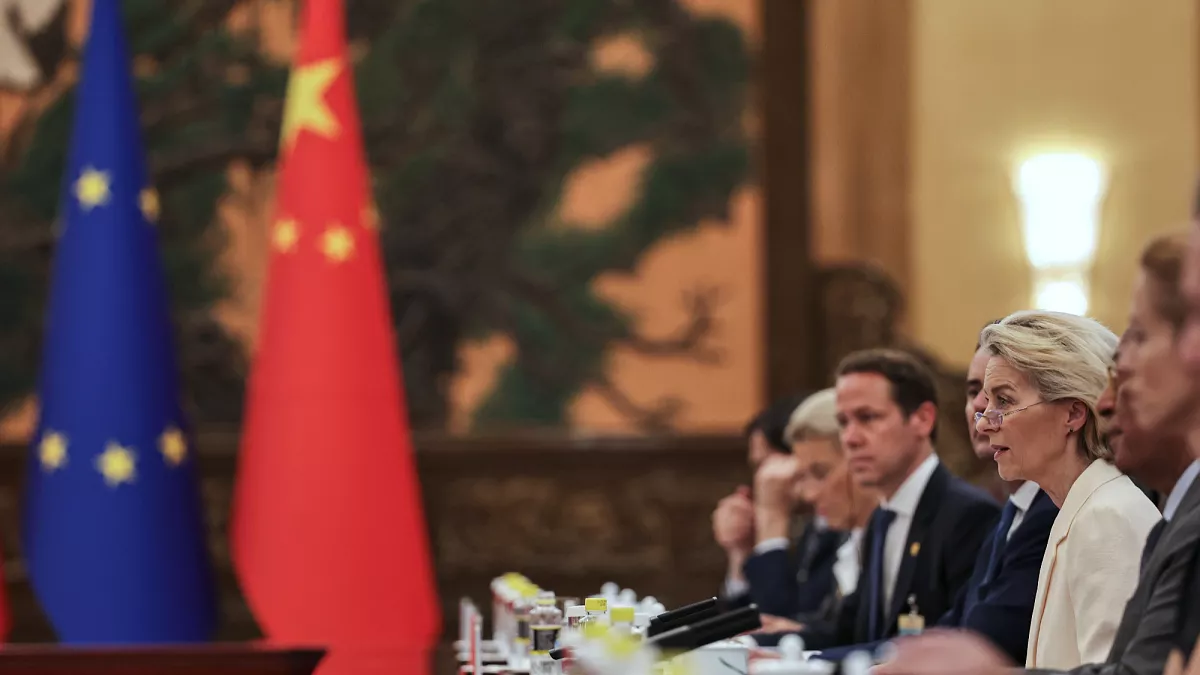
That kind of language reflects a broader hardening in Europe’s stance toward China, which ranks as the EU’s second-largest goods trading partner after the United States. As Beijing pursues more aggressive trade policies and Chinese imports pour into European markets, leaders and businesses alike are increasingly worried about their reliance on Chinese products.
The mood among experts is equally stark. Jeromin Zettelmeyer, director of the Brussels-based economic think tank Bruegel, described the prevailing sentiment as basically panic, pointing to a pervasive sense of imminent danger and the feared collapse of industry.
Beijing Responds With Hostility
Europe’s growing unease is being met with firm resistance in China. Officials in Beijing have warned that the country will retaliate against any protective measures Europe might adopt, setting the stage for an escalating confrontation.
The friction is expected to intensify in the weeks ahead, with several high-profile gatherings on the horizon:
- World leaders are set to discuss global economic imbalances at a Group of 7 meeting in Evian, France.
- China is then expected to feature on the agenda when the EU’s 27 top leaders convene shortly afterward.
- The EU’s executive arm is anticipated to hold an early debate on China policy that could shape the tone of these broader discussions.
Hope for Cooperation, but Tougher Tools Loom
European officials have not abandoned hope of working cooperatively with China to address the trade imbalances, which have grown more pronounced as Beijing ramps up exports to fuel its economic growth. At the same time, they are weighing more forceful trade and industrial measures to rein in China’s expanding dominance in sensitive sectors.
The challenge is formidable. Pulling back from China could prove deeply complicated for Europe for several reasons:
- Politicians and businesses fear retaliation from Beijing.
- Consumers have grown accustomed to affordable Chinese goods, particularly electric vehicles.
- The EU has already tried, without success, to stem the flood of Chinese EVs into its market.
Rebecca Arcesati of the Mercator Institute for China Studies summed up the predicament bluntly, saying Europe is not in a good place. She noted that European leaders must juggle the demands of voters and short-term political pressures, which makes countering the flow of Chinese goods difficult, especially if Beijing strikes back. As she put it, Europe’s systems were not designed to handle a challenge of this magnitude.
The Roots of China’s Manufacturing Edge
China’s dominant position did not emerge by accident. Government subsidies and targeted programs have bolstered the country’s factories and companies, giving them a competitive advantage.
Beijing leaned heavily on industry after a property crisis left policymakers searching for a new engine of growth. Compounding the effect, American tariffs made exporting to the United States more difficult for Chinese producers, prompting those factories to redirect their exports toward markets like Europe.
The numbers tell a dramatic story. In the first quarter of the year, imports from China into Europe jumped sharply. An analysis of customs data found that China’s trade imbalance with the EU reached record levels early in the year, driven largely by a surge of electric vehicles.
A Perfect Storm for European Carmakers
The timing created a particularly difficult situation for European manufacturers. Chinese carmakers, facing slumping demand at home, pushed aggressively into Europe just as European consumers were turning toward greener alternatives.
That consumer shift was accelerated by external events. The war in the Middle East drove up fuel prices, making electric vehicles more appealing to European buyers. The combined effect followed a goods trade deficit in 2025 of roughly $418 billion, based on EU figures.
The consequences threaten European manufacturers and their workers, especially in countries like Germany. Traditionally a powerhouse in car and chemical production, Germany now finds itself struggling to compete.
Harsher Rhetoric and Bolder Proposals
As concerns mount, Europe has responded with tougher talk and more ambitious ideas. French President Emmanuel Macron, a longtime China critic, has urged the EU to create measures protecting strategic industries, similar to tools the United States already employs.
Even leaders generally seen as more friendly toward Beijing have shifted. Spanish Prime Minister Pedro Sánchez, often viewed as one of Europe’s more China-friendly figures, said during a recent trip to Beijing that the continent needed China to open up so that Europe would not have to close itself off.
Spain initially joined France, Italy, Lithuania, and the Netherlands in preparing a paper urging the EU to respond aggressively, including with new trade tools. While the document did not name China directly, it criticized trading partners with what it called systemic and structural industrial overcapacity.
Brad Setser, an economist at the Council on Foreign Relations, observed that many European leaders must tread carefully with China out of fear of retaliation. However, he suggested their fear of manufacturing losses may eventually outweigh that caution, particularly in places like Germany.
Steps Already Underway
Europe has already begun taking protective action. One notable example is the EU’s proposed Industrial Accelerator Act, a sweeping policy aimed at rebuilding the bloc’s manufacturing base.
The plan’s design would effectively bar Chinese companies from benefiting from certain key subsidies, providing particular support to European-made electric vehicles. Predictably, Beijing has reacted with outrage, denouncing the plan as protectionist and warning of retaliation.
China’s Aggressive Trade Maneuvers
Ironically, China’s own increasingly assertive trade behavior has helped fuel the European backlash. Last year, Beijing twice prohibited exports of rare-earth minerals and magnets in retaliation against American tariffs. Those bans hit Europe hard, since the continent relies on both materials for high-tech and green-energy production.
The disruption exposed just how dependent European companies had become. The situation grew more concerning in April, when Beijing unveiled rules granting officials sweeping powers, including the ability to:
- Examine corporate records
- Interrogate employees
- Prevent executives from leaving China if deemed to be helping move supply chains out of the country
According to an assessment by the European Chamber of Commerce in China, this move could inflict an unprecedented level of damage on Europe’s economy.
Sensing a Divided West
China’s pushback appears partly rooted in Beijing’s perception of a less unified front against its trade policies, as Washington and Brussels engage in their own disputes. Noah Barkin, an expert on European-Chinese relations at the Rhodium Group, captured Beijing’s apparent messaging to Europe: the implication that Europe’s reliable American ally is gone, that even the United States is seeking stability with China, and that Europe should therefore not test Beijing’s resolve.
What It All Means
The mounting tension between Europe and China reflects a fundamental dilemma with no easy resolution. On one hand, Europe depends heavily on Chinese goods and fears the economic pain that retaliation could bring. On the other, it faces a genuine threat to its industrial base that grows harder to ignore with each surge of imports.
The coming weeks of high-level meetings will likely prove pivotal in determining how Europe chooses to respond. Whether it pursues cooperation, confrontation, or some uneasy combination of both, the stakes are considerable. The outcome will shape not only the future of European manufacturing but also the broader balance of economic power between two of the world’s largest trading entities.
For now, Europe finds itself caught between the desire to protect its industries and the fear of provoking a damaging trade war. How it navigates that tension may well define its economic trajectory for years to come, and the world will be watching closely as the situation continues to unfold.
Author