The Israeli army’s capture of Beaufort castle has marked a dramatic turning point in the latest war with Hezbollah, representing the deepest push into Lebanon in more than a quarter-century. The seizure of the ancient mountaintop fortress, announced by the military on Sunday, carries both strategic weight and powerful historical symbolism, even as a nominal ceasefire technically remains in place and direct talks loom.
The Capture
Israeli troops took control of the strategic mountain crowned by a Crusader-built castle in southern Lebanon, the military said. The operation followed days of airstrikes and fierce fighting in nearby villages, where Israeli forces battled Hezbollah members across rugged terrain.
Beaufort castle sits near the city of Nabatiyeh, and its capture stands as a major development in a conflict that erupted on March 2. That war began when Hezbollah fired rockets into northern Israel, two days after the United States and Israel struck Hezbollah’s chief backer, Iran.
Since then, Israel has mounted a ground invasion, capturing dozens of Lebanese villages and towns near the border. Hezbollah, in turn, has launched thousands of missiles and drones at Israeli soldiers in southern Lebanon and at targets in northern Israel.
A Push Despite the Ceasefire
Notably, the advance came in defiance of a nominal ceasefire that has technically held since April 17. The timing is striking, arriving just days before the next round of direct negotiations between Lebanon and Israel, scheduled to take place at the U.S. State Department on June 2 and 3.
The juxtaposition of military escalation and impending diplomacy underscores how fragile the current moment is, with battlefield gains potentially shaping or undermining the talks to come.
Nearly 1,000 Years of History
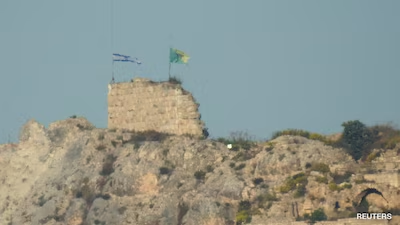
Few military prizes carry the historical resonance of Beaufort. The Israeli military’s Arabic spokesperson posted a photograph on X showing troops outside the castle, while Defense Minister Israel Katz announced that an Israeli flag had been raised over it.
Perched high atop Lebanon’s rolling green hills and overlooking the Litani River, the fortress has served as a strategic asset for armies across nearly a millennium. Built as a Crusader castle around the 12th century atop earlier fortifications, it has passed through the hands of many powers over the centuries, including:
- The Crusaders, who named it Beaufort, Old French for “beautiful fortress”
- Saladin’s Jerusalem army
- The Mamluks and later the Ottomans
- The French mandate authorities
- The Palestine Liberation Organization
- The Israeli military, which held it until 2000
After Israel’s withdrawal, the castle was partially restored and opened to visitors. In Arabic it is known as Al-Shaqif castle, drawn from an old Syriac word describing the formidable rocky landscape.
Echoes of 1982
This is not the first time Israeli forces have taken Beaufort. They previously captured it in 1982 and held it until withdrawing from Lebanon in 2000.
That earlier capture, seized from the Palestine Liberation Organization, was a major victory for an Israeli military then led by Defense Minister Ariel Sharon, who would later become prime minister. During that campaign, the Israeli army pushed north all the way to occupy Beirut.
The castle’s symbolic power runs deep on both sides of the border. In Israel, it became one of the most recognizable sites associated with the 18-year occupation, and inspired one of the country’s best-known war films, “Beaufort,” which grapples with the moral doubts and futility of war in the final days before the withdrawal. Reflecting its cultural significance, UNESCO granted enhanced protection to 34 Lebanese cultural sites, including Beaufort, during the previous Israel-Hezbollah war in 2024.
The Expanding Invasion
The capture of the castle is part of a broader widening of Israel’s operations. According to the military, the army launched an offensive days ago in the Beaufort Ridge and the Suluki valley further south, aiming to dismantle Hezbollah infrastructure and remove direct threats to Israeli civilians. The army said it stands ready to expand the operation if necessary.
In recent days, Israeli forces have grown bolder, crossing the Litani River, which had previously functioned as a de-facto boundary, and ordering residents to leave much of southern Lebanon. Israel has designated the zone from the Litani up to the Zahrani River a combat area.
The pressure on civilian centers is mounting. Israeli troops are now roughly 5 kilometers, about 3 miles, from Nabatiyeh, a major southern city, and have called on all its residents to evacuate. Similar evacuation demands have been issued for the coastal city of Tyre, Lebanon’s fourth largest, and its surroundings. Although some residents have already fled the intense strikes, many remain in towns across the area. Neither Hezbollah nor the Lebanese government immediately commented on the latest push.
Fighting Rages Across the Border
The exchanges of fire show no sign of slowing. Overnight, Hezbollah claimed two attacks targeting Israeli troops and a Merkava tank in the southwestern border town of Bayada. In recent days, the group has reported clashes with Israeli forces in several towns just north of the river, near Nabatiyeh and the castle itself.
Lebanon’s state-run National News Agency reported airstrikes on various villages in the south, saying they caused casualties without providing a breakdown. On Saturday, Hezbollah fired salvos of rockets into northern Israel, including at Kiryat Shmona, the largest city in that region.
One particularly difficult challenge for Israel has been Hezbollah’s use of hard-to-detect fiber optic drones, which have proven deadly and which the Israeli military has struggled to counter. In just the past 24 hours, Israel’s military reported nearly 200 alerts warning civilians across northern Israel of incoming drones and missiles.
The Human Cost
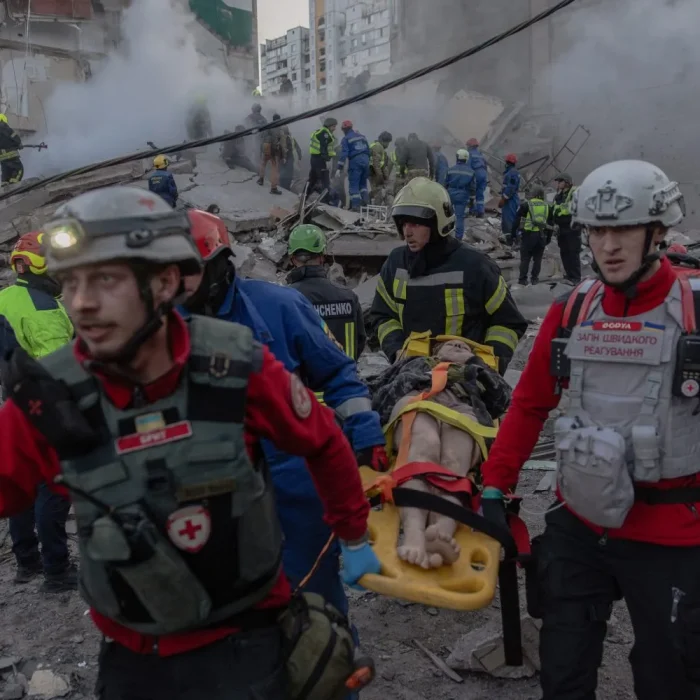
Behind the strategic maneuvering lies a heavy toll. The latest round of fighting between Israel and Hezbollah has killed 3,350 people in Lebanon and displaced more than 1 million.
On the Israeli side, according to Prime Minister Benjamin Netanyahu’s office, at least 25 soldiers and a defense contractor have been killed in or near southern Lebanon, including one death on Saturday. Two civilians have also been killed in northern Israel.
The Bottom Line
The Israeli army’s capture of Beaufort castle is far more than a tactical gain. It is a deeply symbolic moment that revives memories of past wars, signals an aggressive expansion of the current campaign, and complicates a peace process set to resume within days.
With Israeli forces pushing past the Litani, civilians fleeing major cities, and both sides trading fire amid mounting casualties, the conflict appears to be intensifying rather than winding down. As negotiators prepare to meet in Washington, the contrast between the diplomacy on the calendar and the violence on the ground could hardly be sharper. Whether the fall of Beaufort becomes a step toward resolution or a further escalation remains to be seen, and the coming days are likely to prove decisive.
This is an ongoing conflict with significant human consequences, and details may continue to develop as more information becomes available.
Author