The link between thymus health and longevity may be one of medicine’s most surprising recent discoveries. A small, often-forgotten immune organ, long believed to fade into irrelevance after childhood, is now emerging as a potentially powerful predictor of how long a person will live, their risk of serious disease, and even their chances of surviving cancer.
New research is challenging decades of assumptions and suggesting that this overlooked organ deserves far more attention than it has received.
A Long-Overlooked Clue to Healthy Aging
Researchers at Mass General Brigham have uncovered compelling evidence that the thymus, a small organ in the chest, plays a far greater role in adult health than previously thought. Using artificial intelligence to analyze CT scans from tens of thousands of adults, they found a striking pattern.
People with healthier thymuses tended to live longer and faced substantially lower risks of heart disease, cancer, and death. The same organ was also tied to better responses to cancer immunotherapy, hinting that it remains quietly important throughout the entirety of life.
Two Studies That Rewrite the Textbook
The findings were published in two separate papers in the same issue of the journal Nature, and together they challenge long-held beliefs about the thymus. Both studies point to the same conclusion: the organ stays relevant well into adulthood.
The lead researcher framed the discovery in compelling terms, describing the thymus as a long-overlooked organ that may be a missing piece in explaining why people age differently and why cancer treatments fail in some patients. He suggested that thymic health deserves much more attention and could open new avenues for protecting the immune system as we age.
What the Thymus Actually Does
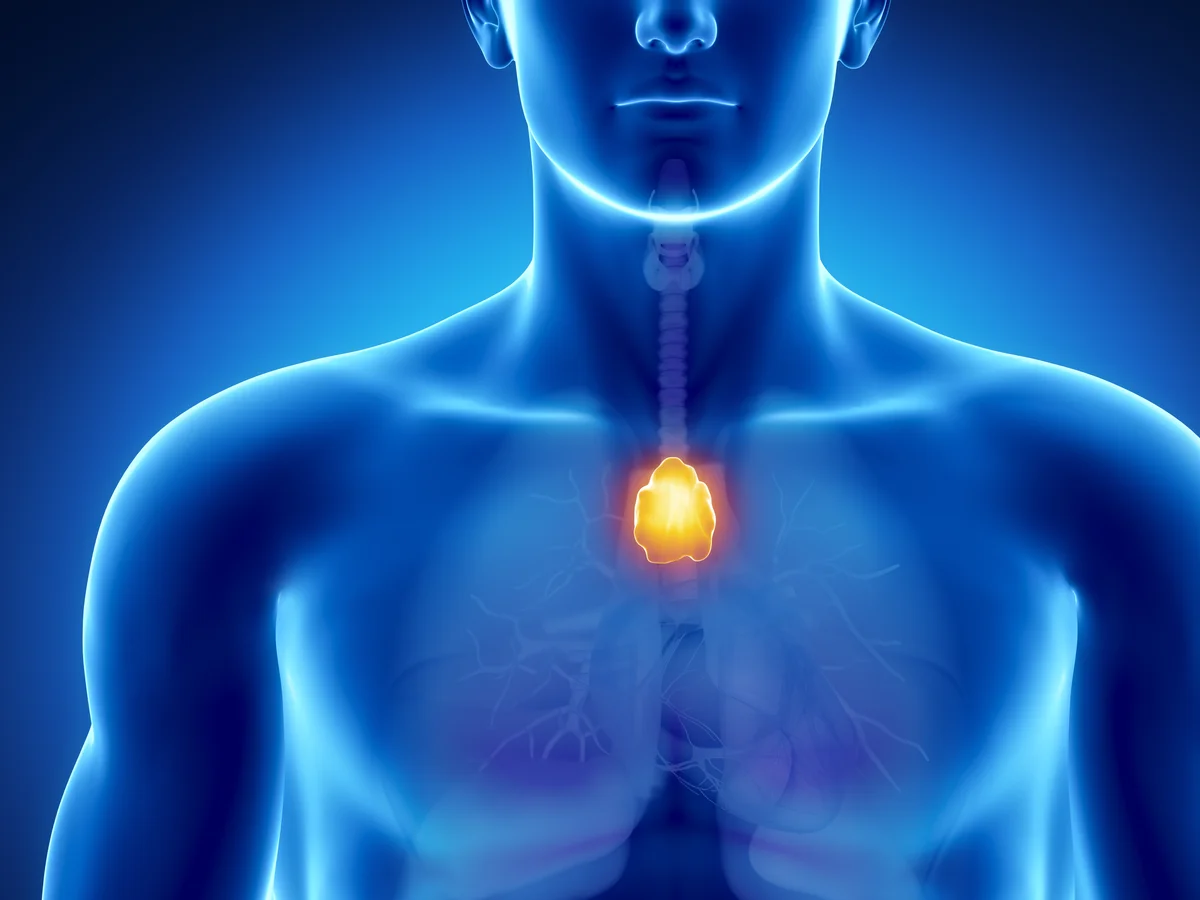
To appreciate why this matters, it helps to understand the organ’s function. Located in the chest, the thymus helps train T cells, a type of immune cell that defends the body against infections and disease.
The reason it has been dismissed for so long lies in its natural decline. After puberty, the thymus gradually shrinks and produces fewer new T cells over time. Because of this, many scientists assumed it played only a minor role in adult health, leaving it largely ignored in large population studies.
Earlier research had connected T cell diversity to aging and declining immune function, but those studies were typically small and focused narrowly on blood samples.
A Much Broader Investigation
This new research took a far more expansive approach than anything that came before. Rather than relying on small samples, the investigators analyzed vast amounts of data drawn from major health studies.
Their analysis drew on two substantial groups:
- More than 25,000 adults participating in a national lung cancer screening trial.
- More than 2,500 people enrolled in the long-running Framingham Heart Study, which tracks the health of generally healthy adults over time.
This scale gave the findings a robustness that earlier, smaller investigations had lacked.
Building a “Thymic Health” Score
The key innovation was the use of artificial intelligence to evaluate routine CT scans. By measuring the size, structure, and composition of the thymus, the researchers were able to create a “thymic health” score for each individual.
That score turned out to carry remarkable predictive power. People with higher thymic health scores experienced significantly better outcomes across the board, compared with those whose thymuses appeared less healthy.
The differences were dramatic:
- About a 50% lower risk of death from any cause.
- A 63% lower risk of death from cardiovascular disease.
- A 36% lower risk of developing lung cancer.
Crucially, these relationships remained strong even after accounting for age and other health factors, suggesting the thymus itself was contributing something meaningful.
Why the Connection Makes Sense
The researchers offered a biological explanation for these patterns. They believe that declines in thymic health may reduce T cell diversity, which in turn makes it harder for the immune system to recognize and respond to new threats such as cancer and other diseases.
In other words, a healthier thymus may equip the body with a more varied and capable immune defense, helping it fend off serious illness over the long term.
Lifestyle and Inflammation Play a Role
The analysis also shed light on what might harm thymic health in the first place. Several factors were associated with a poorer-functioning thymus, including chronic inflammation, smoking, and higher body weight.
These findings hint that everyday lifestyle choices and ongoing inflammation may influence the immune system’s ability to stay resilient as the years pass. While the studies did not prove that changing these factors directly improves thymus function, the associations are intriguing and point toward possible avenues for prevention.
A Surprising Link to Cancer Treatment
The second study explored an entirely different but equally important question: how the thymus relates to cancer treatment success. The team examined CT scans and clinical outcomes from more than 1,200 cancer patients treated with immunotherapy.
The results were striking. Patients with healthier thymuses tended to respond better to treatment, facing roughly a 37% lower risk of cancer progression and a 44% lower risk of death, even after researchers adjusted for differences in patients, tumors, and treatment approaches.
According to the team, these findings reveal a potentially important but previously unrecognized role for the thymus in determining how effectively modern cancer immunotherapies work.
Important Caveats Remain
Despite the excitement, the scientists are careful to temper expectations. They emphasize that additional studies will be needed to confirm the results before any firm conclusions can be drawn.
Several limitations are worth keeping in mind:
- The imaging technique used to measure thymic health is not yet ready for routine clinical use.
- Although lifestyle factors were linked to thymic health, the studies did not test whether changing those factors can actually improve thymus function.
- The findings show associations rather than definitive cause-and-effect relationships.
These caveats mean that, for now, the research is best viewed as a promising foundation rather than a ready-made medical tool.
What’s Next for the Research
The team is not stopping here. They are continuing to investigate other influences on thymic health, seeking to deepen understanding of what helps or harms this small but apparently mighty organ.
One ongoing study is examining a particularly practical question: whether unintended radiation exposure to the thymus during lung cancer treatment could affect patient outcomes. Such work could have direct implications for how certain cancer therapies are administered.
The lead researcher expressed hope that improving understanding and monitoring of thymic health could eventually help physicians better assess disease risk and guide treatment decisions, pointing toward a future where the thymus becomes a routine part of health evaluation.
A New Frontier in Understanding Aging
The discovery that thymus health and longevity may be so closely intertwined opens an exciting new chapter in the science of aging and immunity. An organ once written off as a relic of childhood is now being recognized as a possible window into a person’s future health.
While much remains to be confirmed, the implications are far-reaching. If the thymus truly helps determine who ages well, who resists serious disease, and who responds best to cancer treatment, then learning to measure and protect it could become a valuable part of medicine.
For now, the research serves as a powerful reminder that the human body still holds secrets, and that even its most overlooked parts may carry profound significance. The forgotten organ in our chests, it turns out, may have a great deal to tell us about the length and quality of the lives we lead.
This article covers emerging medical research for general informational purposes and is not medical advice. Anyone with concerns about their health, disease risk, or cancer treatment should speak with a qualified healthcare professional who can offer guidance tailored to their individual circumstances.
Author