Henry Nowak Bodycam Footage Raises “Serious Questions for Police,” Says PM
The release of police bodycam footage showing how officers responded to the killing of teenager Henry Nowak has prompted Prime Minister Sir Keir Starmer to declare there are “serious questions for police” to answer. The footage, which captures the harrowing moments after the 18-year-old was fatally stabbed, has triggered an ongoing watchdog investigation, political controversy, and unrest on the streets of Southampton.
What the Footage Shows
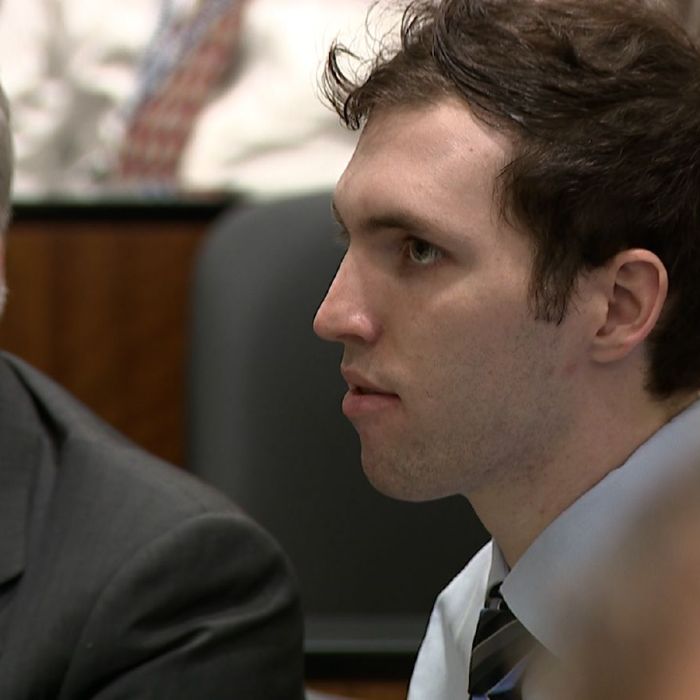
Nowak, a Southampton university student, was stabbed by 23-year-old Vickrum Digwa, who was jailed for life on Monday with a minimum term of 21 years. Digwa used a 21cm (8in) blade that he said he carried as part of his Sikh faith.
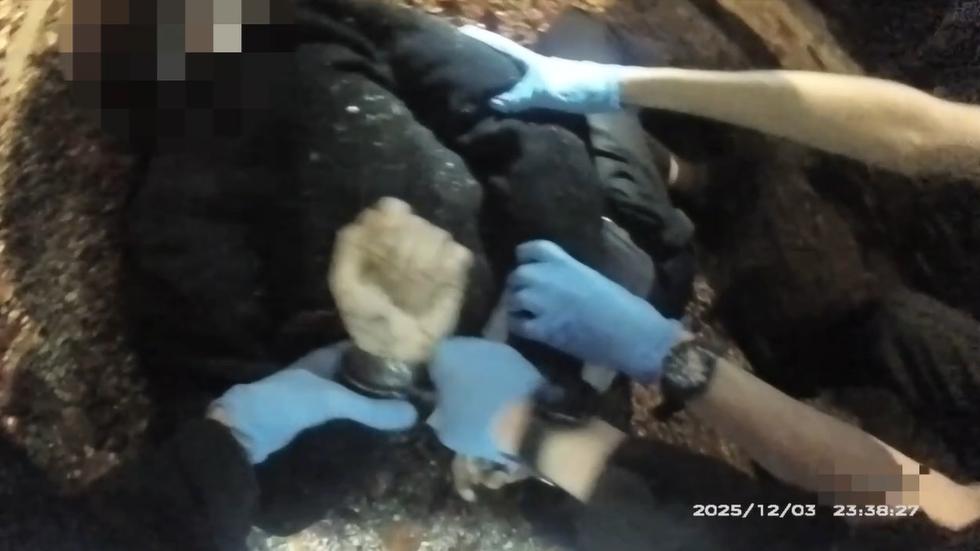
According to the BBC’s account of the bodycam recording, the situation unfolded with devastating consequences after Digwa lied to officers at the scene, falsely claiming he had been the victim of a racist attack. The footage reportedly shows Nowak being handcuffed and repeatedly telling police he couldn’t breathe.
The recording captures a chain of exchanges that the teenager’s family and others have found deeply distressing. An officer is heard asking Nowak his name as he lies on his back, with the teenager faintly replying “Henry.” When Digwa steps into frame and claims Nowak had pulled off his turban and grabbed him by the hair, officers ask Digwa whether he is injured; he describes a swollen eye and minor bruising.
As attention turns to Nowak, he is heard saying repeatedly that he has been stabbed and that he can’t breathe while being made to sit up and handcuffed. At one point an officer is heard expressing doubt that he had been stabbed at all. After a brief check, Nowak, who appears unresponsive, is told he is being arrested for assault.
The Prime Minister’s Response
Speaking to broadcasters, Sir Keir described the footage as “really harrowing” and said he had “felt sick watching it.” He stressed that the question of how accusations of racism may have shaped the officers’ decision-making must be addressed.
While the Independent Office for Police Conduct (IOPC) confirmed its investigation into the force’s actions is ongoing, the prime minister did not rule out going further. He said it was important to let the IOPC complete its work first, but added that he was certainly not ruling out a wider inquiry.
A Family’s Anguish
Nowak’s family have been unsparing in their account of what happened, describing his treatment by police as “inhumane and degrading.” The force has since apologised.
His father, Mark, said that Henry told officers nine times that he could not breathe and four times that he had been stabbed. He described his son being pulled across gravel, his hands forced behind his back, and being placed in handcuffs. He called the contrast between how his son and Digwa were treated “unbearable,” adding that Henry should not have died on the streets of Southampton in police custody.
In his sentencing remarks, Judge William Mousley KC noted that, given the nature of Nowak’s injuries, he would not have survived no matter how quickly he had received first aid, CPR, or expert medical treatment.
The force confirmed that three of the officers involved are still serving, while one has resigned.
A Heated Political Debate
The case has ignited a fierce political dispute, particularly around the contested idea of “two-tier policing.”
Home Secretary Shabana Mahmood addressed the House of Commons, warning against politicising the case and pointing to what she called a “dangerous undercurrent” in public reaction to such crimes. She revealed that one police officer had been forced to relocate to protect himself and his family after being wrongly identified online as involved. While she said it was for the IOPC to determine the specific facts, she defended policing more broadly, insisting officers have a “sacred duty” to act without fear or favour and that everyone is equal before the law.
The opposition struck a sharply different tone:
- Reform UK leader Nigel Farage said he felt a “cold rage” over Nowak’s treatment, calling it evidence of a “two-tier Britain” and arguing that a false accusation of racism had counted for more than a dying person.
- Shadow home secretary Chris Philp told the Commons that police appeared “more concerned with the accusation of racism… than they were with helping Henry.”
The prime minister’s official spokesman pushed back firmly, stating there is “no such thing as two-tier policing.” Labour MP Tanmanjeet Singh Dhesi, who is himself a Sikh, accused Reform UK and others of choosing to “scapegoat” the Sikh community over the actions of a single violent murderer.
Unrest in Southampton
Tensions spilled into the streets on Tuesday evening, when a few hundred people gathered near the scene of the murder in a protest promoted by far-right figure Tommy Robinson. Clashes broke out between demonstrators and riot police, with bins, some bricks, and an e-scooter thrown at officers as police with shields and batons sought to hold a line.
Questions Over the Weapon and the Sentence
The case has also drawn attention to the law surrounding religious blades. Under current legislation, practising Sikhs have a legal defence for carrying a small, curved blade known as a kirpan close to their body for religious purposes. However, while Digwa had been wearing a traditional kirpan beneath his clothing, the weapon he used on Nowak was significantly larger and worn in a sheath over his clothes.
The attorney general’s office is now considering the sentence after receiving “multiple requests” to review it under the unduly lenient sentence scheme. Separately, Donna Jones, the Police and Crime Commissioner for Hampshire and the Isle of Wight, has requested a review of the culture and performance of the force’s control room and the training of the officers who responded.
Digwa’s Family and Further Charges
Digwa’s family issued an apology to Nowak’s family and for bringing the Sikh community into “disrepute.” In a statement, an unnamed family member said they continue to love Vickrum but that their love does not stand in opposition to the sorrow they feel for the Nowak family, describing both as real and enduring.
Other members of the family have also faced court. Digwa’s father, Moga Singh, 52, and brother, Gurpreet, 27, appeared on Tuesday facing multiple charges for possession of offensive weapons in a private place, with items reportedly including an extendable baton, knuckle dusters, a flick knife, a sword, and a machete. Gurpreet Digwa faces additional charges relating to an offensive weapon in public, including an axe, and a prohibited weapon described as an air rifle. Both were released on unconditional bail. Digwa’s mother, Kiran Kaur, 53, was found guilty of assisting an offender after attempting to hide the blade used in the attack and will be sentenced on 17 July.
The Bottom Line
The Henry Nowak case has become far more than a single criminal conviction. It has raised painful questions about how police respond in moments of crisis, how accusations can shape split-second decisions, and how a grieving community processes loss amid a charged national debate. With the IOPC investigation continuing, the sentence under review, and multiple inquiries requested, the full reckoning is still unfolding. As the prosecutor in the case put it, and as both the home secretary and Nowak’s family echoed, this is ultimately a case about murder, even as the surrounding questions about justice and accountability remain very much open.
Author