The Education Department dismantling reached a significant new phase this week as the Trump administration moved to hand off two of the agency’s most consequential responsibilities — protecting students with disabilities and enforcing civil rights in schools — to other parts of the federal government.
Under the changes announced Tuesday, the Department of Justice will take over civil rights enforcement in education, while the Department of Health and Human Services will assume oversight of special education. With these transfers, the Education Department has now shifted the bulk of its core functions to outside agencies.
What’s Changing
The two offices at the center of Tuesday’s announcement carry weighty mandates that touch millions of students:
- The Office of Special Education and Rehabilitative Services manages billions of dollars in grants and ensures states comply with the Individuals with Disabilities Education Act, known as IDEA.
- The Office for Civil Rights investigates complaints of discrimination based on race, sex, or religion at schools and universities across the country. That office has already been significantly weakened by mass layoffs.
Under the new arrangement, the Justice Department will also absorb responsibilities related to protecting student privacy and will provide some training and advisory support to schools. Health and Human Services and Justice will manage most day-to-day operations of the assigned offices.
Still, the Education Department won’t disappear entirely. It will continue performing certain tasks it is legally required to do, such as responding to audits and issuing final determinations in civil rights cases.
The Push to Shrink the Department
The moves fit squarely within a campaign promise. Trump ran on shutting down the Education Department, pledging to return education authority to the states.
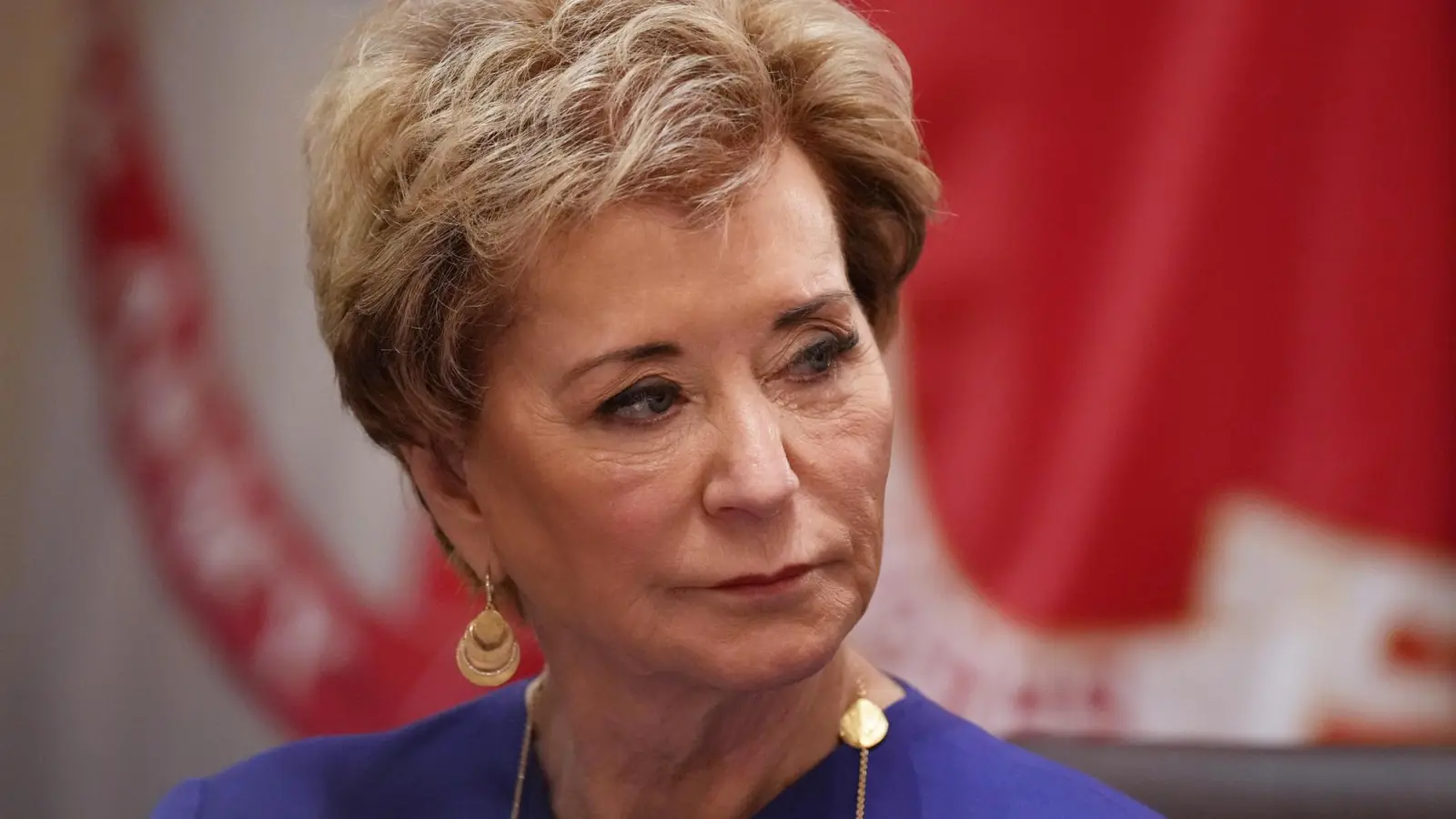
Only Congress holds the power to actually close a federal department. In the meantime, Education Secretary Linda McMahon — a billionaire and former CEO of World Wrestling Entertainment — has pursued a workaround by forging agreements that distribute her department’s duties across other agencies. Tuesday’s announcement built on 10 earlier internal agreements, though the offices affected this time were among the most closely watched.
McMahon defended the strategy as a matter of efficiency, saying the agreements align federal responsibilities with the agencies best suited to handle them. She framed the approach as scaling back federal micromanagement where it hinders success while strengthening oversight where it remains essential.
Advocates Sound the Alarm
The reaction from education and civil rights advocates was swift and largely critical. A central worry is that scattering these functions will create confusion and gaps in service for families and schools that depend on them.
EdTrust, a Washington-based think tank focused on educational equity, warned that the heaviest burden would fall on students who already face the most obstacles. The group named several groups likely to be most affected, including students with disabilities, Black and Latino students, multilingual learners, children from low-income backgrounds, and students in rural communities.
Rachel Gittleman, president of the union representing department employees, predicted the changes would sow chaos for families, students, and schools. She cautioned that the most vulnerable students could be left without both the services they rely on and the protections they need when facing discrimination.
A Question of Expertise
The transfer of special education to Health and Human Services drew particularly sharp concern from disability advocates, who argue that judging whether schools adequately serve children with disabilities is fundamentally an educational task — not a medical one.
Jennifer Coco, interim executive director of the Center for Learner Equity, captured the core objection. She noted that IDEA exists to help students learn alongside their peers, not to treat or cure them, and warned that HHS isn’t equipped to administer the program effectively. As she put it, health and education systems essentially speak different languages, differing in terminology, training, and professional disciplines.
Political Pushback
Democratic lawmakers framed the announcement as politically motivated. Rep. Bobby Scott of Virginia, the ranking member of the House Committee on Education and the Workforce, described it as a move designed to fulfill a campaign promise, predicting it would widen inequities for students of color and students with disabilities.
Sen. Patty Murray of Washington argued that the agreements were dispersing education programs to agencies lacking the necessary expertise. She accused the administration of fixating on bureaucratic logistics and attempting to illegally shutter the department rather than focusing on helping children learn.
What Comes Next
For now, the practical effects on students and families remain uncertain. The administration insists the restructuring will improve efficiency by placing responsibilities with better-suited agencies, while critics contend it risks dismantling protections that took decades to build.
What’s clear is that the Education Department, though not formally closed, has been substantially hollowed out. As these transfers take effect, parents, educators, and advocates will be watching closely to see whether the agencies inheriting these duties can deliver the same level of support — particularly for the students who have the most at stake.
Author