The Minnesota anti-ICE protesters charges announced this week have drawn sharp lines between federal prosecutors, who frame the case as a defense of law enforcement, and defense attorneys, who call it a politically motivated attack on peaceful dissent. Fifteen people allegedly connected to Minneapolis-based antifa groups now face a range of federal charges.
The Charges Announced
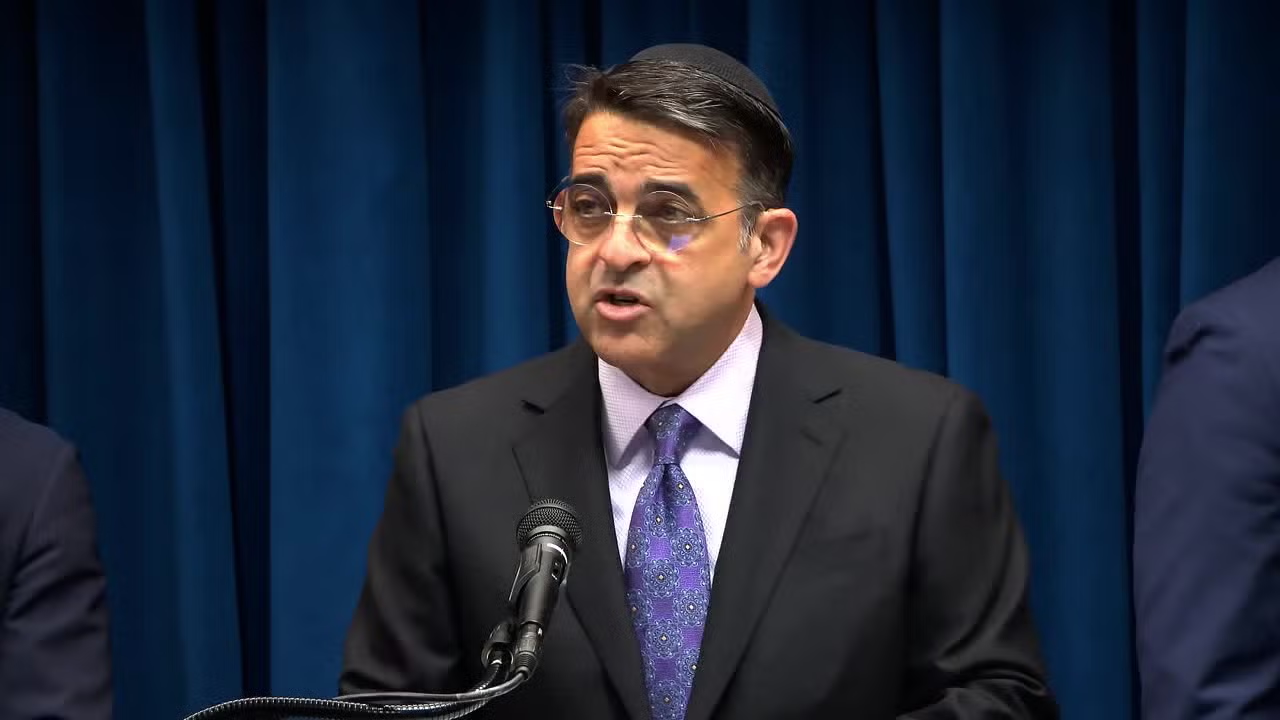
U.S. Attorney Daniel Rosen for the District of Minnesota, alongside Homeland Security Investigations Special Agent in Charge Michael McCarthy, laid out the case during a press conference late Tuesday morning.
According to officials, the defendants are accused of conspiring to impede or injure federal officers, along with related crimes that prosecutors say amount to violently opposing immigration enforcement. The Justice Department alleges the 15 are members or associates of a group called Direct Action Minnesota.
The specific charges span a wide spectrum, including:
- Conspiracy to impede a federal officer
- Stalking and making threats
- Solicitation to commit a violent crime
- Assaulting a federal officer
- Destruction of government property
Rosen said most of the defendants were arrested in a federal operation within the past 24 hours, though two remained at large at the time of the announcement.
How Officials Framed the Case
McCarthy described an investigation that uncovered what he called extensive planning, material support, and coordinated attacks against federal personnel and facilities. He characterized the charges as an important milestone in upholding the rule of law and curbing violence against law enforcement.
Rosen struck a similar tone, warning that the Justice Department would hold accountable anyone who threatens or harms federal officers. He labeled the alleged conduct “un-American” and promised swift justice.
The case unfolds against a notable policy backdrop. Last fall, President Trump signed an executive order designating antifa as a domestic terrorist organization. Rosen noted that many of the defendants charged Tuesday identify as members of that movement.
Pointed Questions From Reporters
The press conference grew tense as journalists pressed prosecutors on the strength and presentation of their evidence.
Asked repeatedly whether any agents had been injured, prosecutors declined to answer directly, saying the details would emerge through the court process. When pressed on what antifa actually is, Rosen suggested the question fell outside the scope of the indictment, pointing out that many defendants self-identify with the movement and that reporters could ask them directly.
Rosen was careful to distinguish association from criminality. He emphasized that simply being connected to the movement isn’t itself a crime — rather, the offenses lie in conspiring to impede or injure federal officers, to commit violence, to stalk, to make threats, to assault officers, or to destroy federal property.
The indictment includes striking allegations, among them ice chunks being thrown at agents and a defendant sideswiping an agent’s vehicle, causing a collision. That prompted reporter Ben Henry to ask why such physical evidence wasn’t shared at the briefing.
Rosen said prosecutors possessed video evidence and eyewitness testimony, all of which would be presented in due course. When Henry pushed on why none of it was shown alongside the still images that were displayed, Rosen replied that they were sharing only what they deemed necessary and directed reporters to read the indictment. He also dismissed the suggestion that any related cases had recently failed, insisting the evidence would bear out the charges.
A Professor Among the Accused
One of those charged is Erik Davis, a professor at Macalester College in St. Paul. The school confirmed it was aware Davis was among the fifteen individuals charged in connection with the federal investigation but said it does not comment on pending legal proceedings.
The Defense Pushes Back
Defense attorneys offered a starkly different account of what’s happening, casting the prosecution as an assault on constitutionally protected dissent.
James Cook, who represents defendant Natasha Rakotz, flatly called the case politically motivated. Jordan Kushner, defending several of the accused, went further, describing it as a “fascist prosecution” targeting peaceful political expression. He predicted the charges wouldn’t hold up and argued as much in court.
Trisha Pohland, another defense attorney, emphasized her clients’ lack of criminal history. She said most had never been in trouble with the law before and were now frightened to face charges for conduct they believed was lawful.
The Allegations of Coordination
According to the formal indictment, prosecutors allege the defendants used encrypted messaging apps to coordinate their activities. The described tactics include stalking ICE agents both in person and online, setting up blockades to obstruct operations, and attempting to “de-arrest” people already in custody.
Where the Case Stands
The legal process is already in motion. Cook told a local outlet that Rakotz would turn herself in Wednesday morning.
After their first court appearances Tuesday afternoon, several defendants were released on bond. As conditions of release, they are barred from attending any protests and from communicating with one another while the case proceeds through the courts.
The dispute now moves into a courtroom where the central questions will be tested: whether the alleged conduct crossed the line from protected protest into criminal conspiracy and violence, and whether the government’s evidence supports the serious charges it has brought. With both sides framing the stakes in stark terms, the outcome could carry implications well beyond the fifteen individuals named.
Author