Trump’s 250ft Washington Arch Advances Past a Key Planning Hurdle
Plans for the Trump Washington arch cleared an important obstacle on Thursday, as a key federal commission granted preliminary approval to the skyline-altering monument. The vote came despite overwhelming public opposition, and it moved one of the president’s most ambitious efforts to reshape the nation’s capital a step closer to reality, even as a major legal question about building heights remains unresolved.
A Preliminary Green Light
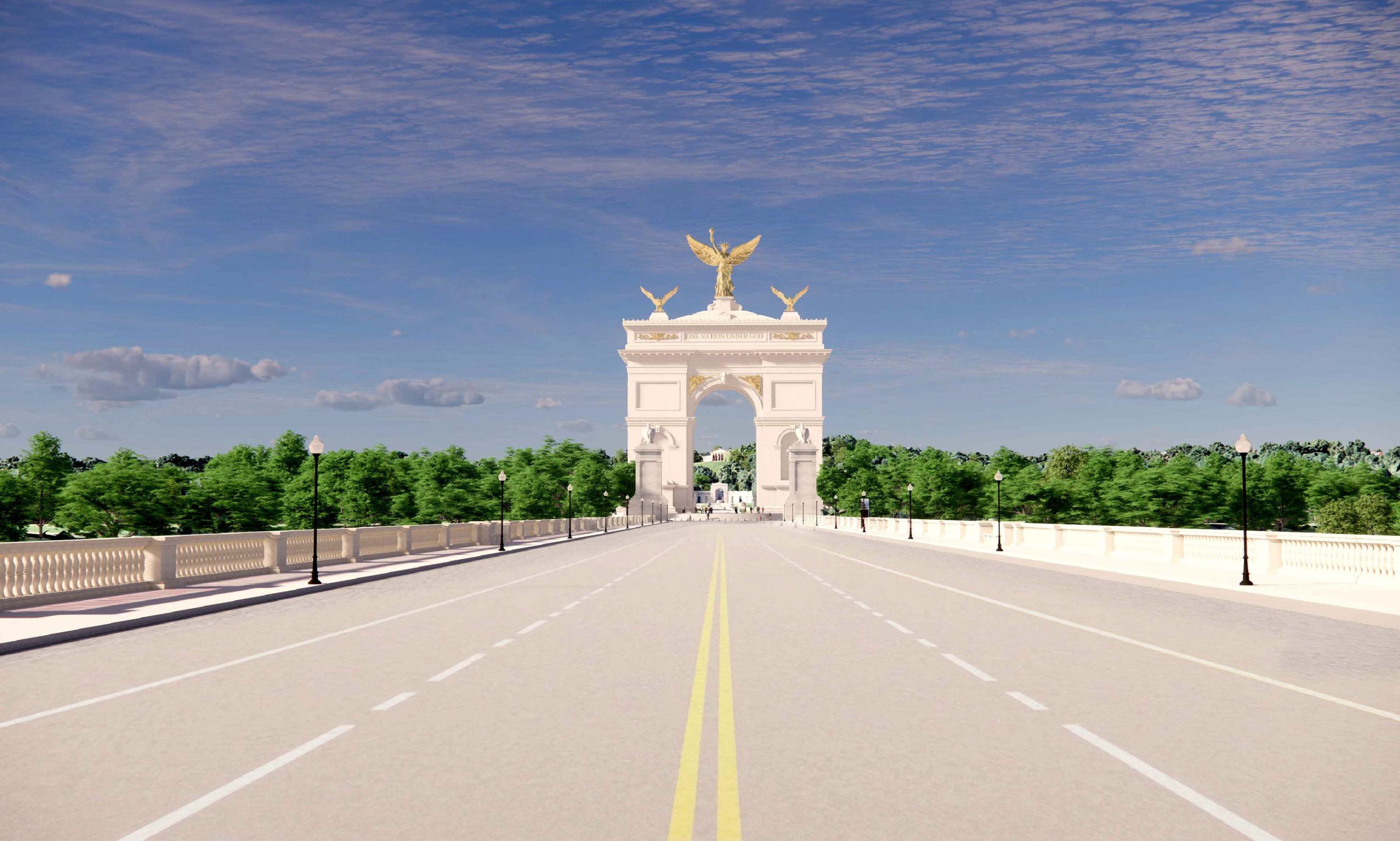
The National Capital Planning Commission (NCPC) voted to approve the preliminary site and building plans for the 250-foot (76-meter) arch. President Trump wants to construct it on a traffic circle at the Virginia end of the Memorial Bridge, just across from Washington.
The project is one of several initiatives Trump is pursuing as he seeks to remake portions of the capital according to his own vision. With this vote, the arch inched forward, though significant hurdles still lie ahead.
The Unresolved Height Law Question
While the commission approved the preliminary plans, it deliberately postponed a decision on whether a federal law limiting building heights should apply to the project.
Commission staff had recommended granting approval while also requesting a series of changes to bring the arch into compliance with the Height of Buildings Act. Those suggested adjustments included redistributing the height among the arch’s main structure, its habitable roof, where an observation deck is planned, and the statues intended to top it.
Instead, commissioners led by chair Will Scharf voted to continue their deliberations on whether the law actually applies. According to the staff report, the commission has long factored this law into its approval process. However, Scharf noted that the Interior Department, which is the applicant and oversees the federal land where the arch would sit, had provided a legal analysis making what he called a “compelling argument” that the law is not binding on the federal government.
How the Vote Broke Down
The commission’s decision reflected a divided but clear outcome:
- Eight of the twelve commissioners voted in favor of preliminary approval, including Scharf and two others appointed by Trump.
- One commissioner voted against the proposal.
- The remaining three commissioners voted present.
Calling it “a complex project,” Scharf indicated before the vote that a decision on final approval could come at the agency’s next meeting in September. All twelve commissioners listened to a summary of the staff report and heard testimony from several dozen people who had signed up to speak about the plan.
Why Opponents Object
Public resistance to the arch has been substantial, and those who testified against it raised a range of concerns. Some objected to building a celebratory arch so close to Arlington National Cemetery, while others argued it would be better suited to a neighborhood near the Capitol and sporting venues.
A central objection focuses on the monument’s scale and placement. Critics say the arch is simply too large and would disrupt the carefully designed sightline between the Lincoln Memorial and Arlington National Cemetery, a view meant to symbolize the reunification of the North and South after the Civil War.
The sheer size of the structure underscores those worries. The proposed arch would stand more than twice as tall as the Lincoln Memorial, which rises 99 feet (30 meters), and would reach nearly half the height of the Washington Monument, which stands at roughly 555 feet (169 meters).
Additional concerns raised on Thursday included vehicular traffic and pedestrian safety. Some speakers also insisted that Congress must approve the arch, a position Trump disagrees with.
The Approval Process So Far
The arch has already passed through part of the federal review pipeline. The U.S. Commission of Fine Arts, a separate federal agency, approved the design back in May. The NCPC, which oversees construction on federal land in the city, began reviewing the plan in June.
Questions Over Who Pays
The financing of the project has also drawn scrutiny. Last year, Trump suggested the arch could be funded using leftover money from the hundreds of millions of dollars he said he had raised from corporations, donors, and wealthy individuals to build a new $400 million ballroom at the White House.
As it turns out, though, some public money will be used for both the ballroom and the arch. The White House has not released a cost estimate for the arch itself.
Meanwhile, work on the president’s broader reshaping of the capital continues. Even as the commissioners met, construction pressed ahead at the White House on the $400 million ballroom, and crews draped tarps over the stone columns at the north entrance of the mansion, where layers of paint are being scraped away.
The Bottom Line
The Trump Washington arch has survived a pivotal early test, securing preliminary approval despite strong public pushback and a still-unsettled dispute over federal height limits. With final approval potentially arriving as soon as September, and with lingering questions about cost, congressional authority, and the monument’s impact on one of Washington’s most symbolic views, the project remains a subject of intense debate. For now, the arch stands as another marker of the president’s determination to leave a lasting physical imprint on the nation’s capital.
Author