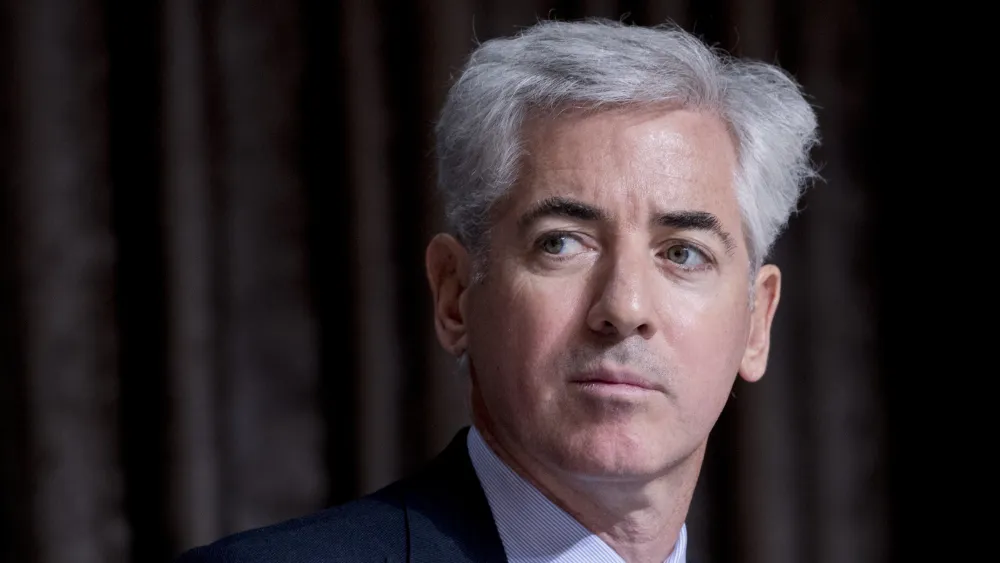
The story of Bill Ackman Universal Music is a reminder that on Wall Street, a deal can fall apart and still end in a substantial payday. Despite two failed attempts to strike an agreement with the world’s largest music company, the billionaire investor is poised to walk away from his Universal Music Group stake with hundreds of millions of dollars in profit.
Cashing Out After a Rejected Bid
Ackman’s hedge-fund firm, Pershing Square, is now selling off its remaining position in Universal. The move comes just after the music giant turned down the firm’s latest takeover offer, prompting Ackman to head for the exit rather than linger as a frustrated shareholder.
The size of that remaining stake is considerable. According to a sales document released by Bank of America and reviewed by The Wall Street Journal, Pershing Square holds roughly 80.6 million Universal shares, a position worth well over $1.5 billion.
A person familiar with the matter said the firm expects to pocket at least $600 million in profit, including dividends, on what has been a nearly five-year investment. In other words, even without the deal Ackman wanted, the bet paid off handsomely.
The $65 Billion Offer That Was Turned Down
The timing of the sale is telling. Ackman is stepping away only days after Universal rejected a takeover proposal he valued at $65 billion, an offer that came from a Pershing Square investment vehicle.
Universal’s board was unmoved, concluding that the bid simply undervalued the company. That is no small claim, given that Universal serves as the home of some of the biggest names in music, including Taylor Swift, Kendrick Lamar, and Billie Eilish.
The structure of the proposed deal was ambitious. Ackman wanted to merge Universal with another publicly traded entity, Pershing Square Sparc Holdings, and shift the combined company to a U.S. listing. Universal currently operates from Santa Monica, California, while maintaining its corporate base in Hilversum, Netherlands, where it trades on the Euronext Amsterdam exchange.
Notably, Ackman had not approached the bid as a hostile critic. He had publicly praised Universal’s chief executive, Lucian Grainge, and argued that the company’s stock had underperformed for reasons that had nothing to do with the strength of its actual music business.
The Powerful Shareholder Who Said No
A major obstacle stood in Ackman’s path. The Bolloré Group, Universal’s largest shareholder, pushed hard against the offer, and its influence proved decisive.
The family of French billionaire Vincent Bolloré holds roughly 18.5 percent of Universal and controls close to 40 percent of the voting rights. With that kind of leverage, the family’s opposition effectively sealed the bid’s fate, leaving Ackman with little room to maneuver.
A Five-Year Journey That Began in 2021
Ackman’s involvement with Universal stretches back to 2021, and the path has been anything but smooth. His first move was a complex proposal for his special-purpose acquisition company to buy a 10 percent stake from Vivendi, the French media conglomerate that owned Universal at the time.
That plan unraveled under pressure from regulators, forcing Ackman to step back. Rather than abandon the opportunity entirely, Pershing Square stepped in and acquired the stake itself, paying an average of 18.27 euros per share, equivalent to roughly $21.20, ahead of Universal’s spinout into a standalone public company.
The firm has been gradually realizing gains ever since. Last year, Pershing Square sold $1.4 billion worth of Universal stock at a price of 26.55 euros per share, locking in a healthy return well before the latest exit.
How the Final Sale Is Structured
The remaining shares are being offered at a discount of 3 to 8 percent relative to Universal’s closing price on Wednesday of around 19 euros. That kind of markdown is standard practice. When investors unload large blocks of stock all at once, buyers typically expect a discount in exchange for absorbing such a sizable position.
A Personal Footnote to the Story
Beyond the financial calculations, Ackman’s connection to Universal carried an unexpectedly personal dimension. Through conversations with the company’s executives, he discovered that Universal owned recordings tied to his own family history.
As it turned out, his grandfather had written a hit song back in 1926 titled “Put Your Arms Where They Belong (For They Belong to Me),” and Universal held those recordings. It was a curious twist that linked the modern financier to the very catalog he had spent years trying to control.
The Bottom Line
In the end, Ackman did not get the company he wanted, but he is hardly leaving empty-handed. The episode illustrates a familiar dynamic in high-stakes investing, where the failure to close a deal does not necessarily translate into failure overall. After nearly five years, two thwarted attempts, and one rejected mega-bid, Ackman is set to exit Universal with a profit measured in the hundreds of millions, proof that sometimes the consolation prize is plenty rich on its own.
Author