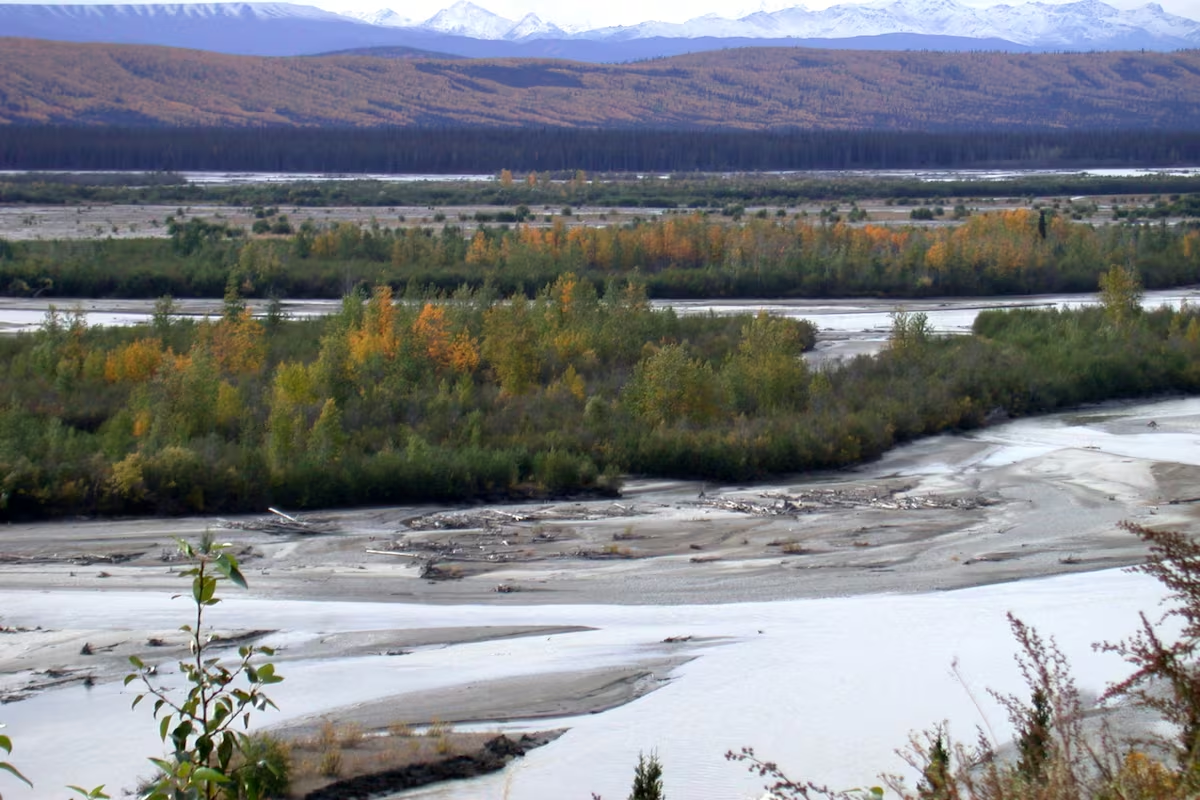
The Susitna River coal project has landed squarely in the national spotlight after President Donald Trump announced his administration would steer $89 million toward studying a controversial coal-fired power plant in the Alaska watershed. The grant is part of a broader $700 million push to prop up coal projects across the country, a move that has drawn sharp condemnation from conservationists and enthusiastic praise from regional lawmakers.
A Bet on Coal’s Comeback
Speaking from the Oval Office surrounded by Cabinet members, Trump framed the spending as a revival of American coal. He said he was invoking the Defense Production Act, a law granting the president sweeping emergency authority over domestic industries in the name of national security, to enable the federal outlay.
Trump claimed the initiative would generate thousands of jobs while safeguarding 14 coal plants and 42 coal mines, all while lowering energy and living costs for Americans through what he called clean, beautiful coal. The timing was notable, coming as gasoline prices climb and the conflict with Iran disrupts oil shipments through the Strait of Hormuz.
What the Alaska Project Actually Involves
The $89 million Energy Department grant would fund a feasibility study for the Terra Energy Center, a proposed plant located west of Skwentna in the Susitna River watershed. The ambitions are substantial. According to the Department of Energy, the money would help assess commissioning a 1,250-megawatt coal-fired facility paired with an integrated carbon capture system.
That figure is striking on its own, since it exceeds the entire generation capacity of the Chugach Electric Association, which sits below 800 megawatts. Terra Energy, an affiliate of Flatlands Energy Corp., would be required to match the federal grant. An official with the project did not immediately respond to requests for comment.
It’s also worth noting how rare such a venture would be. The United States has not built a large-scale coal-fueled power plant in more than a decade, making this proposal a significant departure from recent energy trends.
The carbon capture component adds another layer of complexity. The project has proposed constructing a 60-mile pipeline to transport carbon emissions to Beluga near Cook Inlet, where they would be injected into a depleted natural gas reservoir.
Why Supporters See Opportunity
For backers, the announcement signals more than just funding. State Representative Kevin McCabe, a Republican from Big Lake, argued the plant could deliver reliable energy to support military bases, industrial development, and economic growth across Southcentral Alaska.
McCabe emphasized the symbolic weight of federal endorsement, suggesting that national-level support tends to capture investor attention. In his view, the announcement broadcasts a message that Alaska remains among the best places in the country to pursue major energy and infrastructure projects.
The proposal also arrives at a pivotal moment for utilities along Alaska’s urbanized Railbelt, which are scrambling to secure new sources of heat and power as natural gas production in Cook Inlet continues to dwindle.
A Watershed Worth Protecting
Opponents see the project very differently. Melis Coady, executive director of the Susitna River Coalition, warned that the plant would bring large-scale development to a vital salmon watershed. She noted that the project has already absorbed $13 million in state and federal funding to study its emissions and feasibility.
Coady described a troubling and familiar dynamic, with private interests chasing public subsidies while ordinary Alaskans shoulder the risk. Before more public money or land is committed, she argued, residents deserve straightforward answers about ownership, costs, infrastructure needs, and who ultimately stands to benefit.
The Practical Hurdles
Beyond environmental concerns, critics point to significant gaps in the project’s readiness. According to the coalition, the venture currently lacks several essentials:
- A finalized design for the facility
- A permitted coal mine to supply it
- A signed agreement with utilities to purchase the power
The logistics are equally daunting. The site sits more than 60 miles from the nearest transmission line and would require building a road into the remote West Susitna corridor, a project potentially exceeding $1 billion, a cost the group says is not reflected in the plant’s price tag. That road, known as the West Susitna Access Road, was the subject of contentious funding debates in the state Legislature this year.
Environmental Alarm Bells
The Sierra Club added its voice to the opposition, flagging concerns over hazardous emissions and toxic coal ash. Andrea Feniger, director of the organization’s Alaska chapter, accused the Trump administration of threatening the state’s wildlands on multiple fronts while showing a complete disregard for the people of Alaska.
As the debate intensifies, the Terra Energy Center has become a test case for competing visions of Alaska’s future, one promising jobs and energy security, the other warning of environmental risk and public expense for uncertain reward. With key approvals, infrastructure, and buyers still unresolved, the project’s path forward remains far from settled.
Author