The standoff over Iranian drones in the Strait of Hormuz took a sharp turn this week as US forces shot down two of them, according to the military’s Central Command. The action came just one day after a fresh round of strikes between the United States and Iran, deepening a crisis that now stretches across several fronts in the Middle East.
What’s Happening Right Now
The latest developments paint a picture of a region on edge, with military action, fragile diplomacy, and mounting casualties all unfolding at once. Here’s a breakdown of the key threads.
Drones Shot Down
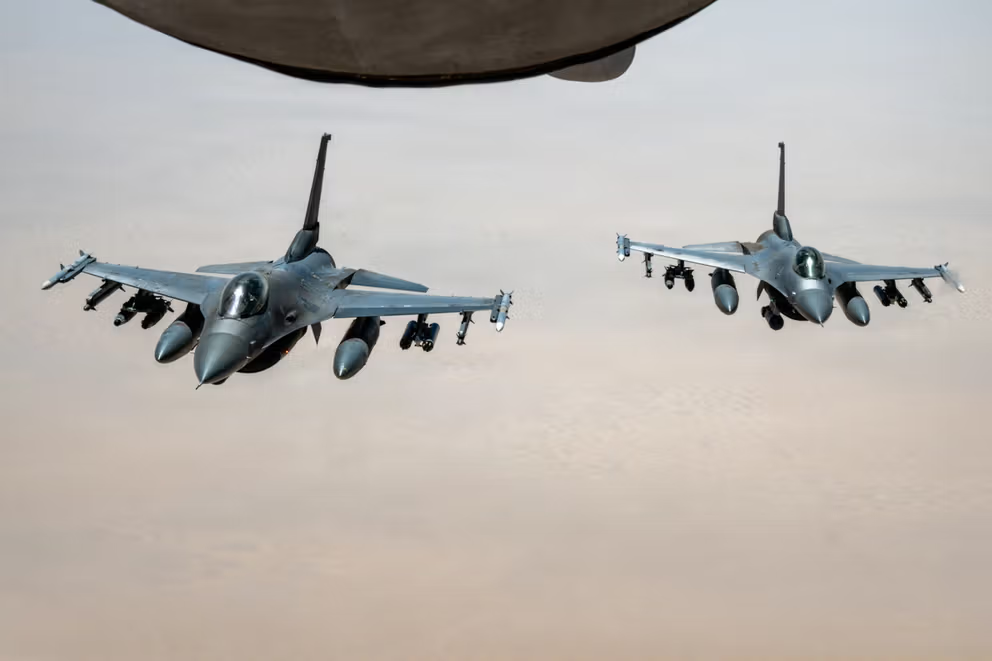
US forces intercepted and destroyed two Iranian drones that were posing a threat to maritime traffic in the Strait of Hormuz, according to CENTCOM. The narrow waterway is one of the world’s most critical shipping routes, and any threat to vessels passing through it carries significant economic and strategic weight.
The downing of the drones followed an exchange of strikes between Washington and Tehran a day earlier. During that earlier flare-up, Iran also fired on Kuwait and Bahrain, widening the scope of the confrontation beyond a direct US-Iran clash.
A New Plan to Pay for the Damage
In an unusual twist, the US is reportedly preparing to allow Iranian assets to be used to fund repairs in Gulf states harmed by any future Iranian attacks. According to a source, the idea is essentially to make Iranian resources help cover the cost of the destruction caused by Tehran’s own actions.
The approach signals an attempt to hold Iran financially accountable while supporting allied Gulf nations caught in the crossfire.
Diplomacy Under Strain
Even as the strikes continue, efforts to ease the conflict are ongoing. Pakistan’s Interior Minister Mohsin Naqvi has traveled to Iran to take part in further negotiations.
But the timing is difficult. The recent attacks have placed even greater pressure on what was already a shaky truce between Washington and Tehran. Each new escalation risks unraveling whatever fragile understanding the two sides had reached.
Bloodshed in Lebanon
The violence isn’t confined to the waters of the Gulf. In southern Lebanon, both the Israeli and Lebanese militaries have reported the deaths of personnel.
Israel says its military operations inside Lebanon are aimed at Hezbollah, the Iran-backed group that has refused to accept a ceasefire extension agreed upon by the Israeli and Lebanese governments. Because Hezbollah was never a party to that agreement, the group has continued its fight regardless of the diplomatic arrangement reached between the two states.
Israel Intercepts Projectiles From Lebanon
Adding to the turmoil, the Israel Defense Forces announced on Sunday that they had intercepted two projectiles fired from Lebanon into northern Israeli territory.
According to the IDF, the interception happened just before 9 a.m. local time, after warning sirens sounded in the Yiftah and Ramot Naftali areas. The military shared the update on Telegram.
This incident underscores just how quickly the conflict along the Israel-Lebanon border has heated up.
Why Hezbollah Remains a Wild Card
A central problem in the current crisis is Hezbollah’s position outside the formal ceasefire. While the Israeli and Lebanese governments managed to reach a US-mediated agreement earlier in the week, Hezbollah was not included in those talks — and it has flatly rejected the deal.
That refusal matters for several reasons:
- The group continues to operate independently of the Lebanese government’s diplomatic commitments.
- Fighting in southern Lebanon has intensified despite the official ceasefire.
- As an Iran-backed force, Hezbollah’s actions tie the Lebanon front directly to the broader US-Iran confrontation.
In short, even a successful agreement between governments can fall apart when a powerful armed group simply refuses to comply.
The Strait of Hormuz: A Strategic Flashpoint
It’s worth understanding why the drone incident over the Strait of Hormuz is so significant. The waterway serves as a vital passage for a large share of the world’s seaborne oil. Any disruption there can ripple far beyond the region, affecting global energy markets and shipping routes.
By targeting maritime traffic with drones, Iran is applying pressure on one of the most sensitive chokepoints in international commerce. And by shooting those drones down, the US is signaling that it intends to keep the route open and protected.
A Conflict on Multiple Fronts
What makes this moment especially dangerous is how many separate threads are unfolding at the same time:
- Direct US-Iran strikes and counterstrikes.
- Iranian attacks reaching Gulf states like Kuwait and Bahrain.
- Drone threats against critical shipping lanes.
- Ground fighting and cross-border fire between Israel and Hezbollah in Lebanon.
Each of these elements feeds into the others, making the overall situation harder to contain. A breakthrough on one front can be quickly overshadowed by an eruption on another.
What Comes Next
For now, the picture remains fluid. Negotiations are still in motion, with figures like Pakistan’s interior minister working to bring the sides closer together. At the same time, the continued strikes and interceptions suggest that neither military pressure nor diplomatic effort has yet gained the upper hand.
The coming days will likely determine whether the fragile truce between Washington and Tehran can hold — or whether the combination of drone threats, Gulf state attacks, and the Hezbollah standoff pushes the region into an even wider conflict.
What’s certain is that the situation around Iranian drones in the Strait of Hormuz, and the broader confrontation it represents, remains one of the most volatile flashpoints in the world right now.
Author