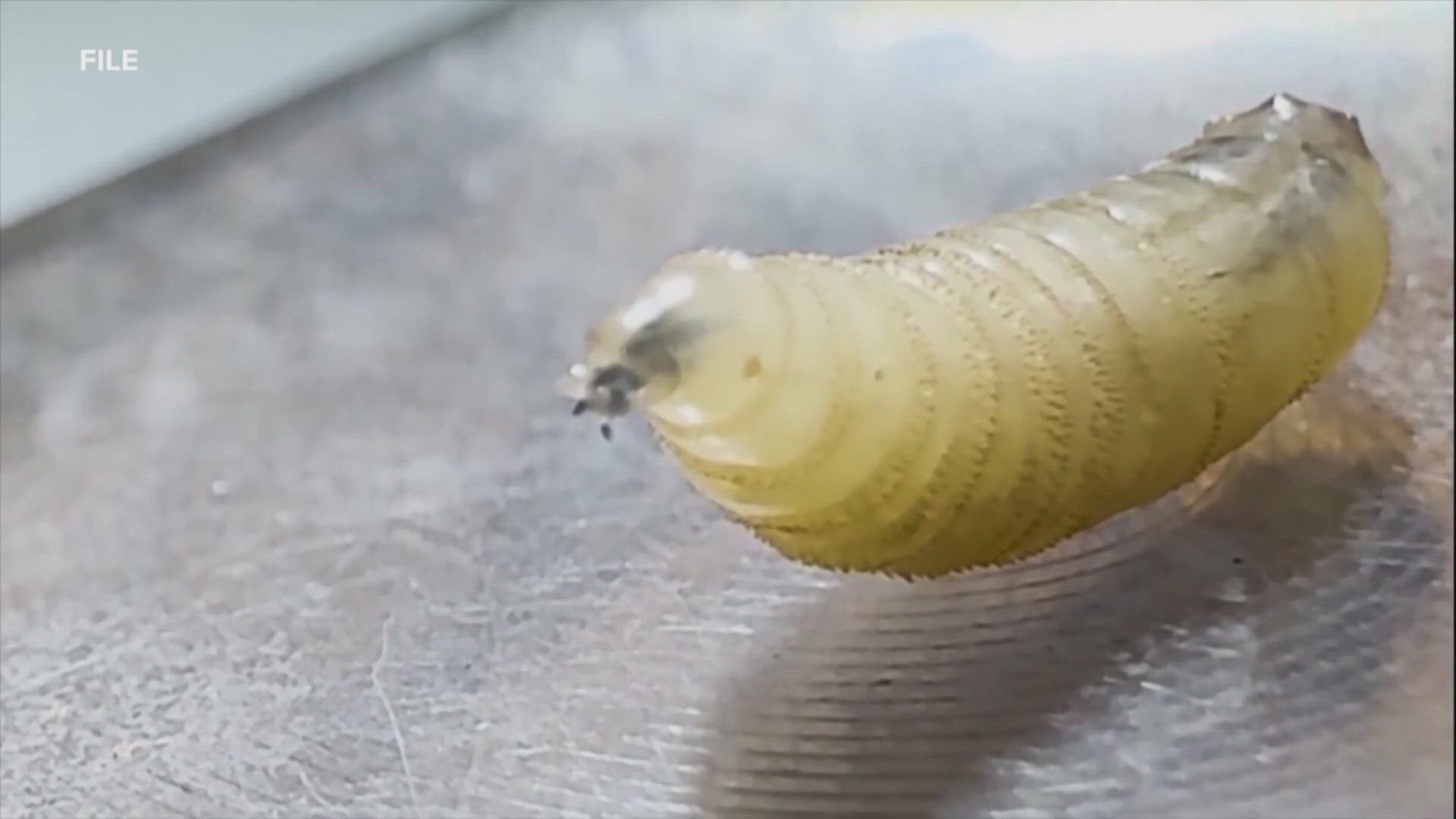
A second Texas screwworm case has been confirmed by the U.S. Department of Agriculture, intensifying concerns about a flesh-eating parasite that poses a serious threat to livestock. The new detection has already prompted Canada to slam the door on certain U.S. animal imports, turning a localized outbreak into a cross-border issue.
Despite the alarming nature of the pest, officials are urging calm, stressing that the U.S. food supply remains safe and that aggressive containment efforts are already in motion.
What Was Found, and Where
The latest case turned up in an unlikely victim: a one-month-old calf in Zavala County, Texas. The discovery was made by the USDA’s Animal and Plant Health Inspection Service, which announced the finding on Friday.
Notably, the new case was located just about 5.6 miles from the first confirmed case reported earlier this month. So far, additional samples gathered from the surrounding area have all tested negative — a small but encouraging sign that the problem may be contained.
The key facts of the situation include:
- A second case confirmed in a young calf in Zavala County
- The location sits roughly 5.6 miles from the first detection
- Surrounding-area samples have tested negative to date
- Both cases fall within an existing movement-control zone
What Exactly Is New World Screwworm?
The reason this parasite causes such concern lies in how it survives. New World screwworm larvae feed on the living tissue of warm-blooded animals, creating severe wounds that can be deadly if left untreated.
That makes it a danger across a wide range of hosts. The pest threatens livestock, wildlife, and pets, and in rare cases it can even infest humans. Because the larvae attack living flesh rather than dead tissue, an infestation can escalate quickly and become life-threatening for the affected animal.
Canada Responds With Import Restrictions
The discovery didn’t stay contained to Texas in terms of its consequences. It quickly triggered action north of the border.
The Canadian Food Inspection Agency announced on Friday that it would temporarily restrict imports of livestock — including horses — from affected areas of the United States. Under the new rules, any animal that originated in or was present in Texas within 21 days before attempting to cross the border will be denied entry into Canada.
The move reflects how seriously authorities are treating the parasite, opting for caution to keep the pest from spreading across international lines.
How Officials Are Fighting Back
Federal and state officials have been quick to frame the second case as a sign that their containment strategy is working, not failing.
They emphasized that the new detection occurred within an existing movement-control zone that was set up after the first case. Crucially, it falls within an area where sterile insects are already being released to suppress the screwworm population — a proven technique for driving down the pest’s numbers over time.
Dudley Hoskins, the USDA’s Under Secretary for Marketing and Regulatory Programs, struck a confident tone. He said the agency had not wasted any time in the fight, pointing out that the U.S. has defeated New World screwworm before and is prepared to do so again.
Is the Food Supply at Risk?
For consumers, this is likely the most pressing question — and the answer is reassuring.
The USDA stressed that the U.S. food supply remains safe despite the detections. According to the agency, New World screwworms do not infest meat, fruits, vegetables, or other food products. The parasite’s biology simply doesn’t lend itself to contaminating the food on grocery shelves.
The agency also explained that its safeguards would catch any problem before it reached the public. Any affected animal would be identified during inspection, and no contaminated product would be allowed to enter commerce.
A Call for Vigilance
While officials project confidence, they’re also leaning heavily on early detection — and that requires help from the people on the ground.
Texas Farm Bureau President Russell Boening urged livestock owners and all Texans to stay alert, calling surveillance and reporting a top priority. His message carried a clear logic: the faster an infestation is found, the faster the screwworm can be eradicated.
That emphasis on speed reflects how containment works with this kind of pest. Catching cases early keeps the population from expanding and gives eradication efforts like sterile insect releases a far better chance of success.
Why This Matters
The reappearance of New World screwworm in Texas is a reminder of how fragile agricultural biosecurity can be. A single parasite outbreak can ripple outward fast — threatening animal health, triggering trade restrictions, and forcing rapid coordination between federal agencies, state authorities, and international partners.
At the same time, the response so far highlights the tools available to fight back. Movement-control zones, sterile insect programs, rigorous inspections, and watchful livestock owners all play a role in keeping a dangerous pest in check.
What Comes Next
This remains a developing story, and the situation could evolve as testing continues and officials monitor the affected region. The negative results from surrounding samples offer hope that the outbreak is limited, but the second case shows the threat hasn’t fully passed.
For now, the focus stays on containment, vigilance, and prevention. With Canada’s import restrictions in place and the USDA’s eradication efforts underway, the coming days will reveal whether this latest Texas screwworm case marks the edge of a contained outbreak — or the start of a tougher fight against a parasite the country has battled before.
Author