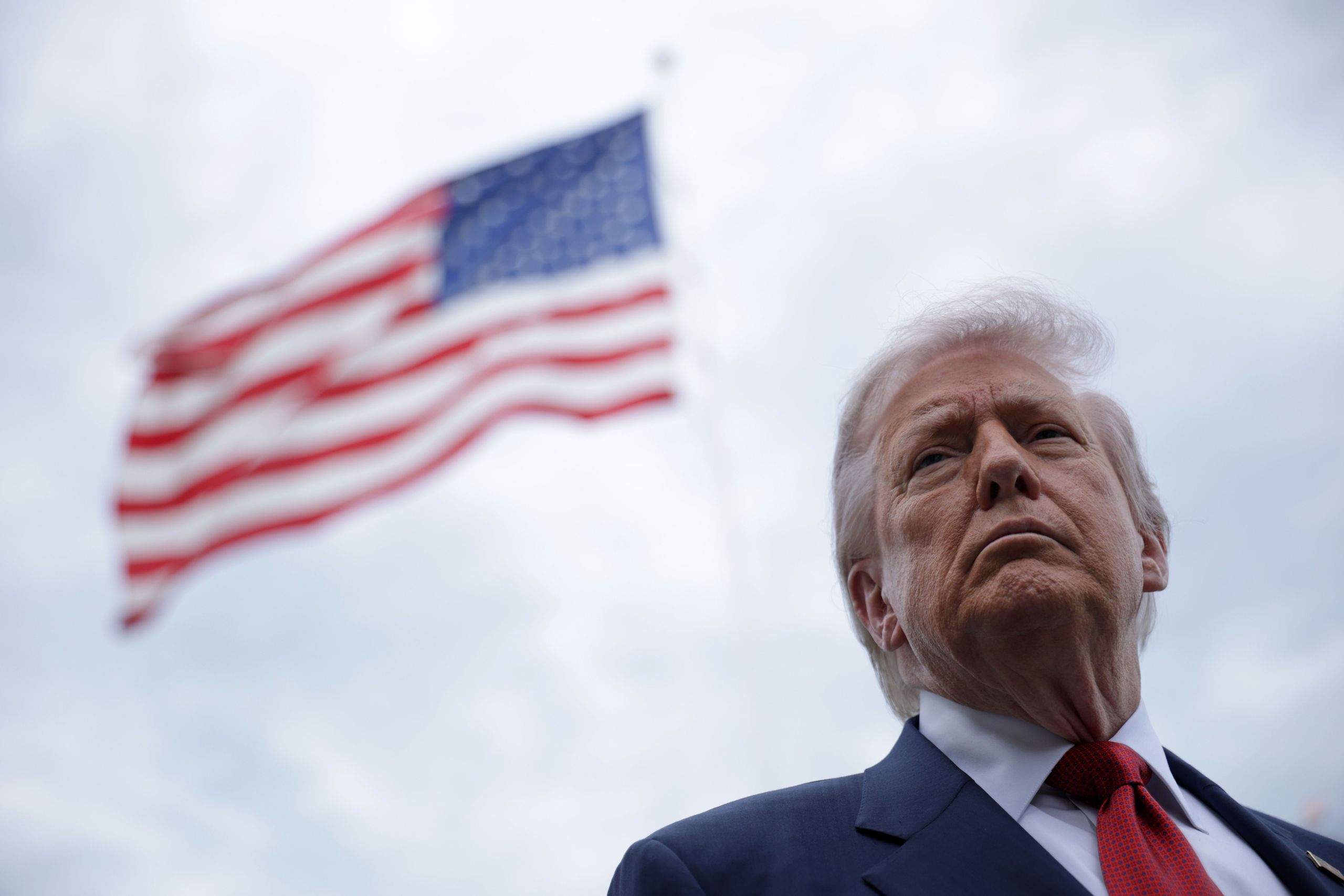
President Donald Trump is continuing to defend his Trump Anti-Weaponization Fund, urging congressional leaders on Sunday to approve the controversial $1.8 billion settlement reached between him and the IRS — even as legal challenges and bipartisan opposition mount.
Trump Makes His Case
In a pre-recorded interview that aired Sunday on NBC’s “Meet the Press,” Trump argued that the fund was meant to help people who suffered under the Biden administration. He claimed that individuals had been “hurt so badly by radical left lunatics” and said that, if it were up to him, he would pay those people what they “deserve.”
Trump painted a dramatic picture of the alleged harm, telling host Kristen Welker:
“People have been destroyed. Lives have been destroyed. Many suicides, think of it. People have committed suicide because a bunch of thugs went after them.”
He went on to praise the proposal directly: “So me, personally, I think the weaponization fund is a great idea, and so do many other Republicans. You have to get it approved. If they get it approved, that’s great. If they don’t get it approved, I’d be disappointed.”
What the Fund Actually Is
The Justice Department established the fund last month as part of a broader agreement among the DOJ, the IRS, and Trump. The arrangement was designed to settle Trump’s January 2026 lawsuit against the IRS over the leak of his and the Trump Organization’s tax returns, along with other related claims.
Under the plan, people who believed they had been targeted for prosecution for political reasons — including by the Biden administration’s DOJ — would be able to apply for payouts.
Legal Roadblocks
The fund’s path forward has been anything but smooth. A federal judge in Virginia temporarily blocked any payouts or efforts to establish the fund while other legal challenges continue to work their way through the courts.
The proposal has also drawn criticism from both sides of the aisle. Lawmakers have derided it as a “slush fund” intended to reward Trump’s allies — including those who stormed the Capitol on January 6, 2021. Trump pardoned those individuals on his first day back in office.
The January 6 Question
When Welker pressed Trump on whether anyone who attacked police officers on January 6 should receive taxpayer money, his answer was less than definitive.
“I wouldn’t be inclined to say so, but I have to see it,” Trump replied. He then pivoted to unfounded claims, asserting, “97 percent of those people, you look at them, the FBI or whoever it was, cause you had a lot of crooked cops, you had dirty cops.”
A Mixed Picture in Washington
The administration’s own position has appeared to shift. Following the judge’s ruling last month, acting Attorney General Todd Blanche told a House appropriations subcommittee that oversees DOJ funding that the administration was backing away from the plan entirely.
“We’re not moving forward with the fund, period,” Blanche stated.
Yet the issue is far from settled on Capitol Hill. Just last week, Senate Republicans rejected attempts to eliminate the fund, ultimately passing a $70 billion immigration bill that had initially stalled over language aimed at killing it.
The fund’s ultimate fate now rests in the hands of the courts and a divided Congress, leaving its future uncertain even as the president continues to champion it publicly.
Author