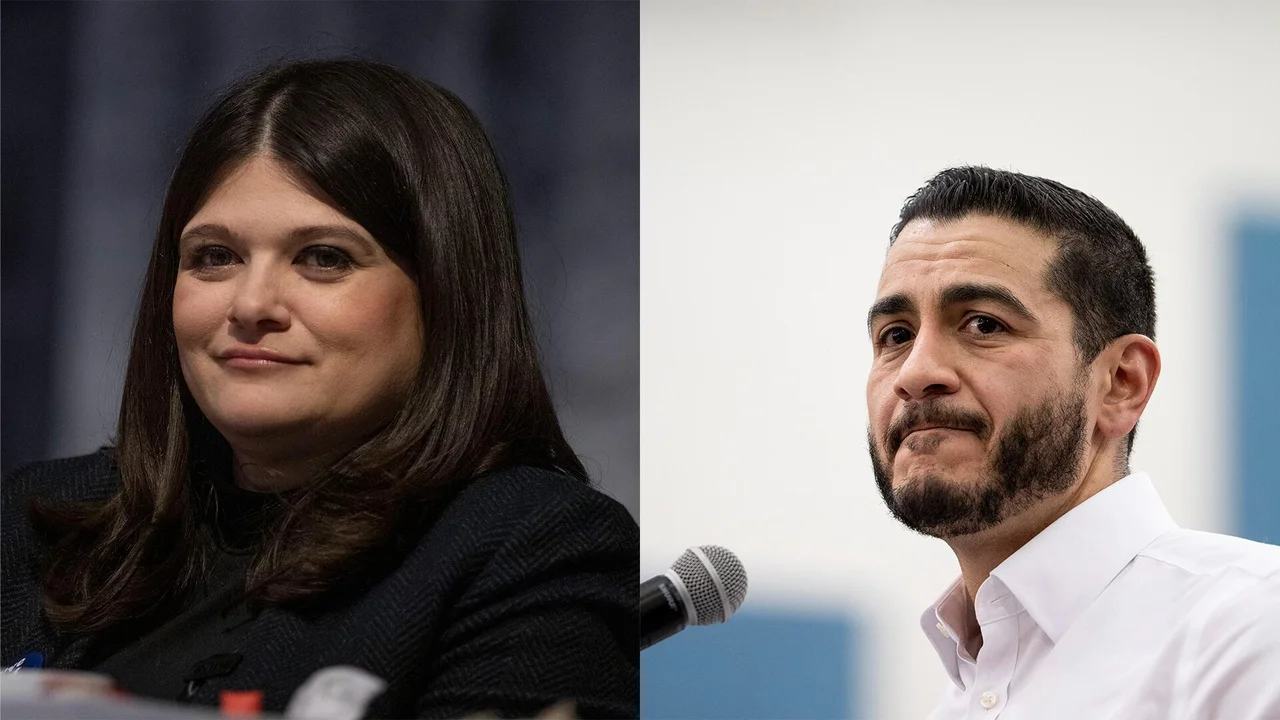
The Michigan Senate debate on Israel put the Jewish state at the heart of a fierce Democratic primary showdown Tuesday night, as two candidates staked out sharply different positions on Netanyahu, AIPAC, and US foreign policy. The exchange underscored how central the issue has become in a battleground state with large Jewish and Arab/Muslim populations.
A Surprising Turn From a Pro-Israel Democrat
Viewers might have struggled at times to remember that one of the candidates enjoys heavy backing from pro-Israel donors. Representative Haley Stevens, widely regarded as one of Congress’ more dependable pro-Israel Democrats, delivered pointed criticism of Israel’s leadership.
Asked about Iran, Stevens declared that Israeli Prime Minister Benjamin Netanyahu had failed, arguing that both he and President Donald Trump had fallen short of achieving lasting peace. She went further, voicing support for aid into Gaza and insisting that Netanyahu has been harmful to American Jews. She described him bluntly as a danger to Jews in America and around the world, saying he had neither made anyone safer nor brought the region closer to peace.
The remarks were striking given her financial support. According to federal campaign records, Stevens has received more than $10 million from donors affiliated with AIPAC, the very lobby her opponent has repeatedly attacked. Her comments also came as Democratic voters have broadly moved away from their traditional sympathies for Israel.
El-Sayed’s Blistering Attack
On the other side, progressive candidate Abdul El-Sayed showed no restraint. The former Wayne County health director, whose grassroots campaign has gained momentum by leaning into anti-Israel rhetoric, branded Israel a “rogue state” and argued that US foreign policy had been handed over to Israel and AIPAC.
El-Sayed’s accusations were sweeping. He tied the joint US-Israeli war on Iran to AIPAC’s influence, claiming the lobby’s goals included annexing Lebanon and carrying out what he called genocide in Gaza. He accused Israel of human rights abuses, genocide, and apartheid, and called for the US to stop writing what he described as unilateral blank checks to the Israeli military.
He even connected the issue to voters’ economic frustrations, urging Michiganders to ask why they were paying $5 for gas and stuck in what he called a quagmire, blaming a foreign policy he said had long been dictated by Israel and AIPAC to ensure the compliance of both parties.
Notably, El-Sayed argued there was no meaningful difference between Stevens and the presumptive Republican nominee, former congressman Mike Rogers, on Israel. He contended that AIPAC would be satisfied with either of his opponents, confident of securing a reliable Senate vote regardless of the outcome.
Stevens Pushes Back
Stevens, who reaffirmed her support for a two-state solution, rejected the suggestion that her positions were bought. She insisted that no one owns her vote or her policies, saying contributors support her campaign because of her proven record of fighting for Michigan.
El-Sayed, however, questioned the sincerity of her sparring with Netanyahu, who is deeply unpopular with American voters. Earlier that day, Netanyahu had told CNN that Stevens’ previous comments accusing him of endangering American Jews amounted to her “probably trying to excuse antisemitism.” El-Sayed suggested the exchange wasn’t authentic, arguing that Netanyahu was attacking Stevens not genuinely, but to help her distance herself from how firmly she has backed Israeli policy.
A Contested Vote and a Trap
The debate also revisited a specific vote. El-Sayed criticized Stevens over a June 2025 House measure that thanked Immigration and Customs Enforcement officers, an appreciation embedded within a resolution condemning the firebombing of a peaceful march for Israeli hostages in Boulder, Colorado. Stevens accused Republicans of cynically inserting the ICE language and said El-Sayed had fallen into a GOP-laid trap.
A Race Reflecting a Broader Shift
Israel has grown increasingly central ahead of Michigan’s August 4 primary, a dynamic heightened by the recent exit of a third candidate who had tried to occupy a middle ground, a development that has stirred anxiety among American Jews.
The contest carries historical weight. Stevens’ Senate bid comes four years after she ousted Andy Levin, a Jewish progressive who had criticized Israel, in a race that drew more than $4 million in AIPAC-affiliated spending. Since then, she has remained among a shrinking group of House Democrats who have voted against every measure to block or condition military aid to Israel.
El-Sayed’s campaign, by contrast, rides a wave of anti-Israel progressives winning congressional primaries and shifting Democratic discourse leftward. In a separate CNN interview published Tuesday, he challenged the very concept of a Jewish state, asserting that every definition of one ends in some form of illiberal values. Asked whether support for Israel could ever amount to more than money, he replied that it could not, at least not for a Democrat committed to human rights.
Ripple Effects Down the Ballot
The Israel divide is reshaping other Michigan races as well. El-Sayed has cross-endorsed two left-wing congressional candidates, state Rep. Donavan McKinney and activist William Lawrence, both of whom have accused Israel of genocide in Gaza. Stevens, meanwhile, has endorsed pro-Israel Jewish state Sen. Jeremy Moss for her House seat.
Further down the ballot, Democratic activist Abbas Alawieh, a key architect of the 2024 “Uncommitted” movement that pressured national Democrats over Gaza, picked up an endorsement Tuesday from Michigan Gov. Gretchen Whitmer in his state senate bid. Alawieh has also met with former Vice President Kamala Harris, who lost Michigan to Trump after the state’s large Arab/Muslim population voiced strong dissatisfaction with her stance on Israel.
As the primary approaches, the race has become a vivid test of where the Democratic Party stands on Israel, with each candidate betting that a very different answer will carry them to victory.
Author