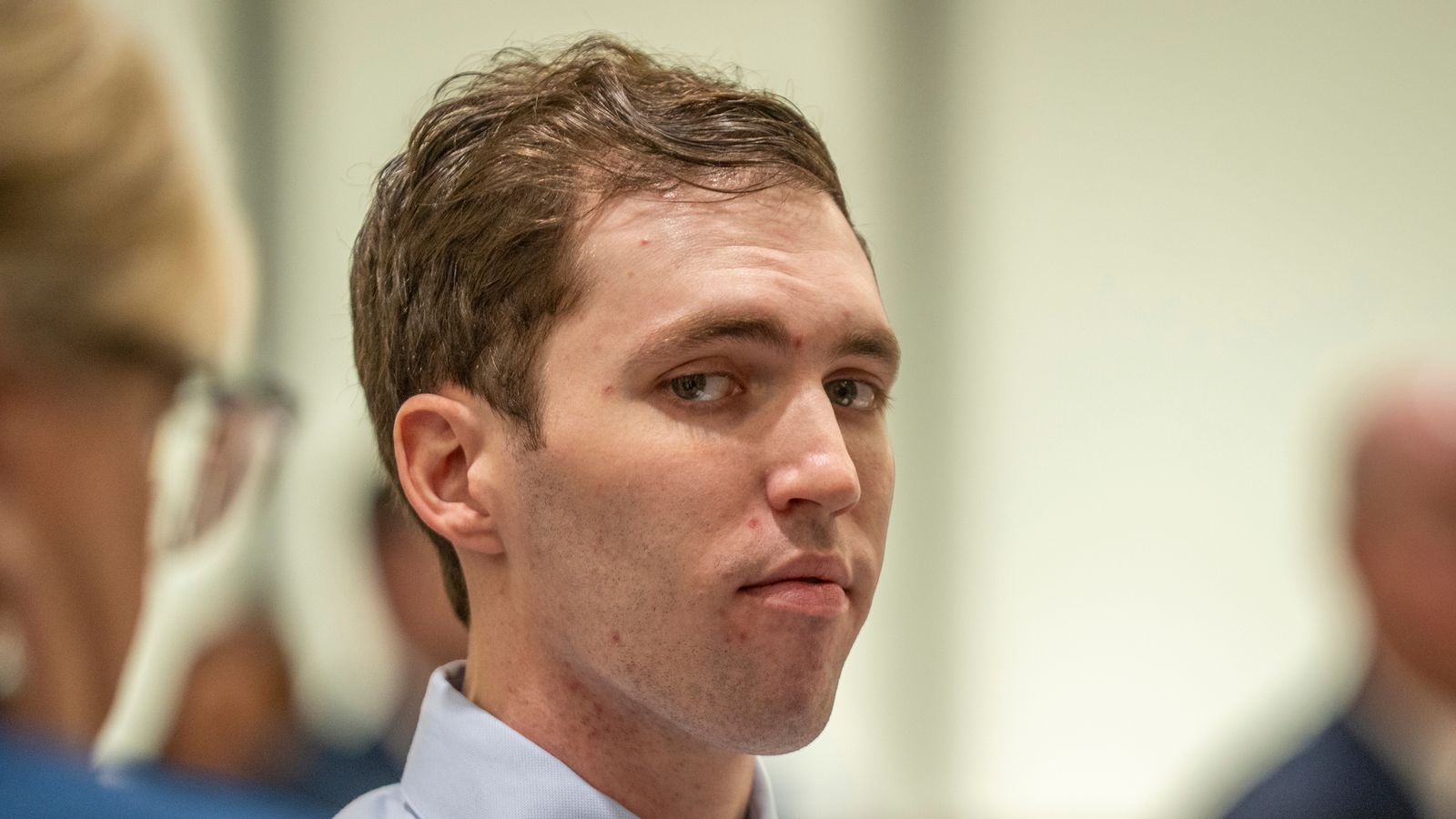
New details in the Charlie Kirk shooting emerged this week as a Utah court heard that the accused gunman wandered the university campus, ate a meal at Chick-fil-A, and even interacted with the activist’s own staff in the hours before the fatal attack. The testimony came during a preliminary hearing that will determine whether the case is strong enough to move toward trial.
Tyler Robinson, 23, stands accused of fatally shooting Kirk as the conservative activist addressed an audience at Utah Valley University on September 10, 2025. Robinson has not entered a plea, and throughout the proceedings his lawyers have challenged much of the evidence and expert testimony presented against him.
A Timeline of the Suspect’s Alleged Movements
The hearing’s second day centered on surveillance footage and the testimony of David Hull, lead investigator for Utah’s State Bureau of Investigation. Hull walked the court through video that prosecutors say captures Robinson on campus repeatedly on the day of the killing.
According to Hull’s account, the suspect’s movements unfolded roughly like this:
- About four hours before the attack, a man identified as Robinson strolled around campus in a T-shirt and shorts and bought a meal at Chick-fil-A.
- During that time, he approached members of Kirk’s Turning Point USA organization, though Hull did not elaborate on what was said.
- Robinson allegedly left and returned about 90 minutes before the attack, this time wearing different clothes and appearing to walk with a limp.
- Footage then reportedly showed him heading to the Losee Building and rolling over a railing onto the rooftop.
Shortly after the fatal shot was fired, Hull testified, the same man could be seen running across the roof, dropping down while holding an unknown object, and leaving the campus. The video also appears to show the suspect jumping from the roof while carrying something in his hands. A rifle was later recovered in a wooded area investigators believe Robinson passed through.
A Return to the Scene
In one of the more striking details, Hull testified that Robinson allegedly came back to the school hours after the shooting. During an active manhunt in the early hours of September 11, an officer briefly spoke with him near campus.
Hull said Robinson had tried to drive a grey Dodge Challenger onto campus but pulled away after the brief exchange. The officer noted the vehicle’s license plate, a detail that would later factor into the investigation.
The Defense Pushes Back
Robinson’s defense team, led by attorney Kathy Nester, has worked aggressively to undercut the prosecution’s case and has argued that the death penalty should be taken off the table. Much of Tuesday was spent trying to poke holes in the evidence on display.
Under questioning, Hull made several concessions that the defense seized on:
- At least one other weapon had been found on campus the day of the shooting.
- No shell casings were discovered on the rooftop near a suspected “sniper pad,” an impression in the gravel that appeared to mark where a shooter had been lying with a clear line of sight to Kirk.
Nester also told the court that some witnesses had described a different suspect on the rooftop, while others interviewed by police claimed a bald man had been driving the vehicle attributed to Robinson in earlier security footage.
The defense objected repeatedly across the first two days of the hearing. They argued that some footage had been edited and pointed out that the people who originally recorded it were not on the stand and therefore could not be questioned. These persistent challenges have offered the first real glimpse into a defense strategy that had remained largely a mystery since Robinson’s arrest.
The DNA Evidence
After Hull stepped down, prosecutors called Jennifer Faumuina, a sergeant with the state bureau of investigation, who described how investigators processed DNA recovered from a screwdriver, a rifle, and a towel found after the shooting.
Prosecutors then introduced an FBI report concluding that the DNA matched Robinson, along with his roommate and romantic partner, Lance Twiggs, who has cooperated with police.
The defense countered by calling its first witness, FBI forensic analyst Amanda Bakker, who signed the DNA report. Nester questioned her at length about testing protocols and the potential for interpretation errors, continuing the effort to cast doubt on the reliability of the forensic findings.
What This Hearing Actually Decides
It’s worth understanding what is and isn’t at stake this week. The hearing, expected to conclude Friday, is not a trial. Judge Graf will not rule on Robinson’s guilt or innocence. Instead, the judge will weigh whether prosecutors have presented enough evidence for the case to proceed to a full trial.
Though the proceedings can look and feel like a trial, the legal bar is much lower at this stage. Prosecutors only need to show reasonable grounds that Robinson should stand before a jury. That contrasts sharply with an actual trial, where the standard rises to proving guilt beyond a reasonable doubt.
For now, the competing accounts remain unresolved. Prosecutors have laid out a detailed timeline placing Robinson on campus before and after the killing, while his defense chips away at the footage, the forensic evidence, and the witness descriptions. The remainder of the week is likely to bring further clashes over just how solid the state’s case really is.
Author