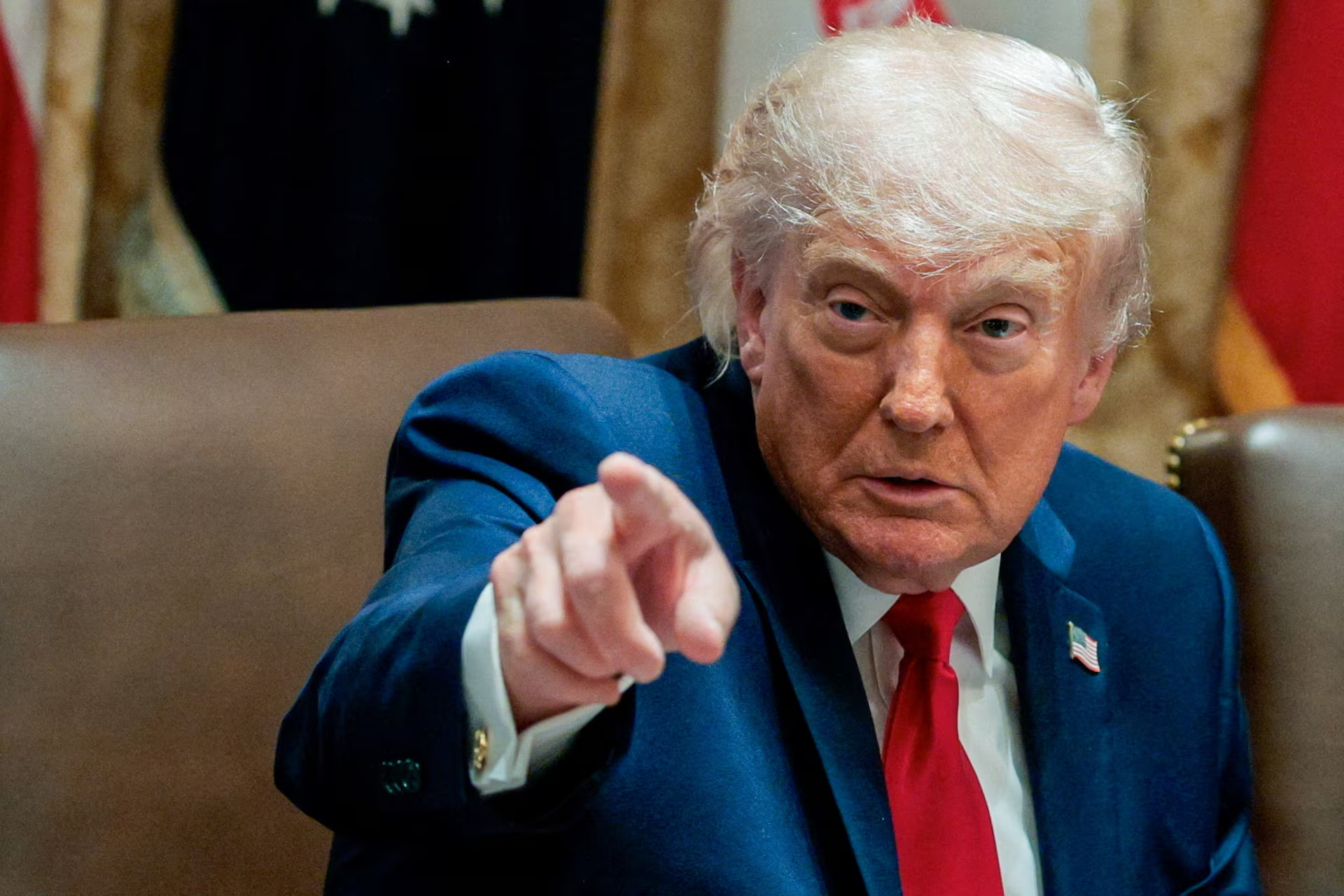
The US-Iran nuclear deal moved into sharper focus on Monday, with President Donald Trump declaring that Tehran had committed to never building a nuclear weapon. The announcement came amid a flurry of developments tied to the framework peace agreement, even as fighting flickered on in Lebanon and key details of the deal remained out of public view.
A Strait Set to Reopen
One of the most consequential claims of the day centered on the Strait of Hormuz. Trump said the vital waterway would be “completely open” by Friday, following agreement on a memorandum of understanding between the US and Iran to end the war. The text of that document has not yet been released publicly.
A formal signing ceremony is scheduled for Friday in Geneva, where US Vice-President JD Vance and chief Iranian negotiator Mohammad-Bagher Ghalibaf are expected to attend.
There were early signs of movement on the water. According to Iranian media, three oil tankers and two cargo ships passed through a section of the strait that had been under a US naval blockade on Monday evening. Trump had said earlier in the day that vessels were once again on the move.
Lebanon: Ceasefire Without Withdrawal
The deal extends a ceasefire to Lebanon, but it stops short of requiring Israeli troops to pull out of the areas they currently occupy. That gap has left diplomatic work unfinished.
Lebanese Prime Minister Nawaf Salam said talks with the US were continuing in pursuit of a full withdrawal of Israeli forces from southern Lebanon. The fragility of the moment was underscored by fresh violence on the ground:
- An Israeli drone struck a car earlier in the day, killing its driver, in what Lebanon’s National News Agency described as the first deadly strike since the peace agreement was announced.
- Hezbollah later said it had used rockets and drones to target an Israeli force attempting to advance in southern Lebanon.
Despite the clashes, Hezbollah welcomed the broader Iran-US agreement, framing it as a comprehensive ceasefire across all fronts, Lebanon included. The Iran-backed group said it would not tolerate any attacks violating Lebanese sovereignty or targeting its people, and cast Lebanon’s inclusion as proof of Iran’s commitment to ending the war.
Netanyahu Digs In and Eyes Re-election
In his first public address since the deal, Israeli Prime Minister Benjamin Netanyahu made clear that Israeli forces would not be leaving occupied territory anytime soon. He said troops would remain in Lebanon, Gaza, and Syria “for as long as necessary.”
In the same breath, Netanyahu delivered a notable political announcement: he intends to run for re-election.
Meanwhile, Israel’s military said it had killed two Hamas commanders in strikes in Gaza on Monday, a reminder that the wider conflict continues even as the framework deal advances.
The Nuclear Question
At the heart of the agreement lies the issue that has long defined tensions between Washington and Tehran. Trump reiterated that Iran had agreed never to possess a nuclear weapon. Reinforcing that point, Vance said nuclear inspectors would “absolutely” be permitted to return to Iran as part of the deal, a step seen as essential to verifying any commitment.
A Reported $300 Billion Carrot
One of the more eye-catching reports of the day concerned the potential financial incentives on offer. According to the Financial Times, the Trump administration is prepared to allow the creation of a $300 billion investment fund for Iran, contingent on Tehran agreeing to a final settlement that includes a nuclear deal.
Trump, however, brushed the report aside, dismissing it as “fake news.”
Markets Breathe a Sigh of Relief
The prospect of an end to the conflict rippled quickly through global markets. Oil prices tumbled on renewed hopes that the deal might resolve what has been described as the most severe energy supply crisis in the market’s history. As the new trading week opened across the Asia-Pacific, the price of Brent crude slipped below $84 a barrel.
Tension With India Lingers
Not every thread of the story pointed toward calm. Anger continued to build in India over the United States’ refusal to apologize for the deaths of Indian sailors killed in strikes in the Strait of Hormuz. The dispute has further strained relations between the two nations, an awkward backdrop as their leaders prepare to meet at the G7 summit in France this week.
Where Things Stand
For now, the framework agreement represents progress without resolution. A signing awaits on Friday, the strait is inching back toward normal, and the nuclear commitments still need to be verified, all while Israeli forces remain entrenched and sporadic violence persists in Lebanon and Gaza.
This is a fast-moving and sensitive story, and the days ahead, particularly around Friday’s ceremony in Geneva, will reveal how durable the deal truly is.
Author