The fate of the Trump administration’s controversial Anti-Weaponization Fund grew murkier on Wednesday after a federal judge declined to issue an emergency order halting it, while simultaneously delivering a sharp warning to government attorneys. The ruling leaves the $1.776 billion fund in legal limbo, with multiple courts still weighing its future.
A Ruling With a Warning Attached
U.S. District Judge Richard Leon sided with the administration from the bench, refusing the watchdog group’s request for a temporary restraining order. Yet he closed the hearing on a pointed note, telling a government attorney plainly not to “play possum” with the court.
The message was clear: while Leon was prepared to take the administration at its word for now, he intended to hold it accountable. Nominated to the bench by Republican President George W. Bush, Leon said he accepted the government’s representations at this stage, but signaled little patience for any attempt to mislead him.
The Administration’s Mootness Argument
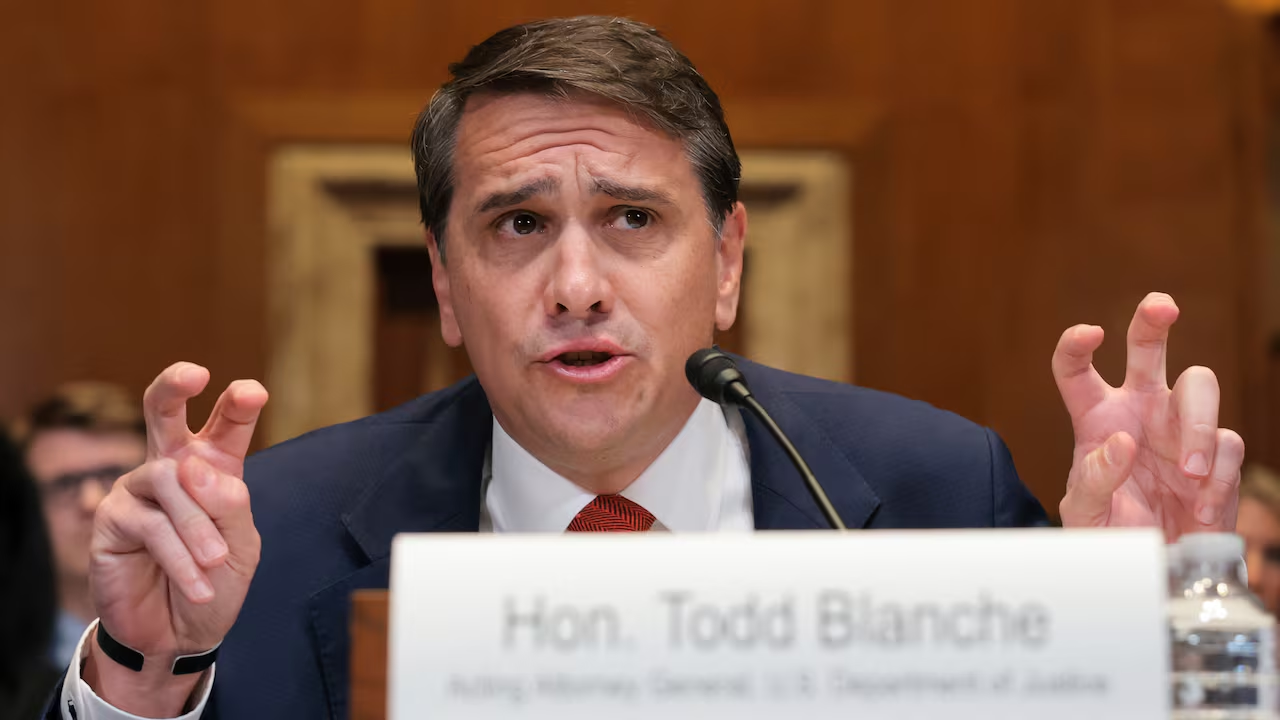
The administration argued that the lawsuit had become moot. Acting Attorney General Todd Blanche had told Congress earlier this month that the government was abandoning its plans for the fund, and the Justice Department contended that this rendered the challenge unnecessary.
The watchdog behind the suit, Citizens for Responsibility and Ethics in Washington, disagreed. Leon’s refusal to grant a restraining order was far from the final word. He indicated he would still consider the group’s separate request for a preliminary injunction, which would block payouts on a more lasting basis.
Another Court Has Already Stepped In
Leon’s decision was not the only judicial action affecting the fund. In Alexandria, Virginia, U.S. District Judge Leonie Brinkema had already temporarily halted the fund’s operations. That order, however, was set to expire Friday unless extended following a hearing scheduled for the same day.
The overlapping cases reflect how many fronts the legal fight has opened across the federal court system.
How the Fund Came to Be
The administration established the fund last month to settle Trump’s lawsuit against the Internal Revenue Service over the leak of his tax returns. So far, the mechanism exists largely on paper. The Justice Department has not yet formed the five-member commission tasked with setting payout criteria, meaning no money has been distributed and no claims have been accepted.
A Rare Bipartisan Backlash
Few of the administration’s initiatives have drawn opposition from across the political spectrum quite like this one. Even many of Trump’s own allies have balked at the prospect of compensating people who stormed the U.S. Capitol on January 6, 2021.
The concerns sharpened during a May 19 congressional hearing, when Blanche declined to rule out the possibility that rioters who assaulted police officers at the Capitol could qualify for payments. The implication alarmed lawmakers on both sides.
Conflicting Signals From the Administration
The government’s position has been anything but consistent. At a House hearing on June 2, Blanche stated flatly that the administration was not moving forward with the fund. Pressed by New York Democrat Grace Meng on whether that meant never, he confirmed it did.
But the courtroom revealed cracks in that account. Leon asked Justice Department attorney Andrew Block why Blanche hadn’t formally rescinded his May 18 order creating the fund. Block said he didn’t know the reason, while maintaining that Blanche’s statements to Congress were enough to render the watchdog’s claims moot. He also argued the group lacked legal standing to sue.
Trump Undercuts His Own DOJ
The strongest evidence against the administration’s mootness claim came from Trump himself. Plaintiffs’ attorney Nikhel Sus pointed out that, just one day after Blanche’s House testimony, Trump expressed support during a June 3 interview for continuing with the fund despite the Virginia ruling against it.
Sus argued that nothing had genuinely changed, noting that on paper the fund remained a legally operating entity. The contradiction between the president and his acting attorney general handed critics a powerful talking point.
Allegations of Fraud on the Court
The legal scrutiny extends beyond the question of whether the fund survives. In Florida, U.S. District Judge Kathleen Williams, who oversees Trump’s lawsuit against the IRS, ordered the president’s attorneys to respond to what she described as grave allegations. Critics of the settlement claim Trump abandoned his case to dodge the court’s examination of what they call an illegal deal.
Williams gave the attorneys until Friday to address accusations of collusion in writing, and to explain whether the case should be reopened on the grounds that the court may have been the victim of a fraud.
The Virginia Front
The fight is also playing out in Virginia, where attorneys from the legal advocacy group Democracy Forward are seeking to permanently block the fund’s implementation and prevent any disbursements. The plaintiffs in that case include a fired prosecutor and a college professor who was acquitted of assaulting federal agents at a protest.
An Uncertain Road Ahead
For now, the Anti-Weaponization Fund exists in a strange state of suspension: officially scrapped according to Blanche, still legally intact according to its critics, and championed by the president even after his own administration claimed to walk away from it.
With pending decisions in Washington, Virginia, and Florida all converging in the days ahead, the fund’s ultimate fate remains genuinely unsettled. What is certain is that the courts, as Leon made clear, will be watching closely to ensure the administration’s words match its actions.
Author