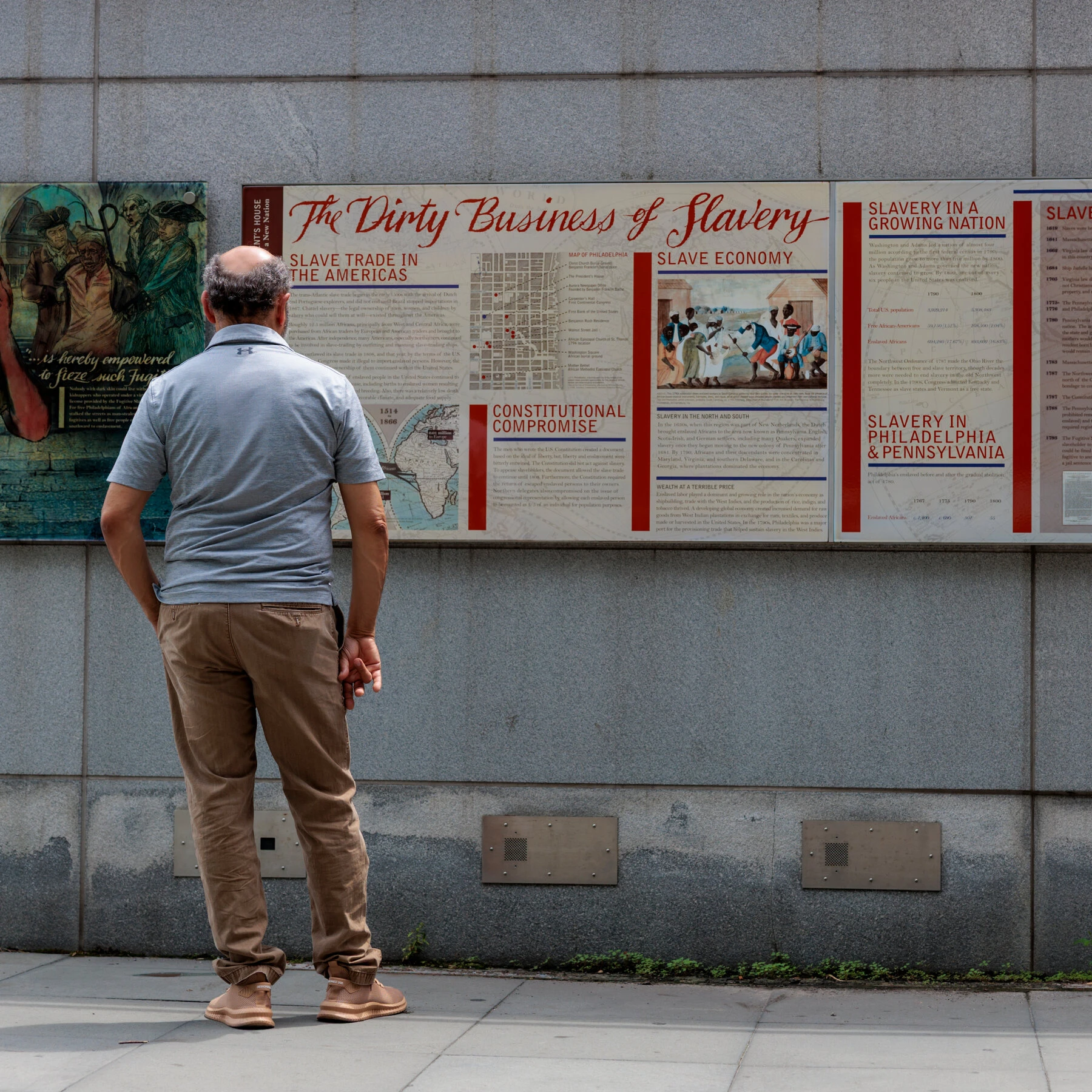
A federal judge has ordered national park signage restored across the country, ruling against a Trump administration effort to strip away references to climate change, slavery, and Indigenous and LGBTQ+ history. The signs had been removed under an executive order targeting language that allegedly portrayed America in an unflattering light.
The ruling reverses a sweeping purge that touched some of the nation’s most significant historic sites—and reignites a broader fight over how the United States tells its own story.
What Got Erased
The scope of the removals was wide. According to the lawsuit challenging the policy, the executive order led to the deletion of:
- References to President Washington’s enslaved people at Independence National Historical Park in Philadelphia
- Signs about climate threats at Fort Sumter in South Carolina
- A pride flag at the Stonewall National Monument in New York City
California sites were hit hard too. Language describing the internment of Japanese Americans at the Manzanar National Historic Site came under scrutiny, as did historical material about Indigenous peoples at Death Valley and Muir Woods.
The Judge’s Sharp Rebuke
U.S. District Judge Angel Kelley, based in Boston, issued the preliminary injunction on Friday. She sided with a coalition of conservation and historical groups, ordering all language removed under the order to be reinstated before the Fourth of July. An earlier ruling this year had already directed the restoration of signage about Washington’s enslaved workers.
Kelley did not mince words. She accused the administration of attempting “to rewrite the Nation’s history with a white-out pen,” and stressed that national parks exist to convey the full sweep of American history—”the good, the bad, and the ugly.”
She tied her reasoning directly to the country’s upcoming milestone. Because officials had moved to strip the parks of difficult truths ahead of the 250th anniversary, she argued, it was all the more important that the nation’s shared history be honestly told and fully restored by that same anniversary—so the country’s genuine achievements could be properly honored.
The Administration Pushes Back
The Interior Department was dismissive. A spokesperson brushed off the decision as the handiwork of a “liberal activist judge.”
The same spokesperson said the department would weigh its appeal options, while pivoting to a celebratory note about a UFC event planned on the White House South Lawn over the weekend in honor of the nation’s 250th anniversary, praising Trump in glowing terms.
Where the Order Came From
Trump signed the original executive order in March 2025. His argument: that a revisionist movement was working to undermine American history by swapping objective fact for what he called a distorted, ideologically driven narrative.
The order claimed that under this revision, America’s legacy of advancing liberty and individual rights was being recast as fundamentally racist, sexist, or otherwise beyond redemption.
The directive’s reach was enormous. More than 430 sites overseen by the National Park Service were instructed to review the language on monuments, memorials, statues and markers to ensure none of it disparaged Americans, past or present. Officials paid particular attention to wording added during the Biden administration. The order even introduced QR codes at park sites, inviting visitors to flag any signage they believed crossed the line.
The Coalition That Fought Back
In February, a group of organizations took the administration to federal court in Boston. The coalition included the National Parks Conservation Association, the American Association for State and Local History, the Association of National Park Rangers, and the Union of Concerned Scientists. Their core argument was blunt: the order was erasing American history and science.
Alan Spears, senior director of cultural resources at the parks conservation association, framed the stakes in plain terms. He described national parks as living classrooms where science and history come alive for visitors, and argued that Americans deserve parks that recount both the country’s triumphs and its heartbreaks. “We can handle the truth,” he said.
For now, the injunction means those harder truths are headed back to park signs across the country—just in time for a 250th anniversary that has become a flashpoint in the larger battle over American memory.
Author