The EU accession process for Ukraine and Moldova is set to officially launch next week, marking a major breakthrough after months of deadlock—made possible by Hungary’s new government lifting the veto that had stalled Kyiv’s membership bid.
The decision represents a significant moment for two nations that view EU membership as a vital shield against Russian aggression.
A Long-Awaited Restart
At a meeting in Brussels on Friday, ambassadors from all 27 EU member states agreed to formally recommence negotiations with Ukraine and Moldova in Luxembourg on Monday.
The path to this point has been anything but smooth. EU leaders first agreed to open accession talks with both countries back in December 2023, and entry negotiations were formally launched in June 2024. But the process soon stalled, held up by opposition from Hungary—then led by pro-Russian Prime Minister Viktor Orban—to Kyiv’s candidacy.
The Hungarian Turning Point
The logjam finally broke with a change of government in Budapest. Hungary’s new administration, which took power in May, agreed last week to drop Orban’s veto, clearing the way for the accession process to resume.
European Council President Antonio Costa and European Commission President Ursula von der Leyen confirmed the development in a joint statement, announcing that all member states had agreed to open the first cluster of accession negotiations with the two countries. They framed the move as a reward for hard-won progress.
“This is a recognition of the determination, courage and hard work shown by both countries in advancing reforms, even in the face of immense challenges,” they said, adding that “enlargement is a strategic choice” and that “a larger European Union is in our common interest.”
Why Membership Matters to Kyiv and Chisinau
For both Ukraine and Moldova, the stakes go well beyond economics. Each views EU membership as an added layer of security against Russia, which insists that maintaining control over its “near abroad”—its term for the post-Soviet states—is essential to its own national security.
The original decision to open talks in 2024 was, in large part, symbolic—a powerful demonstration of EU solidarity with Ukraine following Russia’s full-scale invasion in 2022.
Hungary’s Conditions Remain
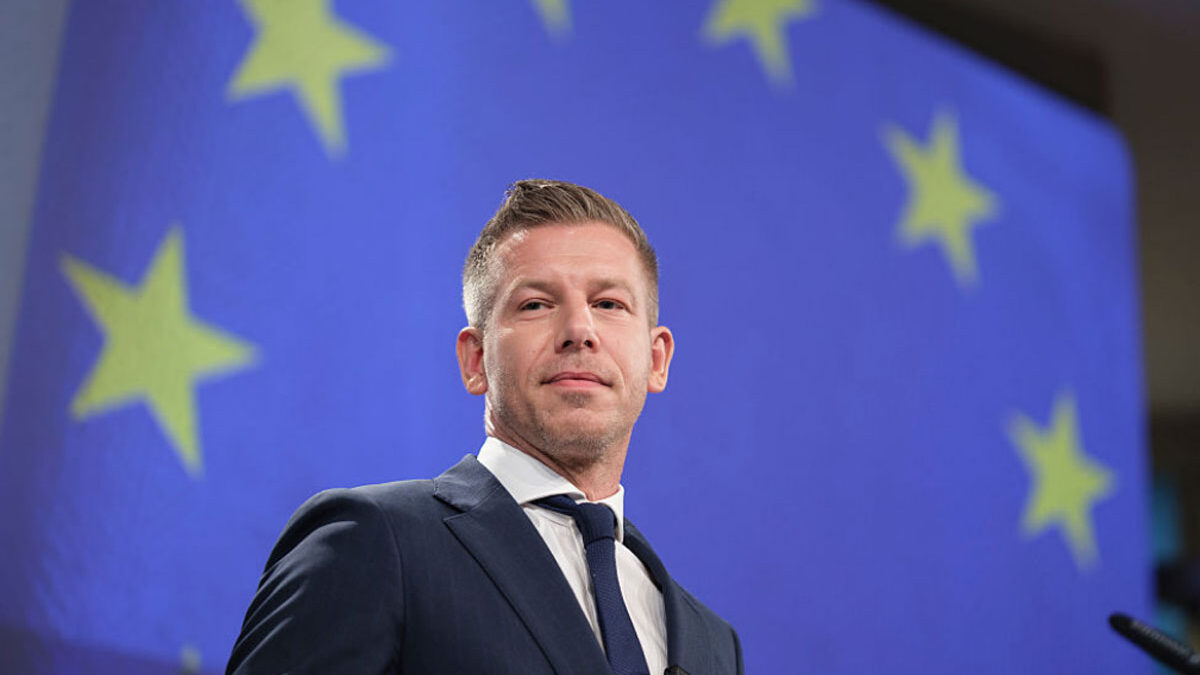
Even with the veto lifted, Budapest hasn’t given Kyiv a blank check. New Hungarian Prime Minister Peter Magyar struck a deal with Ukraine last week over the rights of the country’s ethnic Hungarian minority—a long-running point of friction between the neighbors.
But Magyar has made clear that Hungary’s support comes with limits:
- He opposes any fast-track procedure for Ukraine to join the bloc
- He said Budapest will hold a referendum on Ukraine’s membership
- That vote would only come if Ukraine manages to close all 33 accession chapters, a process he framed as potentially taking 10 to 15 years
What Happens Next
The negotiations beginning Monday will open with the “fundamentals” section of the process. According to Costa and von der Leyen, this covers the basic principles—including the rule of law—that both candidate countries will be required to uphold.
It’s the first step in what is typically a long and complex journey. EU accession usually takes years and demands negotiations on everything from agriculture to judicial standards. Still, for Ukraine and Moldova, simply getting back to the table after months of paralysis is a meaningful victory—and a clear signal that, despite the hurdles ahead, their European future remains firmly on track.
Author