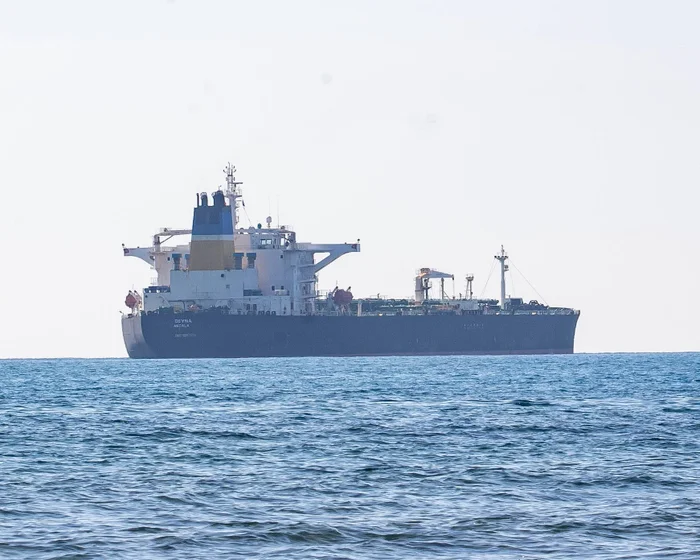
A Russian shadow fleet tanker boarding carried out by British forces in the English Channel has marked a dramatic escalation in the UK’s campaign against Moscow’s sanctions evasion. In the early hours of Sunday morning, Royal Marine Commandos stormed a sanctioned oil tanker, in what officials described as the first UK-led operation of its kind.
A Six-Hour Operation at Sea
Prime Minister Sir Keir Starmer confirmed that he personally directed the armed forces to intercept the vessel as it attempted to pass through the channel. The mission, which lasted six hours, brought together military and law enforcement personnel in a tightly coordinated effort.
According to the Ministry of Defence, the tanker, named Smyrtos, was boarded by Royal Marine Commandos and specially trained law enforcement officers from the National Crime Agency. It was the first time British forces had boarded such a vessel, rather than simply tracking it.
The operation drew on substantial air and naval support, including:
- Aircraft from the Maritime Air Group, among them an RAF P-8.
- Helicopter support, with reports citing Chinook, Merlin Mk4, and Wildcat aircraft.
- The frigate HMS Sutherland and the minehunter HMS Ledbury.
Al Carns, who recently served as armed forces minister, described the sheer intensity of the boarding to the BBC. He explained that personnel would have flown low over the sea, reared up before the ship, fast-roped onto its deck, secured it, and then brought it into UK territorial waters.
The vessel will now be held and monitored off the south coast of England, where it has been moved to an anchorage to be checked for any environmental or safety concerns while investigations continue.
Tracking the Tanker
Details about the Smyrtos paint a picture of a ship working to obscure its identity. According to the tracking website MarineTraffic, the vessel sails under a Cameroon flag and was anchored off the coast of Weymouth.
Its recent journey is telling. BBC Verify found that the tanker set out on June 5 from Russia’s Ust-Luga port, an oil terminal near St. Petersburg, before crossing west into the channel the day before the boarding. The ship was sanctioned in July 2025 and has since changed its name from Myrtos to Smyrtos, while also switching its flag twice.
Inside Russia’s Shadow Fleet
The operation strikes at a system Moscow relies on heavily. Russia has been running a so-called shadow fleet of tankers, vessels with obscure ownership and insurance arrangements, to evade the international sanctions placed on its oil exports.
The scale is significant. According to the MoD, this fleet of more than 700 vessels carries roughly 75% of Russia’s sanctioned oil, providing what officials call a critical lifeline for the Kremlin. By targeting these ships, the UK government says it aims to choke off funding for Russia’s war machine in Ukraine.
The legal foundation for the boarding was laid earlier in the year. Starmer announced in March that British armed forces were now able to board sanctioned vessels passing through UK waters, and the MoD says the UK has now sanctioned more than 500 ships. Those sanctions bar the vessels from entering UK ports and prohibit British firms and individuals from providing financial, insurance, or brokerage services to ships carrying Russian oil.
Strong Words From Officials
Starmer framed the interception as a direct strike against Moscow. He said the successful operation delivered yet another blow to Russia and served as a reminder to those fuelling Putin’s war in Ukraine that the UK would not let them hide.
Defence Secretary Dan Jarvis praised the personnel involved, saying the mission required skill, professionalism, and courage, and emphasizing that Russia depends on its shadow fleet to fund its conflict. Attorney General Richard Hermer added that the government had made clear it would pursue Russia’s shadow fleet under the full force of international law.
Carns suggested this boarding may be the first of many, telling the BBC that the UK would probably see more such operations should the opportunities arise.
A Coordinated European Effort
Britain did not act alone. The MoD said the operation was conducted in close coordination with French authorities, building on recent UK support for allied efforts. French President Emmanuel Macron noted earlier in the month that his country’s military had intercepted a sanctioned shadow fleet tanker with UK support, and the two nations had jointly stopped another vessel in the Atlantic days before.
The move also fits a broader European trend, as the EU has expanded its own maritime enforcement, with its naval mission in the Mediterranean adjusting its rules to permit the detention and inspection of suspected shadow fleet ships.
Turbulence at Home
The high-profile success at sea comes against a turbulent political backdrop. The interception followed a week of resignations over the government’s defence investment plan, which is set to be published before next month’s NATO summit after lengthy delays.
The departures were pointed. John Healey resigned as defence secretary, warning that the level of military spending proposed by Starmer fell well short of what was needed to protect the UK. Al Carns also stepped down as armed forces minister, telling the prime minister that the plan was neither transformative enough nor sufficiently funded.
The government has acknowledged the tension while defending its approach. Culture Secretary Lisa Nandy said the prime minister had been clear with his cabinet that they had to find more money for defence, adding that discussions were ongoing and that the government needed to transform defence spending to match current and future threats. From the opposition, shadow defence secretary James Cartlidge argued the MoD needed as much as £28 billion in extra funding over the coming years, suggesting that cutting welfare would have to be a major part of the solution.
The Bigger Picture
The boarding of the Smyrtos represents more than a single interception in a busy waterway. It serves as a visible test of whether Western sanctions enforcement is shifting from warnings toward sustained interdiction, putting insurers, shipowners, and Kremlin oil traders on notice that one of the world’s busiest shipping routes has become far less hospitable to Russia’s shadow fleet.
Author