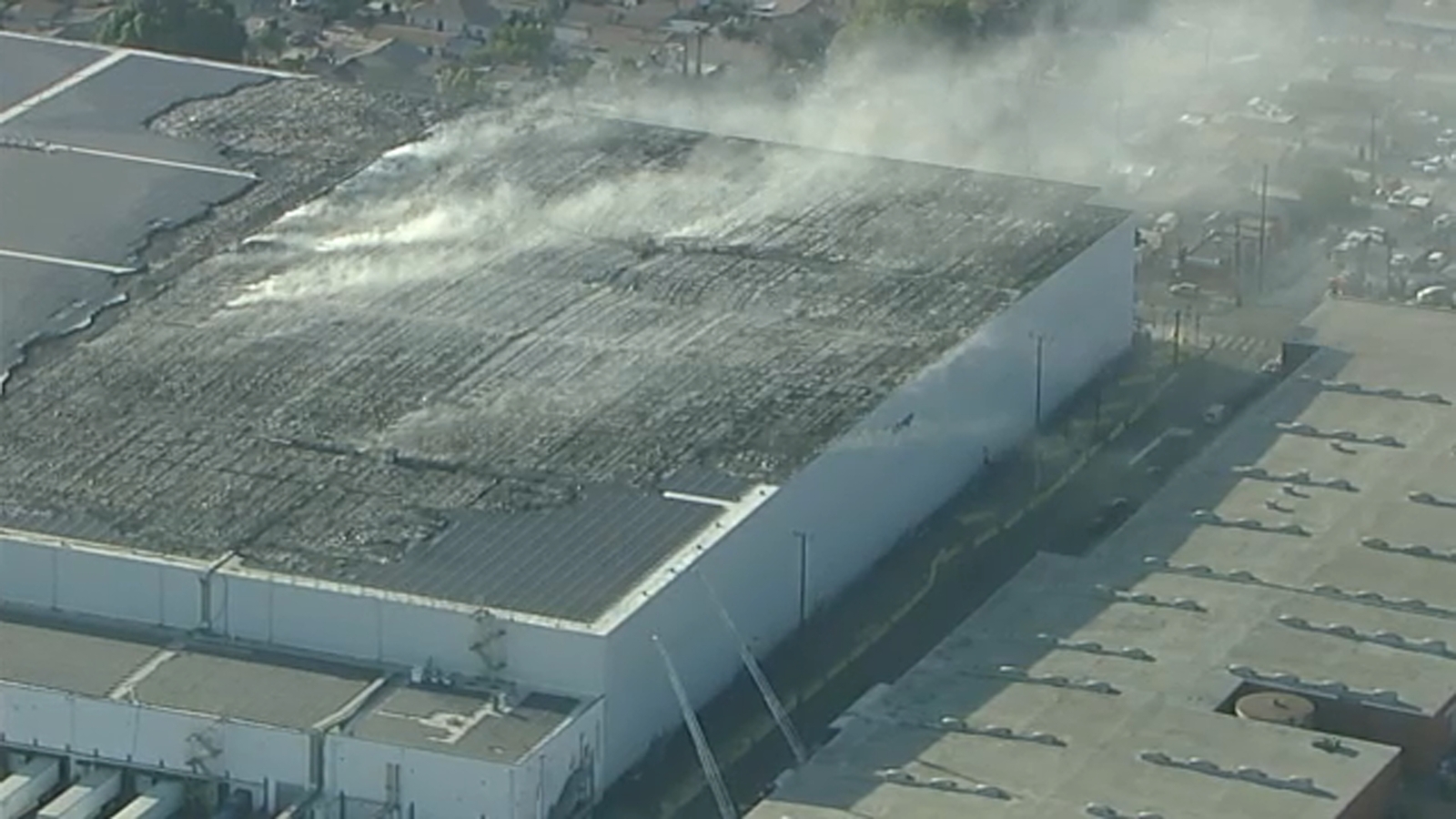
A Boyle Heights warehouse fire turned an ordinary Wednesday afternoon into a scene of chaos, sending a towering column of black smoke over Los Angeles that could be seen for miles. The blaze, fueled in part by solar panels on the building’s roof, prompted emergency shelter-in-place orders and a rare response involving water-dropping helicopters.
For hours, residents in the surrounding neighborhood were urged to stay inside as crews battled the flames and worried about what might be drifting through the air.
How the Fire Started
The fire broke out shortly before 2:30 p.m. at a cold storage facility in the 1400 block of South Los Palos Street in the Boyle Heights area of Los Angeles. Within minutes, thick black smoke poured from the commercial building, drawing attention from across the city.
While the exact cause remains under investigation, the presence of solar panels on the roof intensified the situation and complicated firefighting efforts.
Shelter-in-Place Order Issued
Because the facility held hazardous materials, city officials quickly issued a shelter-in-place order for the immediate area. Residents were given clear and urgent instructions to protect themselves from potentially dangerous smoke and fumes:
- Get inside immediately and stay there.
- Close all windows and doors.
- Turn off air conditioning units to avoid pulling outside air indoors.
- Bring all pets inside.
The concern wasn’t just the fire itself, but what the smoke might be carrying. As a cold storage facility, the building raised immediate questions about which chemicals could be released into the air during a blaze of this size.
An Ammonia Leak Raises the Stakes
Adding to the danger, an ammonia leak was reported at the scene, which further justified the shelter-in-place orders. Ammonia is commonly used in industrial refrigeration systems like those found in cold storage facilities, and exposure can irritate the eyes, skin, and respiratory system.
That detail explained why authorities acted so quickly and cast such a wide protective net around the burning structure.
A Rare and Dramatic Aerial Response
One of the most striking aspects of this fire was the response from above. At least four water-dropping helicopters were called in to help knock down the flames — an unusual sight for a structure fire in an urban setting like Los Angeles.
Helicopter drops are far more common in wildfire situations, so seeing them deployed over a city warehouse underscored just how serious and stubborn this blaze had become.
Police on Tactical Alert
The fire’s severity also drew a significant police response. The Los Angeles Police Department went on tactical alert as the situation unfolded, mobilizing additional resources to manage the area and assist with public safety.
As firefighters began gaining control, the LAPD downgraded to a modified tactical alert, signaling that the immediate crisis was easing.
Traffic and Public Impact
Despite the dramatic scene, nearby freeways stayed open throughout the emergency. Traffic, however, slowed considerably as drivers navigated the area and emergency crews worked the scene.
The good news amid the chaos: no injuries were reported. Given the size of the fire and the hazardous materials involved, that outcome was a relief to both residents and first responders.
How the Day Unfolded
The emergency developed rapidly over the course of the afternoon and evening. Key moments included:
- The fire ignited just before 2:30 p.m. at the cold storage facility.
- The LAPD moved into a tactical alert as the blaze grew.
- An ammonia leak prompted shelter-in-place orders for the surrounding area.
- Questions mounted about what chemicals could be present in the smoke.
- Four helicopters joined ground crews to fight the flames from the air.
Throughout, officials kept the public updated, emphasizing safety and urging residents to take the warnings seriously.
Shelter-in-Place Order Lifted
After hours of intense firefighting, relief finally came. Just before 9 p.m., the Los Angeles Fire Department announced that the shelter-in-place order had been lifted. The massive fire had torn through the roof of the warehouse, but crews had managed to bring it under control.
Even so, officials urged caution rather than declaring the area completely in the clear. In its statement, the fire department noted that while smoke in the area had decreased, people with sensitive health conditions should continue monitoring air quality, stay cautious, remain indoors, and keep doors and windows closed to limit exposure to outdoor air.
What Comes Next
As of the latest updates, the cause of the Boyle Heights warehouse fire remains unknown. Investigators will likely examine the role of the solar panels, the building’s refrigeration systems, and the ammonia leak as they work to piece together what happened.
For now, the takeaway is largely positive. A dangerous, fast-moving fire involving hazardous materials in a densely populated part of Los Angeles ended without a single reported injury — a testament to the swift response from firefighters, the rare aerial support, and residents who heeded the warnings to stay inside.
The incident also serves as a reminder of the hidden risks tied to industrial facilities operating close to neighborhoods. Cold storage buildings, solar installations, and refrigeration chemicals like ammonia each carry their own dangers, and when combined in a single emergency, they demand a fast, coordinated response.
As cleanup begins and the investigation continues, Boyle Heights residents can breathe a little easier knowing the worst has passed — though many will be watching closely for answers about what sparked the blaze in the first place.
Author