Violence Surges in Lebanon
The intensifying Israel-Hezbollah fighting has thrown a fragile diplomatic moment into chaos, as deadly clashes in Lebanon threaten to unravel a recently signed agreement between the United States and Iran. The escalation comes at a critical juncture, just as the next phase of negotiations was set to begin.
The renewed violence has raised serious doubts about whether the broader peace effort can hold amid the deteriorating situation on the ground.
A Deadly Day in Lebanon
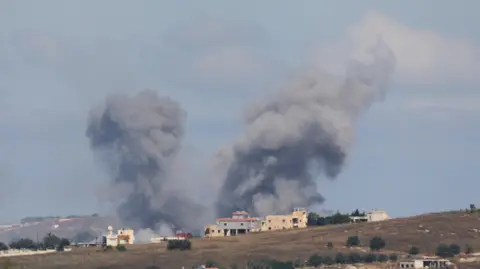
The human toll of the fighting has been severe. According to Lebanese state media, at least 18 civilians were killed in what represented Israel’s deadliest attacks since the U.S. and Iran finalized their initial agreement.
Israel, for its part, reported losses of its own. The Israeli military said four soldiers were killed in an attack on a tank, underscoring the intensity of the clashes unfolding in the region.
The mounting casualties on both sides have only deepened the crisis and complicated efforts to maintain calm.
Talks Suddenly Postponed
The escalating conflict has had immediate diplomatic consequences. Planned talks between Iran and the United States, which had been expected to begin Friday, were postponed.
The White House attributed the delay to logistical issues, citing them as the reason for canceling Vice President JD Vance’s trip to Switzerland. However, a different explanation emerged from other sources.
Officials told The Associated Press and other outlets that Iran had actually suspended the talks due to the ongoing fighting in Lebanon. This discrepancy highlighted the tangled web of factors influencing the negotiations.
Trump Calls for a Full Ceasefire
Amid the turmoil, President Donald Trump weighed in with a clear expectation. On Thursday night, he stated that he anticipated a complete ceasefire across all fronts.
Trump specifically named Lebanon, Hezbollah, and Israel in his call for an end to hostilities. His message reflected an effort to push all parties toward de-escalation, even as the situation on the ground continued to worsen.
The president’s words underscored the high stakes involved in preserving the broader agreement.
Hezbollah Points the Finger at Israel
As the violence persisted, Hezbollah placed blame squarely on Israel. On Friday, the Iranian-backed group accused Israel of failing to comply with any ceasefire agreement related to Lebanon for nearly two years.
Hezbollah declared that it would continue attacking Israeli troops in response. This stance directly threatened to derail the U.S.-Iran deal that Trump had signed just two days earlier.
The group’s defiance signaled that the conflict in Lebanon could have far-reaching implications beyond its borders.
Accusations of Ceasefire Violations
In a statement, Hezbollah leveled serious accusations against Israel. The group, which has long been designated a terrorist organization by both Israel and the United States, claimed that Israel had intensified its violations of the ceasefire.
Hezbollah accused Israeli forces of committing massacres and destroying residential buildings and civilian infrastructure. The group further alleged that Israel had continued land assaults, attempting to infiltrate and seize control of villages and areas it had been unable to reach before the agreement.
These claims painted a picture of ongoing aggression from Hezbollah’s perspective.
A Pattern of Broken Agreements
Hezbollah’s grievances extended back over a longer period. The group accused Israel of never honoring any ceasefire agreement reached since November 2024.
This included the most recent deal between Iran and the United States. That agreement, a memorandum of understanding, demanded an immediate cessation of hostilities on all fronts, specifically including Lebanon.
By framing Israel as a serial violator, Hezbollah sought to justify its continued military actions.
Vows to Keep Fighting
Hezbollah made clear that it had no intention of standing down. The group declared that its fighters in Lebanon would defend their land and people with courage.
It pledged to continue inflicting losses on the Israeli army, targeting both officers and soldiers. The defiant language left little room for compromise, suggesting that the fighting could persist for some time.
This resolve placed additional strain on the already fragile diplomatic landscape.
Israel Responds with Its Own Accusations
Israel did not accept Hezbollah’s narrative. The Israeli side countered by accusing Hezbollah of violating every ceasefire, often almost immediately after each agreement was reached.
On Friday, the Israeli military stated that its operations in Lebanon would continue. Officials emphasized that these operations would persist until the threat posed by Hezbollah was completely eliminated.
This firm position indicated that Israel saw no path to halting its military campaign in the near term.
A Diplomatic Effort Under Threat
The intensifying conflict in Lebanon now casts a long shadow over the broader U.S.-Iran agreement. What was meant to be a step toward regional stability has instead become entangled with the violence between Israel and Hezbollah.
Each side’s refusal to back down has created a dangerous cycle that threatens to undo recent diplomatic progress. The postponement of the talks serves as a stark reminder of how quickly fragile agreements can be tested by events on the ground.
Looking Ahead
As the situation continues to evolve, the future of both the Lebanon ceasefire and the U.S.-Iran negotiations remains deeply uncertain. The competing accusations between Israel and Hezbollah show no signs of resolving easily.
For now, the international community watches closely to see whether diplomacy can regain its footing or whether the escalating violence will derail the broader peace effort entirely. With civilians caught in the crossfire and tensions running high, the stakes could hardly be greater.
The coming days will likely prove decisive in determining whether the recently signed agreement can survive the pressures of a renewed and deadly conflict.
Author