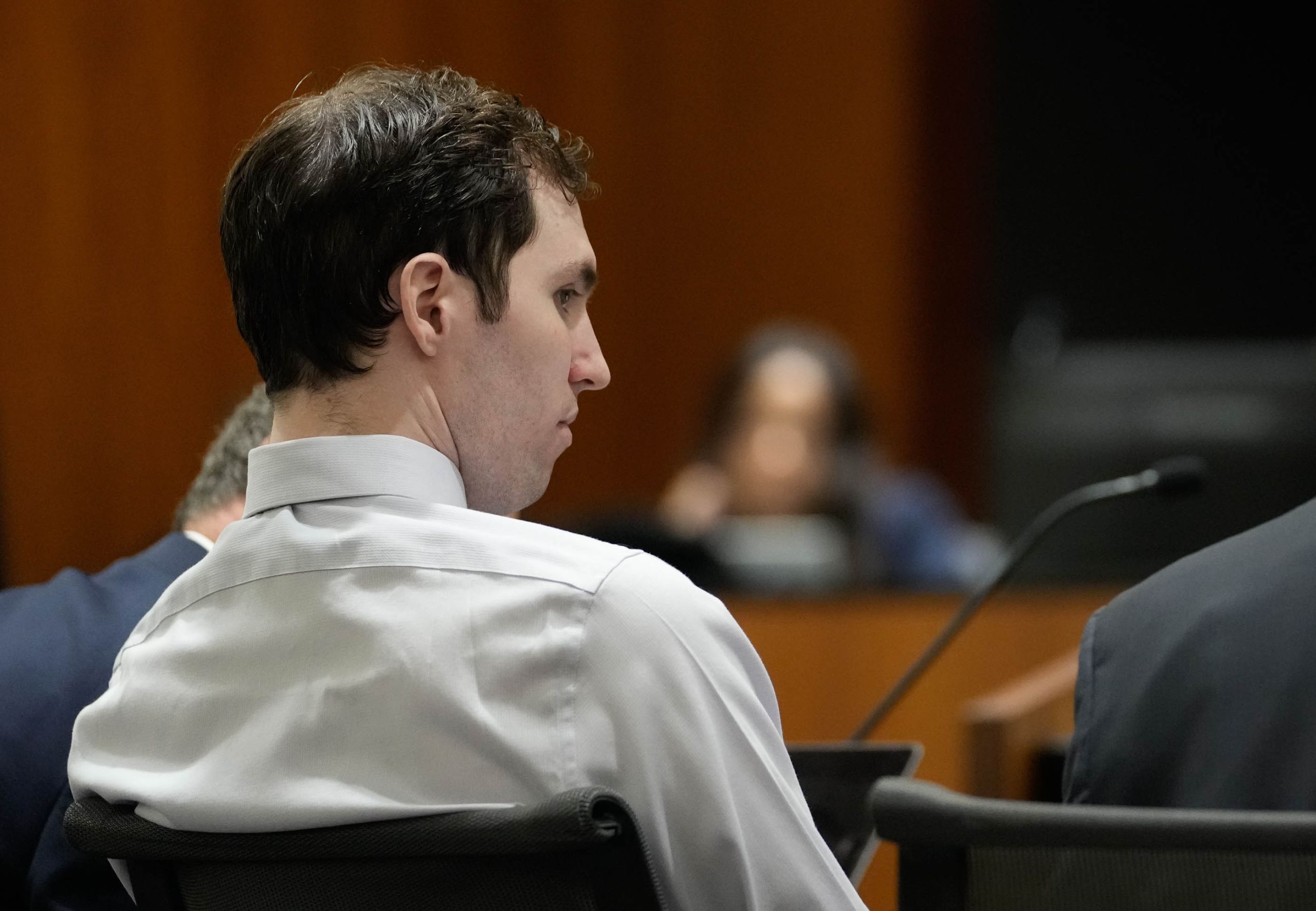
The Charlie Kirk killing case took another significant turn this week as a Utah judge postponed a key decision that could ultimately determine whether the death penalty remains on the table. The ruling, which centers on whether prosecutors violated a pretrial publicity order, has been pushed to Friday, leaving one of the most consequential questions in the case temporarily unresolved.
The defendant, Tyler Robinson, stands accused of killing the prominent conservative figure in a shooting that drew national attention last September. As the legal proceedings unfold, the stakes could hardly be higher, with the potential punishment itself now caught up in a dispute over prosecutorial conduct.
A Delayed Decision
Rather than resolving the contested issue during Monday’s hearing on pretrial motions, Judge Tony Graf opted to set a separate Friday morning hearing to address it. The central question is whether prosecutors crossed a line by making public comments about the case, and if so, what the appropriate consequence should be.
The defense has argued for a striking remedy: removing the death penalty as a possible outcome should Robinson be convicted. That proposal has transformed what might otherwise be a procedural dispute into a matter with profound implications for the defendant’s future.
The Charges Against Robinson
Robinson faces a serious set of charges stemming from the September shooting. These include:
- Aggravated murder
- Felony use of a firearm
- Obstruction of justice
- Witness tampering
As of now, Robinson has not yet entered any pleas. The killing of Kirk on a Utah university campus sent shockwaves across the country and, according to reports, triggered a wave of misinformation that has complicated the legal landscape ever since.
The Heart of the Contempt Dispute
The contempt question revolves around comments made by Christopher Ballard, one of the prosecutors and a spokesperson for the Utah County Attorney’s Office. Robinson’s attorneys contend that statements Ballard gave to several media outlets violated the judge’s order, originally issued in September and amended in December, which prohibited the parties from making public comments about the case except under certain circumstances.
The specific comments at issue concerned an inconclusive ballistics report. Ballard gave interviews to multiple outlets in late March and early April addressing the report, which had been referenced in a March defense filing. He testified that his remarks were about the general circumstances that can lead to an inconclusive test result, not about specific evidence in the case.
Ballard maintained that he acted appropriately, noting that he included statements in each interview affirming that Robinson is presumed innocent. He said he does not believe his comments violated the court’s order.
The defense saw it differently. Robinson’s attorney Richard Novak described the comments as extremely reckless and said he found no credibility in Ballard’s sworn testimony that he intended only to speak generally about bullet fragment analysis.
The Ballistics Controversy
At the core of the disagreement is a technical but crucial detail about the evidence. The defense filing that Ballard addressed in his interviews, a motion to continue the preliminary hearing filed on March 27, stated that the Bureau of Alcohol, Tobacco, Firearms and Explosives was unable to match the bullet recovered at autopsy to the rifle allegedly tied to Robinson.
Prosecutors, however, argued that this characterization left out a critical part of the report’s conclusion. According to them, the ATF was also unable to exclude the bullet as having come from the rifle. Ballard said this was precisely the point he was trying to clarify in his media comments, framing his goal as responding to inquiries generated by what he viewed as misinformation in the filing.
Both Ballard and Utah County Attorney Jeffrey Gray repeatedly pointed to a professional rule referenced in the order that allows attorneys to comment on public information when they believe there is a possibility of prejudicial pretrial publicity.
Competing Views on the Remedy
The question of what should happen if the prosecutors are found in contempt has sparked its own sharp exchange. The defense’s primary suggested remedy was the removal of the death penalty as a possible punishment. They also noted that other potential penalties for contempt could include attending a continuing education program or referral to the state bar association.
Prosecutors pushed back forcefully. After the June 12 hearing, they filed an objection calling the defense’s request grossly disproportionate to the alleged misconduct. They argued that even if the court determined a better statement could have been made, such a misstep would not justify the drastic and never-before-imposed remedy of reducing the aggravated murder charge to a first-degree felony.
The defense responded with its own opposition brief, characterizing the prosecution’s objection as uninvited and asserting that the court had neither requested nor authorized any written post-hearing briefing.
A Key Ruling on Evidence
Monday’s hearing wasn’t solely about the contempt dispute. Judge Graf also issued an important ruling, deciding that prosecutors will be allowed to present hearsay evidence during Robinson’s preliminary hearing, which is scheduled to begin July 6.
Graf explained his reasoning by emphasizing the limited purpose of such proceedings. He noted that in Utah, the primary aim of a preliminary hearing is to determine whether probable cause exists. While he acknowledged it represents a critical stage of the criminal process, he stressed that it is not a trial and does not involve determining guilt or innocence.
The defense had objected to certain evidence, specifically a video deposition of a key witness, arguing it should not be admissible because the witness could not be cross-examined. That witness was later identified in court filings as Robinson’s roommate at the time of the shooting.
Defense attorney Michael Burt advanced this argument, but prosecutors countered that the defense is not entitled to cross-examine witnesses at this stage. Ballard contended that the preliminary hearing serves the narrow purpose of establishing probable cause to bring charges to trial. He warned that granting the defense’s motion would break new legal ground, suggesting the court would become the first to find that the Sixth Amendment right to confrontation applies at a preliminary hearing.
The Fair Trial Concern
Throughout the proceedings, a recurring theme has been the defense’s worry about the impact of intense media coverage. Robinson’s attorneys have repeatedly raised concerns that news coverage of the high-profile case could harm their client’s right to a fair trial.
This concern is amplified by the misinformation that followed Kirk’s death. For the defense, the prosecutors’ media comments represent part of a broader environment that could prejudice potential jurors, which is why they have pushed so hard for a meaningful remedy.
What Comes Next
With Friday’s hearing now set to address the contempt question, several pivotal issues remain unresolved:
- Whether Judge Graf will find that prosecutors violated the pretrial publicity order.
- If a violation is found, whether the death penalty will be removed as a potential punishment.
- How the upcoming preliminary hearing on July 6 will proceed with hearsay evidence permitted.
- How the broader concerns about pretrial publicity will shape the path toward trial.
The Bigger Picture
The Charlie Kirk killing case continues to navigate complex legal terrain, where questions of prosecutorial conduct, evidentiary standards, and the right to a fair trial intersect. Friday’s ruling could prove especially consequential, potentially reshaping the entire trajectory of the case depending on how the judge weighs the competing arguments.
For now, the proceedings underscore how high-profile cases can become battlegrounds not just over guilt or innocence, but over the conduct of the legal process itself. This remains a developing story, and further updates are likely as the case moves toward its preliminary hearing and beyond.
Author