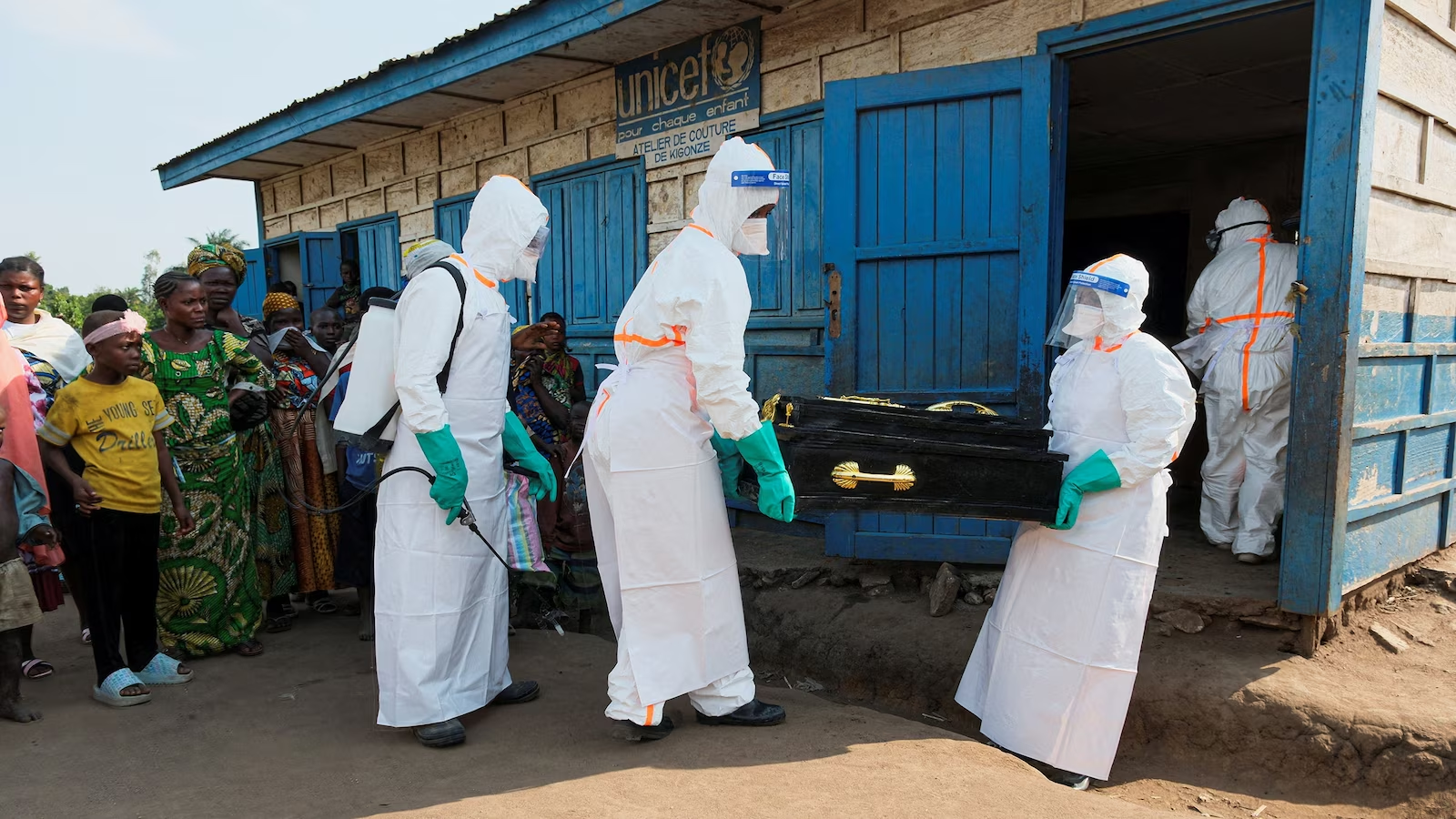
The Ebola crisis affecting children in DR Congo has reached an alarming threshold, with UNICEF warning that nearly 3 million children and adolescents now face rising danger as confirmed cases hit 1,000. The threat extends beyond the disease itself to the collapse of essential services across eastern Democratic Republic of the Congo.
This article addresses a serious humanitarian emergency involving illness and the loss of life, including among children. Readers may find some of the details distressing.
The Scale of the Threat
According to UNICEF, an estimated 2.95 million children and adolescents aged 18 and under are at risk in 31 affected health zones. That figure represents 54 percent of the population in those areas, underscoring just how heavily this outbreak weighs on the young.
UNICEF Executive Director Catherine Russell put a human face to the numbers, describing how teams in Ituri have met children who have lost their mothers, and in some cases both parents, to Ebola. She noted that these children are trying to make sense of the threat while surrounded by rumors and online misinformation.
A Disproportionate Toll on the Young
Although the situation remains fluid, the data reveals how severely the outbreak affects children. As of June 19, children and adolescents account for approximately 15 percent of confirmed Ebola cases and over 25 percent of confirmed deaths in eastern DRC.
Perhaps most troubling, children and adolescents with confirmed Ebola are almost twice as likely to die as adults. That stark disparity highlights the particular vulnerability of younger populations to the disease.
It’s worth noting that these estimates carry some uncertainty. While testing capacity has recently improved, surveillance and contact tracing remain constrained by insecurity and restricted access.
The Epicentre and the Response
Ituri Province remains the heart of the outbreak, particularly the Mongbwalu, Rwampara, and Bunia health zones, with additional cases reported in North Kivu and South Kivu.
In Ituri, UNICEF and partners are working to support the most vulnerable children. Their efforts include:
- Supporting 135 children orphaned by the outbreak with psychosocial care, referrals to essential social services, and alternative care arrangements
- Opening the first nursery, a safe space providing care and protection for infants and young children separated from parents receiving treatment at an Ebola treatment centre
- Preparing to open two additional nurseries soon
Children Already at a Disadvantage
The outbreak has struck a population that was deeply vulnerable even before Ebola arrived. In Ituri, more than half of children under five are chronically malnourished, and immunization rates are low, with more than one in five children never having received a first dose of the diphtheria, tetanus, and pertussis vaccine.
These conditions make Ebola especially dangerous. Early symptoms can mimic other illnesses such as malaria, delaying detection, while malnutrition heightens the body’s vulnerability to the disease.
Risks Beyond Infection
The dangers facing children extend well beyond the virus itself. Beyond infection and the loss of parents and caregivers, children face stigma and psychosocial distress.
Infectious disease outbreaks also tend to increase the risk of violence, including sexual violence against women and girls. On top of this, children may lose access to the services they depend on, including healthcare, nutrition, immunization, education, water and sanitation, and child protection.
In eastern DRC, these threats are magnified by years of conflict and mass displacement, which have long exposed children to violence, exploitation, and other protection risks.
The Outbreak Crosses Borders
The crisis has not remained contained within the DRC. In Uganda, 20 Ebola cases and two deaths have been confirmed among individuals who traveled from the DRC to seek testing and treatment.
Children have been affected there as well. One child has tested positive, and 19 more are under quarantine monitoring, illustrating how easily the disease can spread across borders.
A Coordinated Effort and an Urgent Appeal
In both the DRC and Uganda, UNICEF is supporting governments and partners, including WHO and Africa CDC, to contain the outbreak. Their containment work focuses on infection prevention and control, contact tracing, safe and dignified burials, and community engagement involving young people and community leaders. At the same time, UNICEF is striving to sustain essential services across health, nutrition, education, and child protection.
The financial need is pressing. UNICEF is initially seeking $70.7 million for its six-month response, of which $20 million remains unfunded. This effort forms part of the broader multi-partner Ebola Preparedness and Response Continental Plan. The agency is also calling for immediate, safe, and sustained humanitarian access to affected communities.
Why Children Are So Vulnerable
Russell offered a poignant explanation for why this outbreak hits children so hard. She noted that children are especially vulnerable because they depend on caregivers and cannot distance themselves from a sick parent or sibling the way an adult can.
To better protect them, she emphasized, the response needs sustained access and adequate resources to reach every affected community.
A Crisis Demanding Attention
The Ebola crisis affecting children in DR Congo represents a convergence of dangers: a deadly disease, a fragile healthcare system, ongoing conflict, and a population of children already stretched to the limit. As cases climb past 1,000, the window to protect millions of young lives depends heavily on funding, access, and a coordinated international response.
For now, the children of eastern DRC remain caught at the intersection of disease and instability, their safety hinging on whether the world responds with the urgency the moment demands.
Author