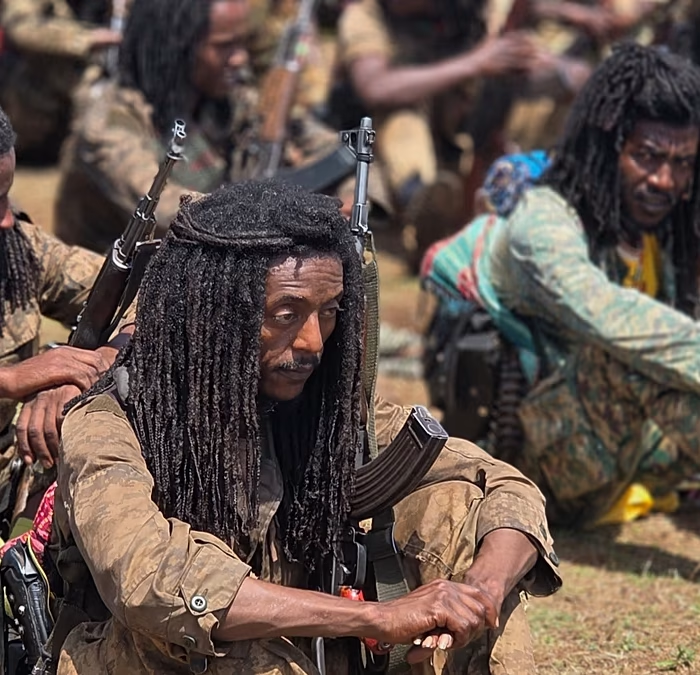
Battle of Little Bighorn anniversary celebrations brought hundreds of Native Americans together across Montana and the Dakotas this week, marking 150 years since allied tribes handed the U.S. Army one of its most famous defeats. Known to many Native people as the Battle of Greasy Grass, the event is being commemorated not as a distant historical footnote but as a living testament to survival and continuity.
A Gathering on Sacred Ground
The quiet, wind-swept hills near the Little Bighorn River in present-day Montana have become the setting for horse rides, battle reenactments, and a camp drawing hundreds of people from numerous tribes. The battle itself, one of the most symbolically charged events in American history, reached its 150th anniversary on Thursday.
On that hot day a century and a half ago, allied tribes came together near the riverbanks to fight for their way of life against westward expansion. Lieutenant Colonel George Armstrong Custer and more than 200 of his troops were killed, delivering a rare and stunning defeat to the U.S. Army.
This week’s commemoration spanned multiple sites and traditions:
- Horse riders from the Cheyenne River Reservation in South Dakota and beyond traveled hundreds of miles to the Crow Agency area in Montana.
- Reenactments illustrated the battle, drawing on oral history passed down through generations.
- At the Standing Rock Sioux Reservation in North Dakota, communities planned horse races along with traditional songs and dances.
- Families were encouraged to share their own oral histories.
For William Good Bird, a traditional singer from the Spirit Lake Dakota Nation who woke the camp with song and drumming, simply being present carried deep meaning. He described the gathering as proof that his people are still here, saying he was celebrating the victory of his people, his life, and his place on the earth.
How the Battle Unfolded
The road to the battle began with gold. The discovery of gold in the Black Hills, in what is now South Dakota, by a Custer expedition just years earlier triggered a military campaign aimed at forcing Great Plains tribes onto reservations, according to historian Dakota Goodhouse.
Goodhouse noted that while there were larger and longer battles, along with other Native victories between March 1876 and June 1877, only the Battle of Greasy Grass, named by Native Americans for the slick grass along the river, achieved national recognition. The reason was the death of the commanding officer.
At the time, the Lakota were among the largest and most powerful tribal nations, led by figures like Sitting Bull and warriors such as Crazy Horse. Native fighters quickly overwhelmed Custer’s men, whose forces were spread thin across miles of hilly terrain.
The Aftermath and a Father’s Words
News of Custer’s defeat shocked Americans, who were in the midst of celebrating their nation’s centennial. In response, the federal government accelerated its efforts to crush Native resistance, ushering in years of hardship. Crazy Horse was killed in 1877, and starvation forced others to surrender by 1881.
The story of Sitting Bull’s surrender, as Native accounts tell it, differs from many history books. Jon Eagle Sr., a former Standing Rock tribal historic preservation officer from the Hunkpapa band, shared a moment passed down through his people. According to that account, Sitting Bull looked at his son Crow Foot and told him that if he lived, he could never be a man in this world because he could never own a gun or a pony. Eagle believes Sitting Bull understood that profound change was coming for his children, grandchildren, and the generations not yet born.
Sitting Bull was killed in 1890, along with about a dozen others, when agency police attempted to arrest him.
A Polarizing Figure in Custer
Custer remains a complicated and divisive figure. Biographer T.J. Stiles described him as one of the most distinguished combat officers in the Army at the close of the Civil War. Yet the so-called “Boy General,” known for his long hair and flamboyant battlefield attire, often chafed against the chain of command and showed little patience for the administrative side of leadership. Stiles captured his temperament by noting that whenever Custer landed in trouble, he immediately went looking for more.
In 1873, Custer was assigned to lead the Seventh Cavalry at Fort Abraham Lincoln, near present-day Bismarck, North Dakota. From there he led expeditions, including the one that confirmed gold in the Black Hills, a place sacred to the Lakota.
Goodhouse offered a more layered portrait, noting that while the U.S. remembered Custer as a tragic hero, he could in some ways be considered progressive for his era. Even as the federal government worked to displace Native peoples and erase Native languages through boarding schools, Custer learned to speak Arikara and Lakota and became fluent in the sign language used by regional tribes.
A Different View of 250 Years
As much of the country prepares to celebrate 250 years since the signing of the Declaration of Independence, many Native Americans view the milestone very differently. Crow tribal member and reenactment coordinator Jim Real Bird described it as a marker of 250 years of injustice toward Native people rather than a cause for celebration.
Eagle echoed that sentiment, emphasizing resilience over grievance. He said a central message shared whenever his people gather is that efforts to erase them failed, and that they remain an ancient people deeply connected to their environment.
Keeping History Alive
For more than 30 years, reenactments featuring hundreds of warriors have marked the anniversary near the battlefield. The choreography draws on Northern Cheyenne oral history and emphasizes both horsemanship and language preservation. Real Bird stressed the centrality of language, arguing that everything else about Native identity loses meaning without it.
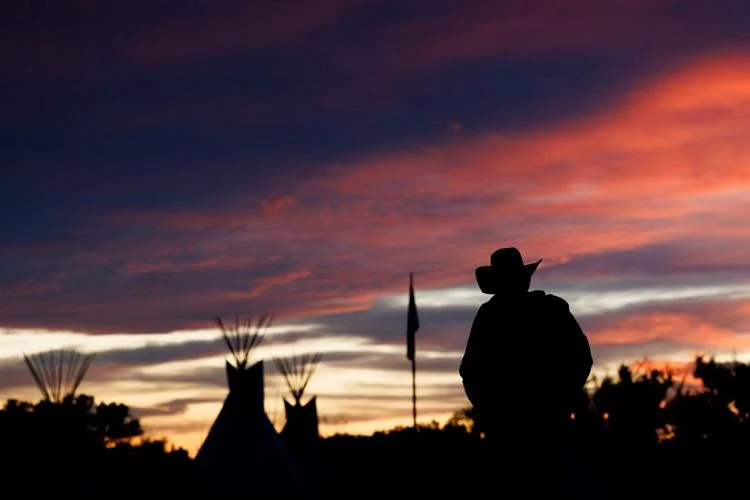
The atmosphere this week was celebratory. Several hundred riders charged up a hill and circled at the top, whooping and yelling beneath a bright sun, surrounded by wide-open grassland with mountains in the distance. Elders wore headdresses, drums sounded, and flags from various tribal nations flew above a camp of dozens of tepees along the Little Bighorn River. People had traveled from tribes across the Dakotas and as far away as Washington state.
For Theresa Long Turkey of the Lower Brule Sioux Tribe, the gathering serves as renewal, a source of fuel for the year ahead and a personal restoration.
At Standing Rock, Eagle explained that the horse races honor the horse nation that carried their ancestors to victory 150 years ago. The commemoration also includes oskáte, a traditional celebration of oral histories, victory songs, and tribal dancing. He framed it as a chance to remind younger generations that they descend from a powerful and ancient nation that endures despite everything done to it. His own great-great-grandfather, Sunka, fought that day, as did his father, Charging Thunder.
Goodhouse, too, carries direct family memory of the battle. He recalled stories his grandfather told of ancestors in the Hunkpapa camp when troops attacked, including his grandfather’s great-grandfather, Striped Face, who was shot but climbed back onto his horse and rejoined the fight. That handed-down narrative, Goodhouse said, keeps a living energy at the site.
The Bottom Line
The 150th anniversary of the Battle of Little Bighorn stands as far more than a remembrance of a single day in 1876. For the tribes gathered along the river, it is an affirmation of survival, identity, and continuity, a moment to honor ancestors who fought for their way of life and to remind the generations to come that they remain, in the words of those present, still here.
Author