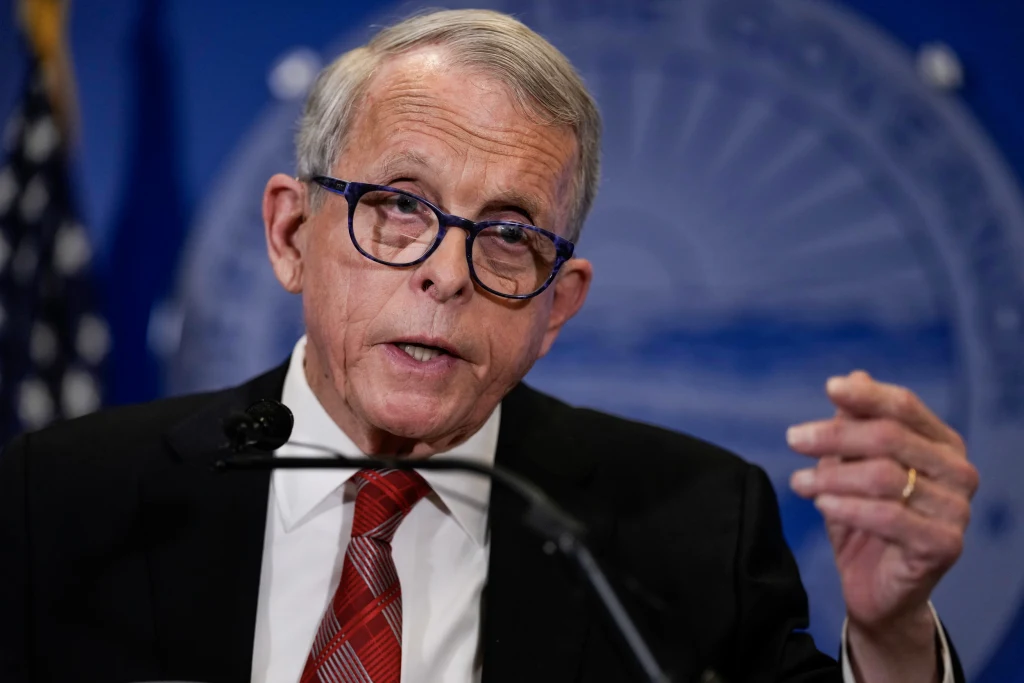
TPS Ohio Haitian migrants are at the center of a growing dispute after a Supreme Court ruling this week opened the door for the Trump administration to end Temporary Protected Status for Haitians and Syrians. The decision strips legal immigration status from thousands of refugees, and few states stand to feel the impact more than Ohio, home to over 10,000 Haitian migrants. Republican Governor Mike DeWine has openly called the move a mistake, sitting down with Amna Nawaz to explain why.
Why DeWine Sees the Policy as Wrong
DeWine was direct in his assessment: the policy itself is flawed. He pointed to Springfield, Ohio, as a clear example of what’s at stake. In his view, the city has been steadily recovering over the past several years, and a major reason for that turnaround is the Haitian community filling jobs that had otherwise gone unfilled.
The governor said local employers consistently echo this point. He also cited Springfield’s mayor, who has repeatedly noted that Haitian residents are buying homes, launching businesses, working steadily, and raising families. From DeWine’s own observations, he believes the mayor’s assessment is accurate.
He drew a careful distinction, though. While many Haitians in the area hold TPS, others have different forms of legal status. The Supreme Court ruling specifically threatens those relying on TPS. Notably, DeWine made clear he doesn’t dispute the court’s legal reasoning. The justices were interpreting a statute written by Congress that limits the courts’ ability to interfere with the administration’s designation. His objection, he stressed, is about policy rather than the law. He repeatedly framed the change as a job killer for Springfield, for Ohio, and for the state’s broader economic momentum.
The Debate Over Safety in Haiti
The interview also tackled the administration’s justification for the move. White House Deputy Chief of Staff Stephen Miller had argued that the presence of high-crime pockets in Haiti shouldn’t be grounds for asylum, comparing those areas to high-crime neighborhoods in American cities like Chicago, St. Louis, and Los Angeles. Miller maintained that elevated crime rates have never been a basis for asylum and never will be.
DeWine pushed back forcefully. He called the claim that Haiti is safe absurd and dismissed the comparison to Chicago as nonsensical. Drawing on personal experience, he explained that he and his wife run a school in Haiti and have traveled there roughly 20 to 25 times, giving them extensive contacts on the ground.
His description of conditions was stark:
- The situation, he said, is worse now than it has ever been.
- Gangs effectively control large portions of the country, including much of the capital, Port-au-Prince.
- People are killed daily.
- U.S. carriers refuse to fly into Port-au-Prince because gangs shoot at incoming planes.
He added that the only period he could recall things being relatively stable was when U.S. Marines were present. Among the Haitians he has spoken with, none expressed any willingness to return. Instead, they are searching for any other country where they can work and support their families.
Balancing Strained Resources With Economic Gains
Nawaz raised a complicating point. When her colleague reported from Springfield over a year earlier, residents and companies welcomed the new workers, but the mayor acknowledged that local services were under strain. Schools, hospitals, and clinics needed added support, including language translation, and resources were being stretched.
DeWine didn’t deny the challenge. He acknowledged that a large influx arrived in a relatively short window and that the state has worked with the mayor to provide help. Educating children who don’t yet speak English, he conceded, carries real costs.
Still, he emphasized the economic upside. Despite language and cultural barriers, employers kept hiring Haitian workers because they had positions to fill. He described a multiplier effect at work:
- Some companies told him they were able to add a second shift because of Haitian labor.
- Others said they could take on larger projects and sell more goods.
- That expanded activity, in turn, created additional jobs for others in the community.
In short, DeWine argued, Springfield took on a difficult task and handled it well, but losing these workers would force many into unemployment. Some have already left, and others, once their TPS status ends, will be unable to work legally and will eventually have to go.
The Bigger Picture for Ohio
DeWine closed by framing the issue within Ohio’s broader economic ambitions. He described the state as thriving, continually attracting new companies. The pressing challenge, he said, is whether there are enough people to staff them.
Ohio has invested heavily in education, job training, career technical programs, and colleges to build its workforce. But the governor cautioned that without immigrants, filling those jobs becomes far harder. He noted that Ohio’s population has begun rising for the first time in years, and he attributed roughly three-quarters of that growth directly to immigrants, underscoring why he views the TPS rollback as a setback for his state.
Author