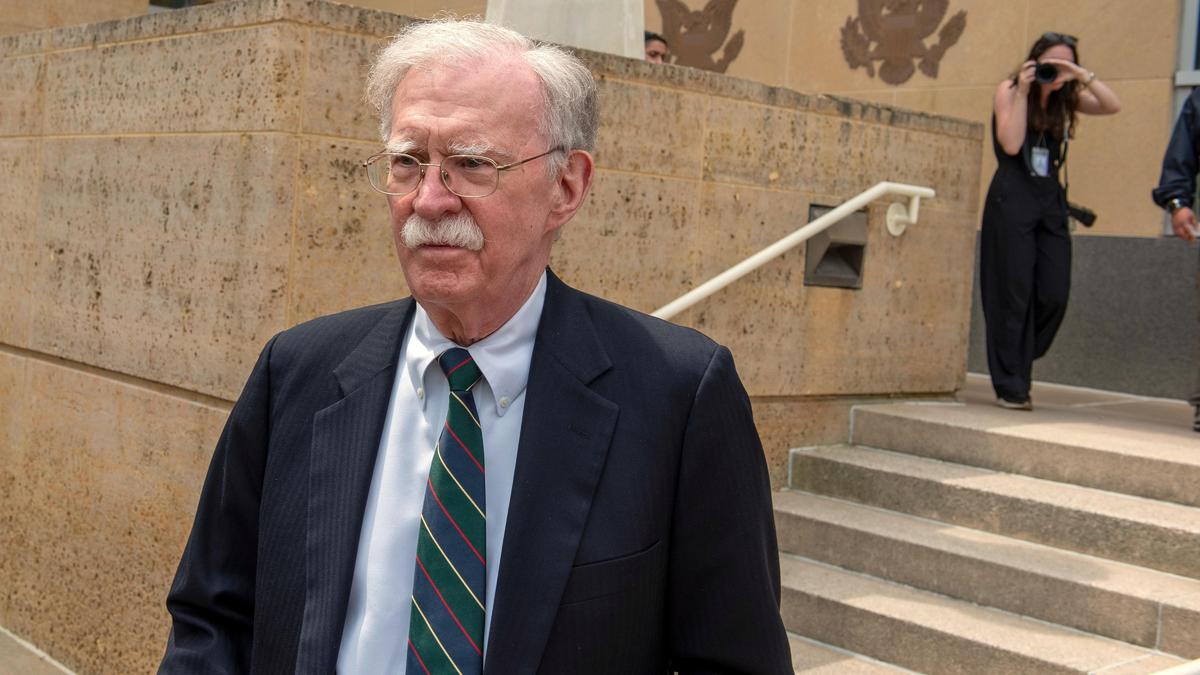
John Bolton guilty plea marked a striking turn Friday as the former national security adviser to President Donald Trump admitted in federal court to one count of retaining sensitive government information. The plea, part of a negotiated deal, caps a high-profile case that has drawn attention both for its legal stakes and its political overtones.
A Career Marred by a Guilty Plea
Bolton, who served in Trump’s first administration before becoming one of his sharpest critics, accepted responsibility under an arrangement in which prosecutors agreed to recommend a sentence of no more than five years in prison. When U.S. District Judge Theodore D. Chuang asked whether he was guilty, Bolton replied that he was and expressed regret for his actions.
The admission casts a shadow over the legacy of a public servant whose career spanned multiple presidential administrations, while handing a victory to a Justice Department that has pursued several of Trump’s political adversaries.
The Terms of the Deal
Bolton had initially pleaded not guilty last year. Prosecutors alleged that he had sent diary-like recollections of his sensitive work to relatives who were assisting him in preparing a memoir. Under the plea agreement reached Friday, Bolton agreed to:
- Forfeit his government pension
- Pay a fine of $2.25 million, with half due within five days of sentencing and the remainder within 90 days
In exchange, prosecutors agreed to recommend a maximum of five years in prison at his sentencing hearing scheduled for October. The final decision on whether to accept that recommendation rests with the judge. The original indictment had charged Bolton with 18 counts of transmitting or retaining national defense information, each carrying a potential penalty of up to 10 years.
A Long Conservative Record
A longtime conservative, Bolton served under several Republican presidents. He was U.S. ambassador to the United Nations under President George W. Bush and later became Trump’s third national security adviser during his first term. Trump fired him in 2019 after the two clashed over foreign policy.
Bolton went on to sharply criticize Trump in his 2020 memoir, describing the president as poorly informed. It was his preparation for that book, authorities said, that ultimately formed the basis of his indictment.
How the Case Unfolded
Federal prosecutors accused Bolton of sharing more than 1,000 pages of diary-like summaries of his work from 2018 to 2019 with relatives through a personal email account. That account, authorities said, was later hacked by someone U.S. officials believe was connected to the Iranian government, who then sent emails threatening to release the information. According to the indictment, a representative for Bolton alerted the FBI to the hack and the threatening messages in July 2021.
During their investigation, FBI agents raided Bolton’s office in downtown Washington and his home in Bethesda, Maryland, last year, where they reported finding documents marked as classified or secret.
The specific count to which Bolton pleaded guilty involved information he acknowledged sharing, including details about an adversary’s plans to attack U.S. forces in another country. Prosecutors said that material exposed human intelligence sources and methods and had been marked top secret, the highest level of classification.
A Pattern of Targeting Trump’s Critics
Bolton’s indictment last October came shortly after two other Trump adversaries faced criminal prosecution: former FBI director James B. Comey and New York Attorney General Letitia James. Both of those cases, pursued over the objections of career prosecutors, were ultimately dismissed and widely condemned as politically motivated retribution.
Comey has since been indicted in a separate case in North Carolina over allegations that a social media photo he posted in 2025 amounted to a dangerous threat against the president. He has maintained his innocence.
Bolton himself had previously argued that his conduct was lawful, characterizing the Justice Department’s investigation as part of Trump’s broader effort to intimidate his opponents. At the time, Trump dismissed the veteran diplomat as a “bad guy.”
Comparisons to Trump’s Own Case
After Friday’s hearing, Bolton’s attorney, Abbe Lowell, commended his client for accepting responsibility, drawing a pointed contrast with Trump’s handling of similar accusations. Trump had been indicted on multiple counts of retaining sensitive information at his Mar-a-Lago estate following his first term, but maintained his innocence, and the case was dismissed before trial after a judge ruled that the special counsel who brought it had been improperly appointed.
Lowell argued that Trump disregarded classified information laws, took actual classified documents to his Florida property, and never accepted accountability, while contending that Bolton’s offense amounted to keeping a diary to preserve history.
The White House declined to comment on the comparison. A Justice Department spokesperson rejected it outright, asserting that Trump did nothing wrong while Bolton pleaded guilty because he was guilty.
Officials Send a Warning
The Bolton case originated with a probe begun under President Joe Biden’s Justice Department and was led by veteran prosecutors in Maryland. Speaking outside the courthouse after the hearing, U.S. attorney Kelly O. Hayes emphasized that the rules governing classified and national defense information apply equally to everyone, regardless of their position or length of service.
Another senior Justice Department official, Hayden O’Byrne, said Bolton had betrayed the public trust by unlawfully retaining and disclosing the information entrusted to him. He framed the plea as a warning to anyone in government, stating that those who leak or mishandle national secrets will face prosecution.
Author