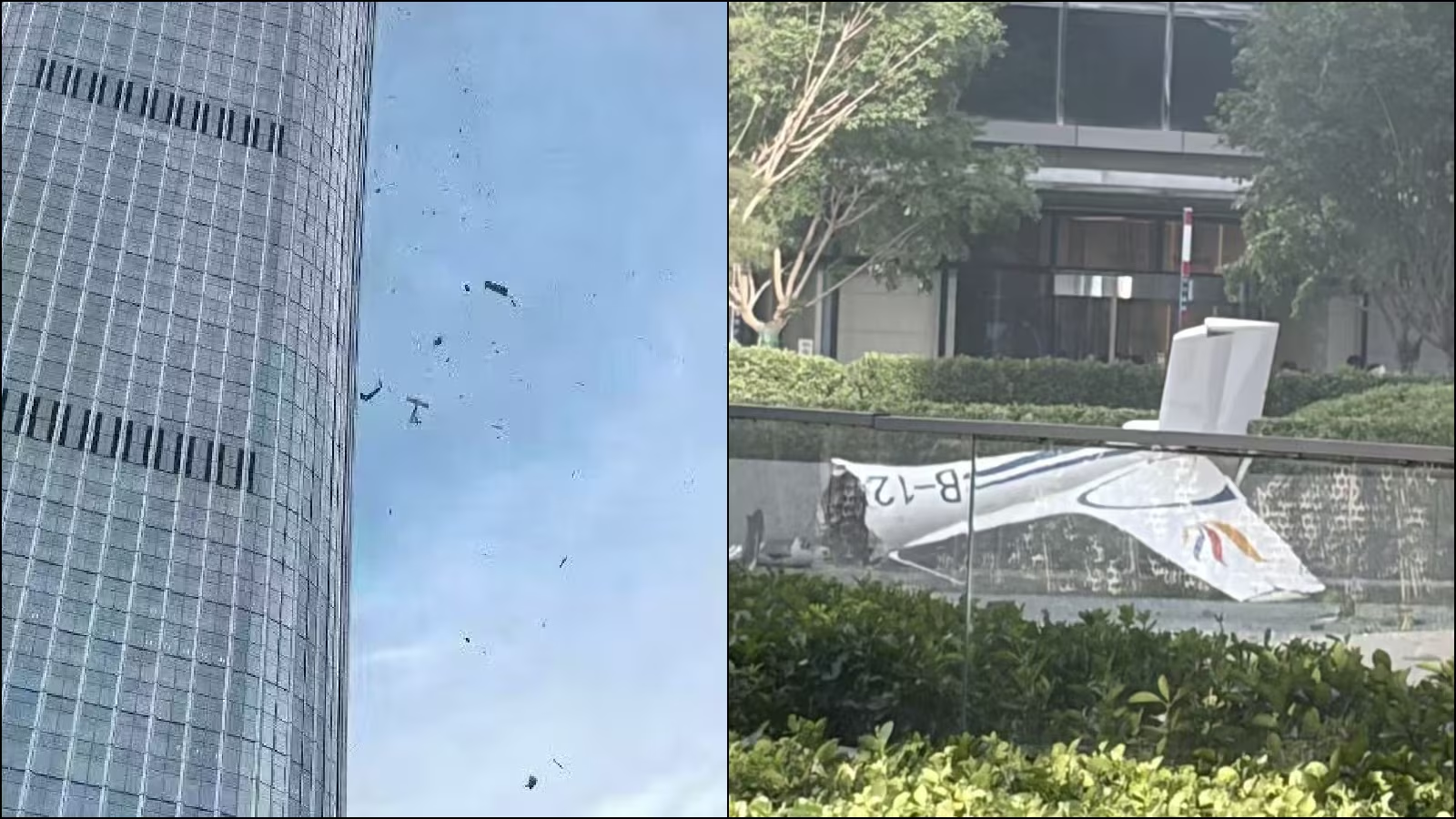
A Beijing plane crash tower incident has gripped China after a small aircraft flew into the capital’s tallest building, killing the pilot and injuring 13 others. The crash, which occurred just miles from the heart of the Chinese Communist Party, has raised serious questions about how such a breach of the city’s tightly controlled airspace could have happened.
The Official Confirmation
Beijing authorities confirmed on Saturday that a small aircraft had struck the capital’s tallest building the previous day. The Chaoyang District government, which oversees a large area of eastern Beijing including the tower’s location, said the two-seat, single-engine sport aircraft crashed into the high-rise mid-flight at 5:55 p.m. on Friday, near one of the city’s most important business districts.
The statement marked the first official acknowledgment of the event, arriving nearly 24 hours after videos circulated on social media. Those clips showed chunks of debris and plane parts plummeting onto the streets below Citic Tower, the headquarters of Citic Group, one of China’s largest state-owned financial conglomerates. Authorities said the injured were receiving extensive medical care and that an investigation was underway.
A Visible Scar on the City
The aftermath remained plainly visible days later. A gaping hole in the building could still be seen on Sunday as police maintained a perimeter spanning several blocks around the site and questioned pedestrians who came too close. Five police cars were stationed at the northeast corner of the tower, several with flashing lights.
In a curious detail, a small derrick, the kind sometimes used for building repairs, appeared protruding from the upper edge of the hole on Sunday morning. The equipment had not been there the previous day, suggesting repair or investigation work had already begun.
Troubling Security Questions
The crash has sparked significant concern because of its location and the nature of China’s airspace controls. The incident occurred less than five miles from Zhongnanhai, the seat of the Chinese Communist Party, raising the question of how a pilot managed to fly into the city center unobstructed.
China is known for strictly regulating its skies. The country routinely issues bans on flying drones, racing pigeons, and even kites during important events. Several factors make the breach especially puzzling:
- The crash happened in sunny, calm weather, ruling out poor conditions as a cause.
- It occurred far from any airport.
- The aircraft had flown well outside its usual operating area.
An Unexplained Flight Path
Adding to the mystery is why the aircraft was in the city center at all. The plane was reportedly used for training exercises in a district roughly 30 miles east of the high-rise. Photos of the debris posted online showed parts of a lightweight model registered to Shuangyue General Aviation, a regional flight training provider based in the outlying eastern district of Pinggu.
Flight tracking data from FlightRadar painted a clearer picture of the plane’s movements. The aircraft took off from an airfield in Pinggu on Friday at 5:31 p.m., circled the area, and then flew west into the city center. Notably, every recorded flight by the plane over the previous three months had taken place within the Pinggu District, making its sudden journey into central Beijing all the more unusual.
Unanswered Questions
Many details remain unclear. Authorities did not name the pilot, and social media posts claiming the pilot was a Citic employee could not be verified. When approached, a representative for Citic Group declined to answer questions on the record.
For now, the incident leaves Beijing with a damaged landmark, a tragic loss of life, and a host of unresolved questions about how a small training aircraft came to strike one of the city’s most prominent towers in the heart of a tightly secured capital. As the investigation unfolds, officials will face pressure to explain how such a breach occurred so close to the nation’s center of power.
Author