The newly signed Australia Vanuatu security deal marks a significant move in the contest for influence across the Pacific, as the two nations agreed to bar foreign military bases from being built on the island nation. The pact has drawn a wary response from China, which fears the arrangement may be aimed squarely at limiting its growing presence in the region.
The Nakamal Agreement Takes Shape
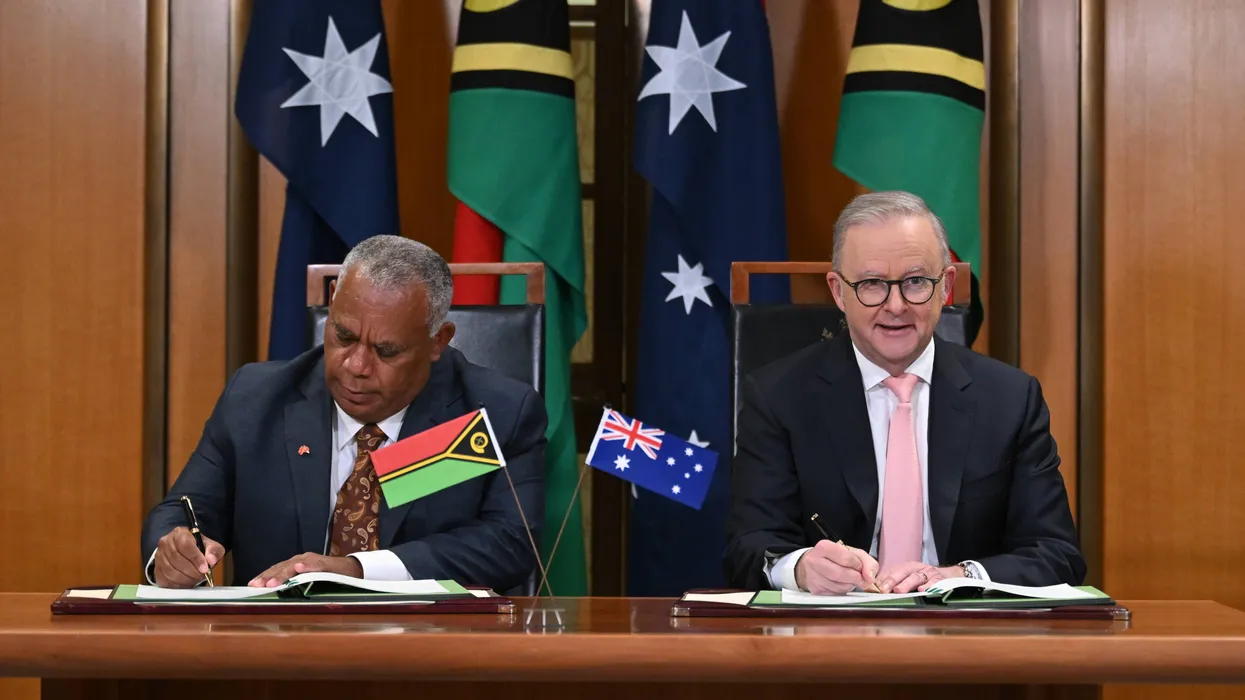
The deal, formally known as the Nakamal Agreement, was signed in Canberra on Monday by Australian Prime Minister Anthony Albanese and his Vanuatu counterpart, Jotham Napat. It combines economic and security elements into a single comprehensive arrangement.
At its core, the agreement provides Australia with assurance on a key strategic concern. Albanese told reporters that the deal guarantees there will be no foreign military base on the island, framing it as a way to protect both countries’ collective and individual security as well as their sovereignty.
What Each Side Commits To
The pact establishes a set of mutual obligations that bind the two nations more closely together. In exchange for Australia’s commitments, Vanuatu agreed to important restrictions on its dealings with outside powers.
The key terms of the arrangement include:
- Australia committing to increased economic support for Vanuatu
- Vanuatu barring the establishment of foreign military bases or infrastructure on the island
- Vanuatu agreeing to consult Australia on any third-party investment in critical infrastructure
Napat underscored his country’s stance, noting that Vanuatu has passed an act in parliament prohibiting the use of its critical infrastructure for any form of militarization. He described the pact as reaffirming a shared commitment to strengthening the partnership between the two countries, built on mutual respect, trust, and a common vision for a peaceful, stable, and prosperous Pacific.
China Voices Concern
The agreement did not go unnoticed in Beijing, which responded with thinly veiled unease. China expressed concern that the deal might be directed at it.
A spokesperson for China’s Ministry of Foreign Affairs, Guo Jiakun, said Beijing hoped cooperation between relevant countries and Pacific Island nations would contribute to the development and stability of the island region. He added a pointed caveat, expressing hope that such cooperation would not target any third party or serve as a tool for geopolitical rivalry.
A Deal Reworked From an Earlier Version
This agreement represents a second attempt after an earlier draft fell through. Vanuatu had rejected a previous version of the deal in September over worries that it would limit the country’s ability to attract infrastructure investment.
The revised pact reflects compromises on both sides. While Vanuatu will still consult with Australia over third-party engagement in its critical infrastructure, the earlier proposal’s power of veto has been dropped. On the financial side, the original draft had proposed that Australia provide Vanuatu with 500 million Australian dollars, roughly $345 million, over ten years. Albanese said the updated figure would be revealed in the budget update at the end of the year.
China’s Foothold in the Pacific
The backdrop to the deal is China’s expanding presence across the South Pacific, which has steadily deepened over the past decade. Notably, Vanuatu is set to sign a separate economic agreement with China, illustrating the balancing act the island nation is performing between competing powers.
China’s involvement in Vanuatu and the wider region has taken multiple forms:
- Providing loans to finance Chinese contractors building infrastructure and buildings
- Constructing roads and buildings across the South Pacific as part of its Belt and Road initiative
- Making naval port calls to Vanuatu and funding the expansion of a wharf in Luganville, the country’s second-largest city
- Establishing policing ties in 2023, including donations of drones, patrol boats, and vehicles to Vanuatu’s police force
Cementing Australia’s Role
A significant aim of the new agreement is to reinforce Australia’s position as Vanuatu’s primary partner, particularly in security matters. The pact explicitly names Australia as Vanuatu’s longstanding primary policing partner.
Under the deal, the two countries will expand cooperation across several domains, including police training, maritime security, cybersecurity, intelligence sharing, and infrastructure. Vanuatu also agreed to turn first to Australia, New Zealand, or France in the event of a major natural disaster, further anchoring the island nation within a network of traditional regional partners.
A Broader Strategic Push
The Vanuatu agreement is not an isolated initiative but part of a wider Australian effort across the Pacific. Australia has secured, or is working to secure, a number of agreements with Pacific island states.
The clear motivation behind this diplomatic push is to curb China’s influence in a region that has become an increasingly important arena for strategic competition. By locking in commitments that prevent foreign military bases and prioritize traditional partners, Australia is seeking to shore up its standing before Beijing’s footprint grows any larger.
Navigating Competing Powers
The Nakamal Agreement captures the delicate position of Pacific island nations like Vanuatu, which find themselves courted by major powers offering economic incentives and security partnerships. Vanuatu’s willingness to sign with Australia while also pursuing a separate economic deal with China reflects a pragmatic strategy of extracting benefits from both sides.
For Australia, the deal represents a meaningful win in its ongoing effort to maintain influence in its near region. Yet with China continuing to deepen its economic and security ties throughout the South Pacific, the competition for partnership and influence appears far from settled. How these overlapping arrangements play out will likely shape the strategic landscape of the Pacific for years to come.
Author