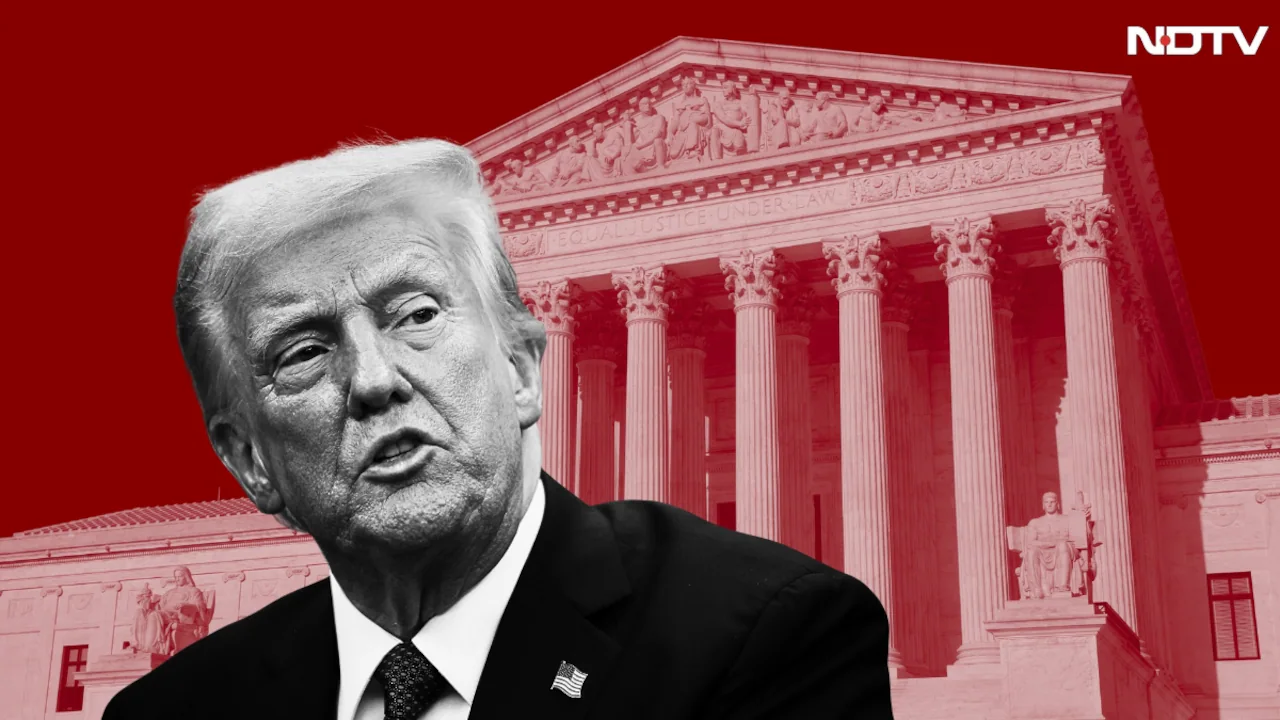
Birthright citizenship remains the law of the land after the Supreme Court delivered a decisive blow to one of President Trump’s signature immigration policies. On June 30, 2026, the justices struck down an executive order that would have stripped automatic citizenship from certain children born on American soil, reaffirming a principle that has anchored U.S. law for well over a century.
The decision, handed down in the case known as Trump v. Barbara, settled a fierce legal fight that had worked its way through lower courts ever since the order was signed. And it left intact a simple, long-standing rule: if you are born in the United States, you are almost certainly an American.
What Trump’s Order Tried to Change
On his first day back in office in January 2025, President Trump signed an executive order aiming to narrow who qualifies for citizenship at birth. Under the plan, babies born to undocumented immigrants and to certain temporary foreign residents would no longer be recognized as citizens automatically.
In practical terms, the order would have limited birthright citizenship to children who had at least one parent who was a U.S. citizen or lawful permanent resident. Everyone else born on U.S. soil, no matter that they entered the world in an American hospital, would have been left without citizenship at birth.
Critics warned this could create something the country had never seen before: a permanent underclass of people born in America yet denied the rights that come with citizenship. The order also directed federal agencies to withhold key documents, such as Social Security numbers, from affected children, which would have pushed them into undocumented status from the moment they were born.
The Court’s Answer
The justices were not persuaded. Chief Justice John G. Roberts Jr. wrote the majority opinion, concluding that the order clashed with the 14th Amendment of the Constitution.
The amendment’s language is direct. It declares that all persons born or naturalized in the United States, and subject to its jurisdiction, are citizens of both the country and the state where they live. Courts have read that clause broadly for generations, extending citizenship to nearly everyone born on American ground, with only a narrow exception for the children of foreign diplomats.
Roberts leaned on history to make his point. He traced the practice back through English common law, the ratification of the 14th Amendment in 1868, and the Supreme Court’s landmark 1898 decision in United States v. Wong Kim Ark, which confirmed that a man born in San Francisco to Chinese immigrant parents was fully American. In his written opinion, Roberts noted that the arguments made by the administration echoed the losing side of that century-old case, and that neither time nor circumstance had turned that losing view into law.
He framed the stakes in memorable terms, describing citizenship as the right to have rights and stressing that the promise written into the Constitution still holds today.
Who Sided With Whom
The ruling was not a lopsided one. Three conservative justices, Clarence Thomas, Samuel Alito, and Neil Gorsuch, dissented, arguing that the amendment left room for the president’s approach. Justice Brett Kavanaugh agreed the order had to fall, but on the narrower ground that it violated federal statute rather than the Constitution itself.
Roberts was joined in his constitutional reasoning by Justice Amy Coney Barrett along with the court’s three liberal members, Sonia Sotomayor, Elena Kagan, and Ketanji Brown Jackson. The outcome marked another significant courtroom setback for the administration and drew a sharp reaction from the president, who urged Congress to take up the issue through legislation.
Why Birthright Citizenship Is Actually Unusual Worldwide
Here is a fact that surprises many Americans: the sweeping version of birthright citizenship the United States practices is rare on the global stage. Of the world’s roughly 200 countries, only about 30 grant citizenship automatically to anyone born within their borders.
Most of that group sits in the Americas. Canada, Mexico, and nearly all of Latin America and the Caribbean follow the same principle the U.S. uses, known as jus soli, meaning “right of the soil.” Outside the Western Hemisphere, though, the approach is far less common.
A Different Rule Across Much of the World
Across Europe, Asia, the Middle East, and Africa, citizenship usually flows through bloodline rather than birthplace. This principle, called jus sanguinis, or “right of blood,” means a child inherits citizenship from a parent regardless of where the birth takes place.
Consider a few examples:
- A baby born in Japan to non-Japanese parents does not become Japanese simply by being born there.
- In France, a child born to foreign parents can claim citizenship at 18, provided they have lived in the country for at least five years.
- In Portugal, a child qualifies for citizenship if a parent has held legal residency for at least a year.
These conditional systems show that many nations treat citizenship as something tied to a family’s roots or long-term ties to a place, not an automatic consequence of geography.
What the Ruling Means Going Forward
For now, the decision closes the door on ending birthright citizenship through executive action alone. The court’s majority signaled that reshaping such a deeply rooted constitutional guarantee would likely require far more than a presidential order, a constitutional amendment being the highest hurdle of all.
The practical effect is that the familiar understanding stays firmly in place. A child born in the United States is a citizen, even when that child’s parents are not. For millions of families, the ruling removed a cloud of uncertainty and reaffirmed a promise that has defined American identity since the years after the Civil War.
Whether the debate resurfaces in Congress remains to be seen. But as the law stands today, the soil still confers the right, and the Supreme Court has said clearly that it intends to keep it that way.
Author