The Amazon Leo satellite service has hit a pivotal milestone, with the tech giant announcing it finally has enough satellites circling low-Earth orbit to power up its long-awaited challenger to Starlink. Following a launch overnight, Amazon confirmed that its constellation has reached a threshold capable of delivering continuous coverage, marking a major step forward in the increasingly crowded race to beam internet from space.
A Constellation Ready to Go Live
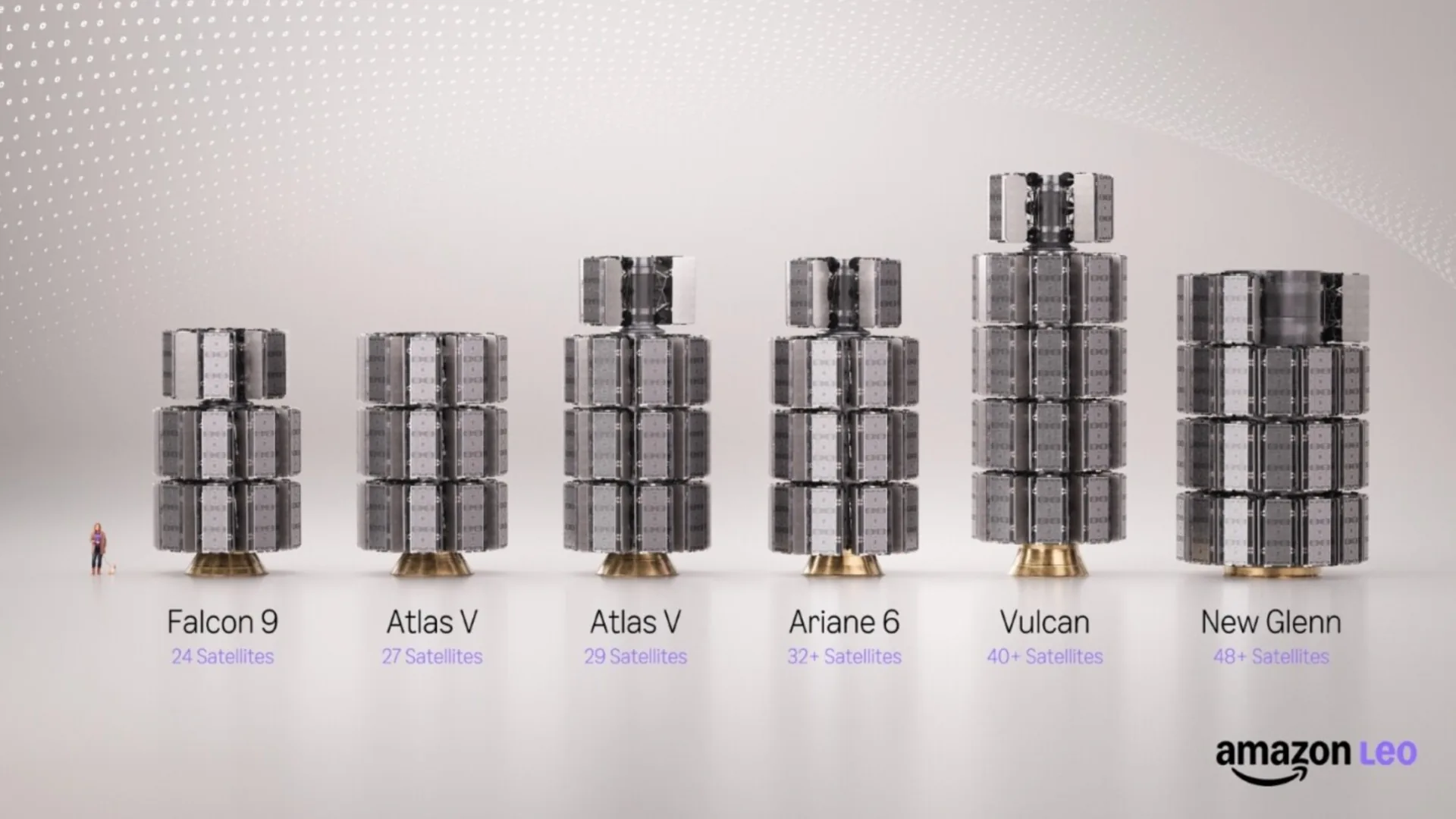
According to Amazon, the latest launch pushed its total to 396 deployed satellites. That number, the company says, is enough to support uninterrupted service across the initial range of latitudes it plans to cover.
Chris Weber, the vice president overseeing business and product for Amazon Leo, framed the achievement as proof the company remains on track for its stated goal of commercial availability by mid-2026. Reaching this point on schedule is no small feat, especially given the technical and logistical hurdles involved in building an orbital network from scratch.
Still, Amazon is tempering expectations. While the milestone is significant, the company is careful to signal that customers shouldn’t anticipate flawless performance the moment the service switches on.
Learning From Starlink’s Early Days
To understand what early Amazon Leo users might experience, it helps to look back at how its biggest rival began. SpaceX launched Starlink’s public beta in 2020 under the memorable and self-deprecating name “Better than nothing beta.”
At that point, SpaceX already had nearly 900 satellites in orbit, yet the service was far from polished. Its early days looked something like this:
- Coverage was limited to a narrow band of users across the northern United States and Canada.
- Customers frequently reported service interruptions and heavy sensitivity to obstructions like trees.
- Download speeds ranged from roughly 50Mbps to 150Mbps.
- Latency sat between 20ms and 40ms.
Those growing pains didn’t last forever. By 2022, both the service quality and coverage areas had improved dramatically, transforming Starlink from a rough experiment into a genuinely reliable option for many users.
What Amazon Leo Users Can Expect at First
Amazon’s early adopters are likely to walk a similar path. The initial rollout will probably come with the same kind of limitations that defined Starlink’s opening chapter, with performance improving gradually over time.
The key to that improvement lies in volume. As Amazon continues launching additional satellites, users can expect better speeds, greater network capacity, and steadily expanding global reach. In other words, the service that launches next year should look quite different from the one available a few years down the road.
This incremental approach is simply the nature of satellite internet. A constellation becomes more capable as it grows denser, filling coverage gaps and distributing demand across more hardware in orbit.
The Massive Gap Amazon Must Close
While the milestone is worth celebrating, it also throws into sharp relief just how far Amazon still has to travel to catch its competitor. SpaceX has an enormous head start.
Starlink currently operates more than 10,000 satellites, delivering connectivity across land, sea, and air in over 160 countries. That scale has produced impressive real-world results, even accounting for variations based on equipment, subscription tier, time of day, and location. Today’s Starlink users typically see:
- Median download speeds around 200Mbps
- Upload speeds ranging from 10Mbps to 40Mbps
- Latency hovering near 25ms
Matching those figures will take Amazon years. The company has ambitious plans to eventually deploy a full fleet of 3,232 Leo satellites, but reaching that target is a long-term endeavor rather than an overnight transformation.
Roadblocks Slowing Amazon Down
Adding to the challenge, Amazon has fallen behind its own schedule. A significant part of the delay traces back to difficulties with launch capacity.
Jeff Bezos has struggled to get Blue Origin’s reusable New Glenn rocket into regular, dependable operation. Since reliable and frequent launches are essential to building out a satellite constellation quickly, any setbacks with the rocket directly slow the pace at which Amazon can expand Leo. That bottleneck has made an already difficult race even harder to run.
Why This Milestone Still Matters
Despite trailing far behind Starlink, Amazon’s announcement carries real weight. Reaching enough satellites to offer continuous service proves the project has moved beyond theory and into practical reality.
For years, skeptics questioned whether Amazon could genuinely compete in a field SpaceX has dominated. Hitting this threshold, and doing so in line with its mid-2026 timeline, suggests the company is serious and capable of executing on its vision, even if the road ahead remains long.
Competition in this space also benefits consumers. As more players enter the satellite internet market, the pressure to improve speeds, lower prices, and expand coverage grows. That dynamic could ultimately help millions of people in remote or underserved areas gain reliable access to the internet.
The Bigger Picture
The broader story here is about an intensifying battle for the future of connectivity beyond the reach of traditional cables and cell towers. Satellite internet promises to bring high-speed access to places where laying fiber is impractical or impossible, from rural communities to ships at sea and aircraft in flight.
SpaceX has clearly set the pace, but Amazon’s entry ensures the field won’t be a one-company affair for long. Even if Leo takes years to rival Starlink’s performance, its presence signals a maturing industry where multiple providers push one another to do better.
Looking Ahead
For now, Amazon Leo stands at the starting line of commercial service, armed with just enough satellites to begin but a long climb ahead to reach the heights its rival has already achieved. Early users should approach the launch with realistic expectations, understanding that the experience will evolve considerably as the network expands.
The coming months will reveal how smoothly Amazon can transition from milestone to marketplace, and whether it can steadily overcome the launch challenges holding it back. What’s certain is that the competition to connect the world from orbit has entered an exciting new phase, and consumers may well be the biggest winners as these giants push to outdo each other in the skies above.
Author