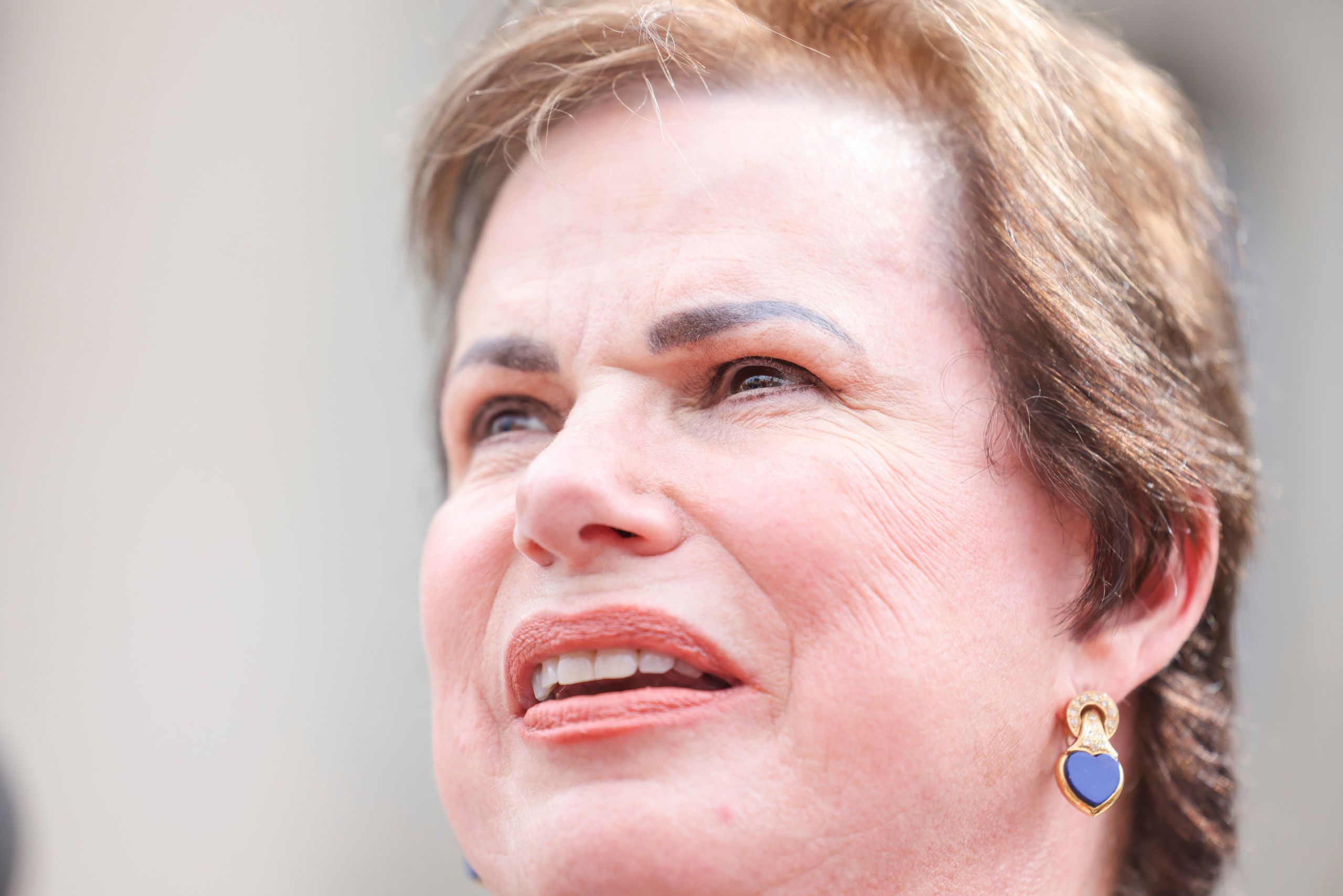
Liz Murrill indicted is a phrase now echoing across Louisiana politics, after an Orleans Parish grand jury handed down a stunning 16-count felony indictment against the sitting state attorney general. The charges, rooted in a series of letters she sent to New Orleans officials, have thrown the state into what one prosecutor bluntly called a constitutional crisis and deepened an already bitter feud between Republican state leaders and the city’s Democratic power structure.
What the Grand Jury Decided
Meeting on July 2, the grand jury reviewed evidence assembled by special prosecutor Laurie White and returned what’s known as a true bill, meaning jurors found enough probable cause for the case to proceed. The result was a formal indictment charging Murrill with:
- Eight counts of public intimidation
- Eight counts of malfeasance in office
The public intimidation charges fall under a Louisiana law that broadly prohibits threats, coercion, or pressure intended to influence how a public official carries out their duties. The malfeasance counts stem from a separate statute that applies when an official is accused of intentionally neglecting a legal duty or improperly performing official responsibilities.
Orleans Criminal District Judge Leon Roche issued a warrant for Murrill’s arrest and set bond at $25,000 per count, adding up to a total of $400,000 across all 16 charges. Court records indicate her arraignment was scheduled to follow, with the case assigned to a judge who has served on the court since 2020.
The Root of the Conflict
The indictment traces back to a heated dispute over control of a court clerk’s office. After the state legislature passed a bill merging Orleans Parish’s criminal and civil courts, the elected criminal clerk of court, Calvin Duncan, was effectively ousted from his position. In response, New Orleans officials moved to appoint retired judge Calvin Johnson as interim clerk and called for a special election to fill the seat.
Murrill sharply disagreed with that maneuver. She fired off letters to city leaders warning that their actions could trigger serious consequences under Louisiana’s so-called usurper laws, statutes that can result in officials forfeiting their positions. The recipients included Mayor Helena Moreno, District Attorney Jason Williams, and five members of the City Council.
In her correspondence and public statements, Murrill argued that the underlying premise of the city’s actions was simply wrong. According to her interpretation, the new law did not create a vacant office at all. Instead, she contended, it abolished the former criminal clerk position, folded its authority, records, and funding into the existing civil clerk’s office, and renamed that continuing office. Under that reading, the lawful clerk of court remained in place, and any attempt to install a competing clerk amounted to recognizing a fictional office.
Murrill had urged the council to pause and wait for the Louisiana Supreme Court to weigh in before acting. When they proceeded anyway, she warned that no public official should acknowledge the disputed appointment and called on the council to rescind its resolutions.
Officials Push Back
New Orleans leaders viewed the letters very differently. Mayor Moreno characterized the correspondence as a threat and, in a video statement issued earlier in the saga, made clear she would not be cowed. She emphasized that she refused to be intimidated by the state attorney general and would not back down.
Moreno had also pointed out what she saw as a striking irony: that Murrill would put such warnings in writing when Louisiana law itself makes intimidation a crime. That observation would prove prophetic once the grand jury took up the matter.
After the indictment came down, Moreno struck a more measured tone, describing the development as a matter for the courts and stressing that her focus remained on serving the people of New Orleans.
Murrill Fires Back
Murrill responded forcefully, framing the indictment as a politically motivated attack. She argued that after taking on violent crime and corruption in New Orleans, it came as no surprise that entrenched interests were searching for ways to stop her. She branded the charges retaliatory, meritless, and unconstitutional.
Beyond the substance of the charges, Murrill leveled pointed accusations about how the proceedings were handled. She claimed confidential information had been improperly leaked to the press, and she alleged that the court had gone so far as to lock out and even handcuff members of the media, threatening them with contempt. She called it deeply ironic that the special prosecutor would cite the need to protect confidentiality as justification for closing the courtroom, while, in her telling, the grand jury itself had leaked information freely.
Murrill announced she would immediately file an emergency supervisory writ with the Louisiana Supreme Court, expressing hope the matter would be resolved quickly. She vowed not to retreat, pledging to keep enforcing the law and fighting corruption. Her attorney echoed that defiance, calling the indictment embarrassing and a misuse of the criminal justice system unlikely to hold up.
The Governor Enters the Fray
Governor Jeff Landry, a fellow Republican and close ally, wasted no time rallying to Murrill’s defense. On social media, he blasted what he called a kangaroo grand jury and an Orleans kangaroo court, declaring that he would pardon Murrill as fast as the law allows and dismissing the local justice system as a circus.
There’s an important legal wrinkle to that promise, however. Under Louisiana law, the governor cannot issue a pardon unilaterally; a recommendation from the state pardon and parole board is required, and that board can only act after a conviction. In a separate post, Landry announced he was ordering the State Police to investigate alleged improprieties involving the grand jury and those who ran it.
The special prosecutor offered a sharp retort to the governor’s pardon pledge, telling reporters that they should first secure a conviction, and then he could grant the pardon.
A Feud Years in the Making
The indictment represents the boiling point of a relationship that has been deteriorating almost since Murrill and Landry took office in early 2024. From the outset, state Republican leaders asserted authority over New Orleans, dedicating state resources to the local criminal justice system and establishing a year-round State Police presence in the city. At the time, local officials, including the district attorney, publicly welcomed the additional support, and violent crime did decline in the months that followed.
That cooperation has since curdled into open hostility. The special prosecutor, a former criminal court judge, framed the case in distinctly local terms, telling reporters she was tired of the rest of the state kicking New Orleans and that officials in the city deserved not to be intimidated or threatened.
What Comes Next
For now, the standoff is far from resolved. Murrill’s challenge heads to the Louisiana Supreme Court, the governor has threatened both a pardon and a State Police probe, and questions swirl about how the grand jury proceedings were conducted. Whether the indictment ultimately survives legal scrutiny or collapses under the weight of the controversy surrounding it remains to be seen.
What’s certain is that Louisiana finds itself in uncharted territory, with its sitting attorney general facing criminal charges amid a raw power struggle between state and city leaders. However the courts rule, this extraordinary clash has already reshaped the state’s political landscape and left observers wondering just how deep the rift between Baton Rouge and New Orleans will ultimately run.
Author