Jollibee in Vancouver became an unlikely stage for international diplomacy this week, as Canadian Prime Minister Mark Carney and Philippine President Ferdinand Marcos Jr. traded the formality of the negotiating table for a plate of fried chicken. The surprise stop at the beloved Filipino fast food chain offered a warm, human counterpoint to the serious business of statecraft — and put a spotlight on one of the Philippines’ most recognizable global brands.
A Diplomatic Detour Worth Savoring
Not every moment of foreign policy unfolds behind closed doors. Sometimes it happens over a tray of Chickenjoy and Jolly spaghetti.
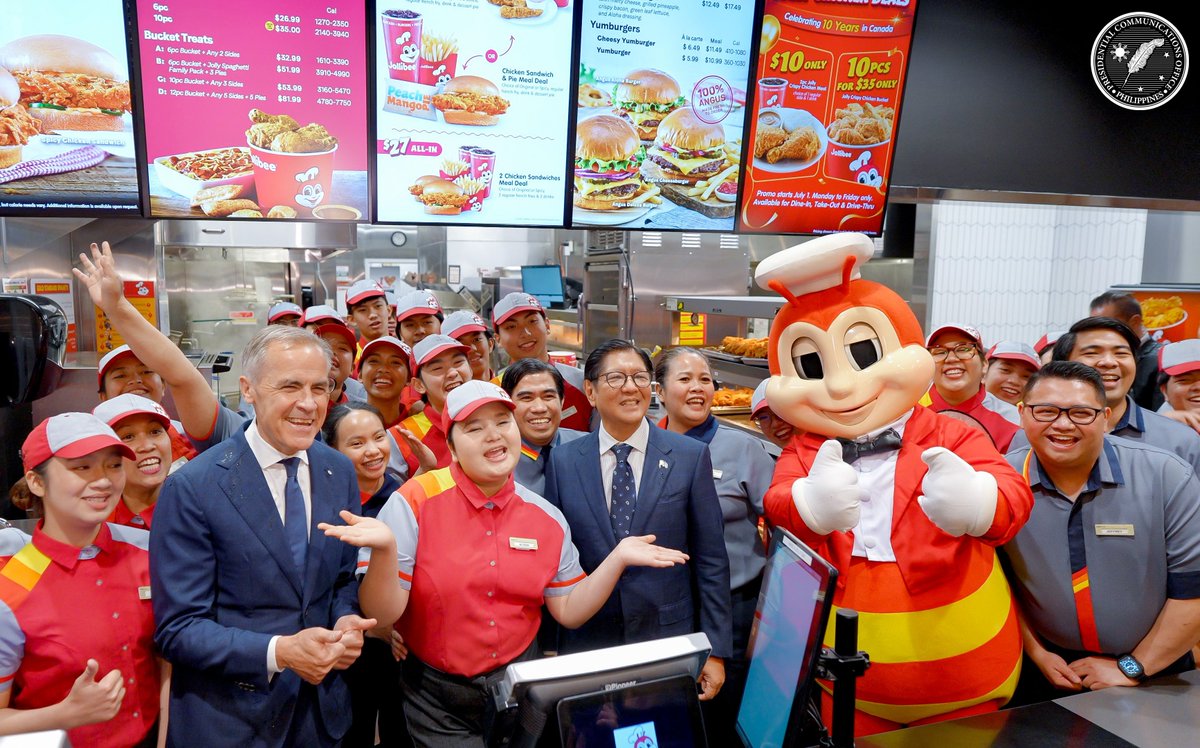
That was certainly the case on Thursday, July 2, when the two leaders wrapped up their official duties and made their way to Jollibee’s downtown Vancouver location on Granville Street. The visit came right after a bilateral meeting and joint press conference at the Vancouver Convention Centre, where the two nations unveiled a new strategic partnership.
The choice of venue was anything but random. By stepping into a bustling fast food restaurant rather than another sterile government hall, Carney and Marcos sent a message that the relationship between their countries is rooted not just in policy, but in people, culture, and shared everyday experiences.
More Than a Photo Opportunity
Of course, there was plenty of picture-taking. The two leaders ordered food, posed alongside Jollibee’s cheerful bee mascot, and mingled with the customers and staff who happened to be there.
But the stop carried significance well beyond the cameras. It served as a living illustration of the deepening economic and cultural bonds between Canada and the Philippines. Jollibee itself stands as a prime example of Filipino entrepreneurship taking root and thriving on Canadian soil.
The Granville Street location holds a special place in that story. It was the very first Jollibee outlet to open in Vancouver back in March 2022, and it has since become part of a growing network. Today, the chain operates 23 restaurants across Canada — a footprint that continues to expand.
A Symbol of Growing Business Ties
The Vancouver restaurant is a Filipino-Canadian owned establishment, and officials have pointed to it as a genuine symbol of the strengthening commercial relationship between the two countries.
According to a statement from the Philippine presidential communications office, the chain’s expansion carries real economic weight. The benefits are expected to ripple outward in several directions:
- Creating new jobs within local communities
- Encouraging Filipino-Canadians to pursue franchise ownership
- Boosting exports of Philippine-made food products
- Reinforcing overall trade between Canada and the Philippines
Those trade figures are already substantial. According to the export marketing bureau of the Philippine Department of Trade and Industry, Canada now ranks as Jollibee’s second-largest market for exports of Philippine food products. That statistic underscores just how intertwined the two economies have become when it comes to food and consumer goods.
A Taste of Home Abroad
For the large Filipino community in Canada, Jollibee represents far more than a quick meal. It’s a connection to heritage, memory, and identity.
Marcos captured that sentiment in a post shared on social media, remarking that there was no better setting to celebrate the friendship between the two nations than over a Jolly meal. His words tapped into something deeper than trade statistics or partnership agreements.
The president went on to describe how the chain has grown into a place where generations of Filipinos living in Canada can rediscover a taste of home. Even as they build lives far from the islands, these communities continue to contribute meaningfully to their adopted country — and a familiar meal offers a comforting reminder of where they came from.
That emotional resonance is part of what makes Jollibee such a powerful cultural ambassador. It isn’t merely selling food; it’s preserving a sense of belonging for a diaspora spread across the globe.
Why This Moment Mattered
At first glance, two heads of state grabbing fast food might seem like a lighthearted publicity stunt. But the visit neatly encapsulated the broader goals of the newly announced partnership between Ottawa and Manila.
Trade agreements and diplomatic declarations can feel abstract and distant to ordinary citizens. A shared meal at a recognizable restaurant, on the other hand, makes those relationships tangible. It shows how business investment translates into real jobs, how cultural exchange enriches communities, and how two nations can find common ground in something as simple and universal as a good meal.
The Jollibee stop also highlighted the role that immigrant entrepreneurship plays in bridging countries. A Filipino brand, operated in part by Filipino-Canadians, thriving in a major Canadian city, is a story of mutual benefit — one that both leaders were clearly eager to celebrate.
The Bigger Picture
As Canada and the Philippines move forward under their strengthened partnership, moments like this one serve as reminders that diplomacy wears many faces. Some negotiations happen across polished boardroom tables. Others unfold over Chickenjoy, Jolly spaghetti, and slices of crispy peach mango pie.
By choosing to share a meal rather than simply exchange handshakes, Carney and Marcos offered a refreshing image of international relations — one grounded in warmth, familiarity, and genuine human connection.
In the end, the visit proved a simple truth: the strongest bonds between nations are often forged not through grand gestures, but through the small, relatable pleasures that bring people together. And on this particular week in Vancouver, that bond tasted a lot like fried chicken and sweet mango pie.
Author